
How to Get Rid of Ants in Grass Naturally
Boiling water, soapy drench and diatomaceous earth all work on lawn ant nests. Which to use where, and why most lawn ants are better left alone.
 By
On this page
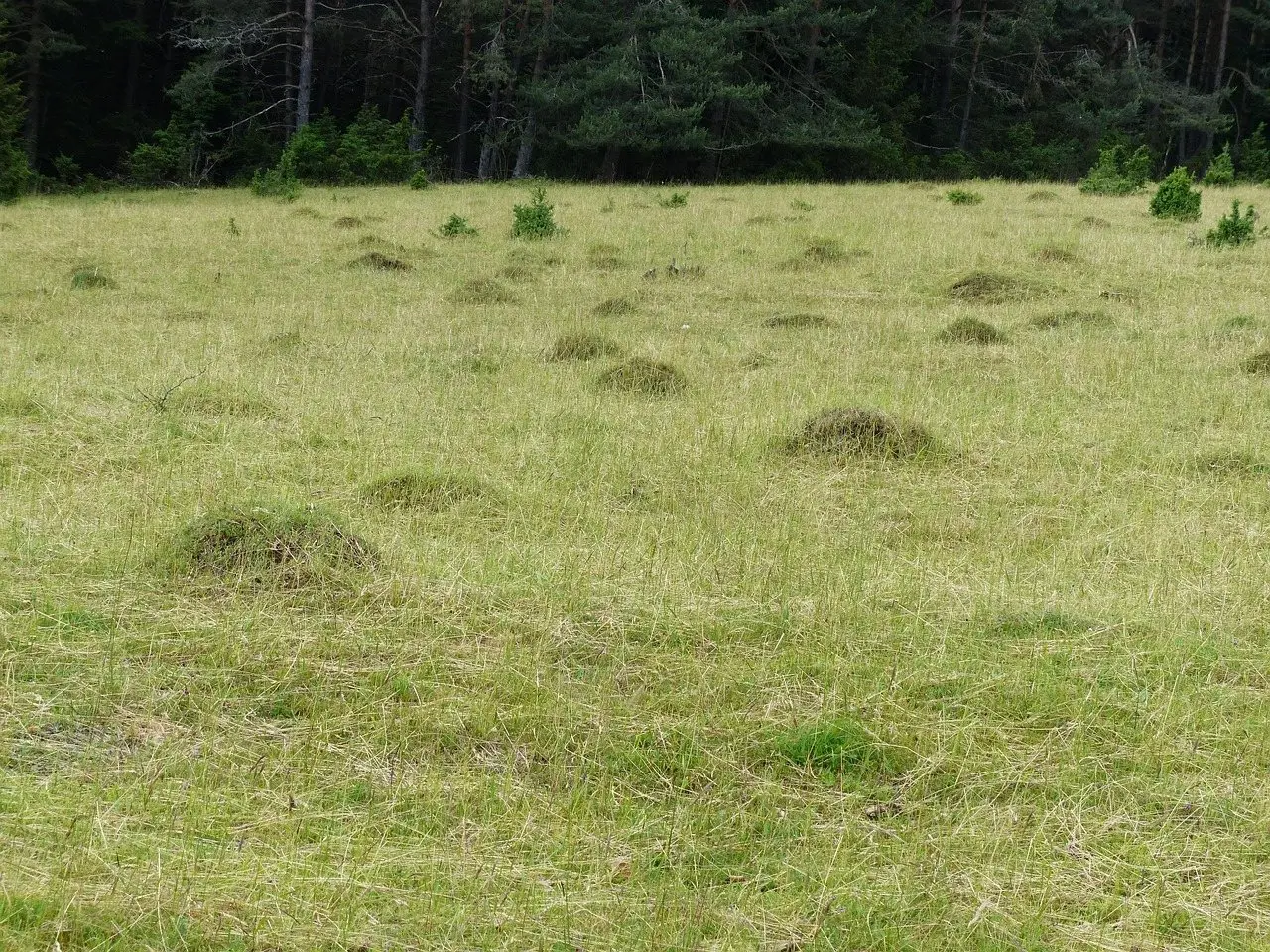
Most lawn ant problems are cosmetic, and the three methods that genuinely end a nest without synthetic insecticide are boiling water, a soap drench and dry diatomaceous earth.
Pick the method for the situation
| method | best for | cost to the lawn |
|---|---|---|
| Boiling water | One or two big established nests | Scorched circle, recovers in weeks |
| Soap drench | Several smaller nests, near beds | Minimal |
| Diatomaceous earth | Trails and entrances in dry spells | None, but kills pollinators |
| Nematodes (Steinernema) | Large areas, warm moist soil | None |
Boiling water, done properly
- Find the real entrance, not just the mound — disturb the mound and watch where they retreat
- Two to three gallons for an established nest, in a slow pour so it soaks rather than runs
- Repeat for two or three days. One application kills the workers near the surface, not the queen
- Overseed the scorched patch once it dries out
Keep boiling water off roots and paving joints
Avoid pouring within a foot of shrub stems or in the root zone of anything shallow-rooted, and keep it off block paving where it can wash out jointing sand.
The soap drench
- A quarter cup of liquid dish soap per gallon of warm water
- Pour slowly into the entrance, then follow with plain water to carry it down
- Two or three applications, a few days apart
- Safe next to beds and borders, and no scorching
Making the lawn unattractive
- Overseed bare and thin patches — ants colonise open soil
- Aerate compacted areas
- Water deeply and less often rather than a daily sprinkle
- Raise the mowing height one notch for denser cover
- Control aphids on nearby shrubs and roses; the honeydew is why they are in the garden
Common questions
What is the most effective natural way to kill ants in a lawn?
Do ants actually damage grass?
Does diatomaceous earth kill lawn ants?
Will vinegar or baking soda get rid of lawn ants?
How does a soap drench work on ant nests?
What keeps ants from coming back?
Backyard Weekly
Know what to plant, week by week
Join the weekly email for seasonal jobs, fixes for what is going wrong, and gear worth buying.
Not ready to subscribe? The planting calendar is free and needs no email.
By subscribing you agree to our privacy policy. Grow In Backyard will never sell your address.
Keep reading
Why Are Ants Attracted to Light? Only the Winged Ones Are
The ants at your lamp are not the ants in your kitchen, and they are gone within days. What they are doing, and why workers ignore light entirely.
Can Carpenter Ants Kill a Tree? They Follow Decay, Not Cause It
Carpenter ants excavate wood that is already soft and wet. They do not eat live wood, so they are a symptom of internal rot rather than its cause.
What to Do After Aerating a Lawn: The First Two Weeks
Leave the cores where they fall, overseed within 48 hours, top-dress with compost, and hold off mowing. The order matters more than the tasks.

How to Get Rid of Flies in a Backyard With Dogs
Dog waste is the breeding source, so daily pickup does most of the work. The safe traps, sprays and barriers to use where dogs have free access.