
What to Do After Aerating a Lawn: The First Two Weeks
Leave the cores where they fall, overseed within 48 hours, top-dress with compost, and hold off mowing. The order matters more than the tasks.
 By

On this page
The holes are the whole point, and they start closing immediately. So the answer is less a list of jobs than a sequence: seed and top-dress within 48 hours, water, and leave the rest alone.
The sequence
| When | Do |
|---|---|
| Same day | Overseed. Holes are fully open |
| Same day / next | Top-dress thinly with compost or soil-sand |
| Same day | Starter fertilizer with phosphorus |
| Day 0–14 | Water lightly, twice daily. Keep the surface damp |
| Day 2–3 | Mow only if you did not overseed |
| Week 2–4 | First mow at three inches, top third only |
| Week 4+ | Weed killer becomes safe |
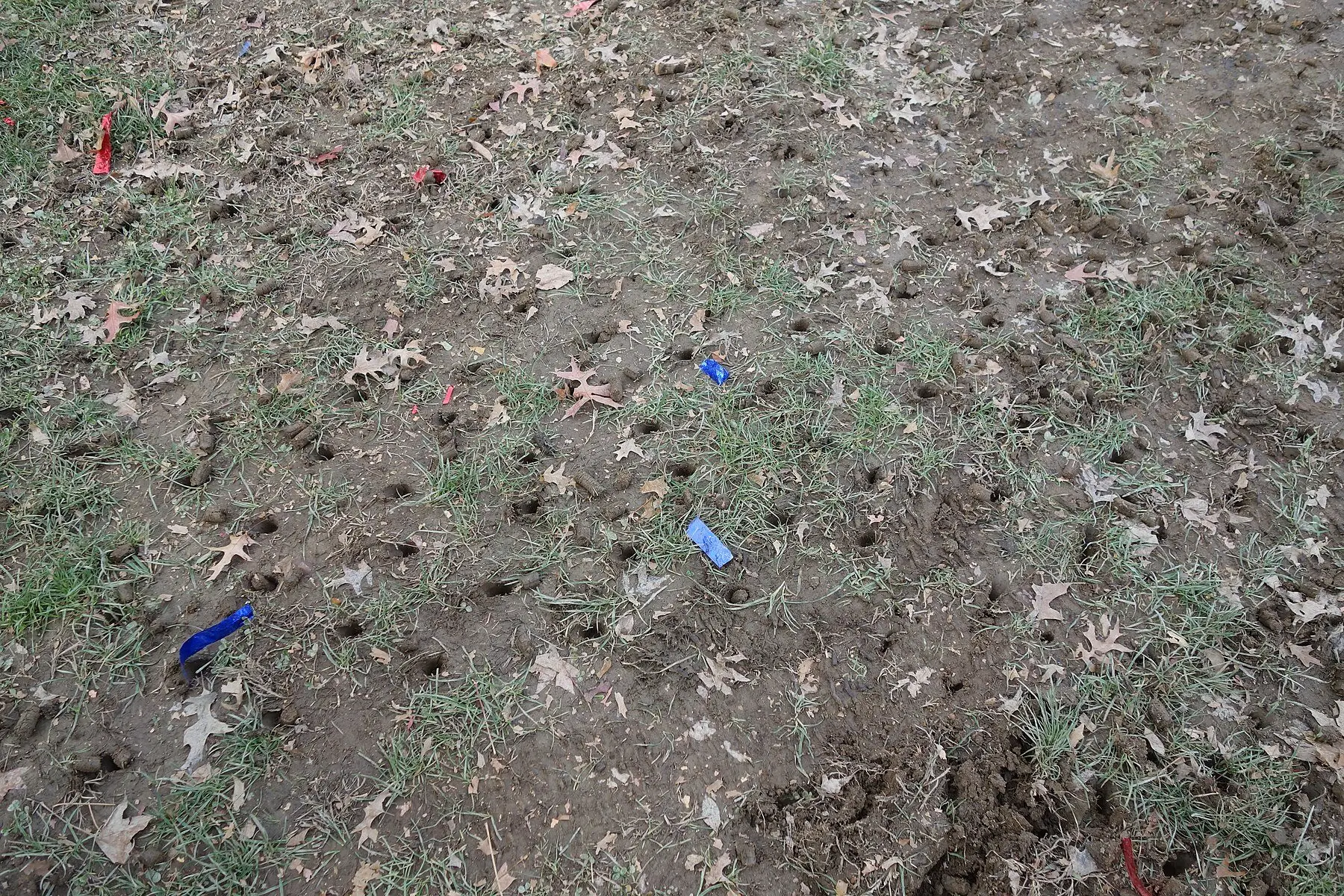
Leave the cores
They look untidy for a week. Leave them anyway.
- They are soil, and they break down in one to three weeks
- They carry soil microbes up into the thatch layer, which is where thatch actually decomposes
- Raking them off removes the benefit and adds work
If you need them gone for an event, mow over them once dry and they shatter.
Overseeding is the reason to aerate at all
Seed-to-soil contact is the whole game
Grass seed broadcast onto uncored turf largely sits on top and dies. Seed that drops into an open core hole is in soil, held damp, and germinates at a far higher rate.
This is why the 48-hour window matters. Aerating and overseeding a month later is two jobs that do not help each other.
- Spread seed the same day, in two passes at right angles
- Top-dress thinly — compost, or a soil-sand mix — and brush it in to work seed into the holes
- Keep the top half inch damp for two to three weeks. Light and frequent, not deep and occasional
Feed, but the right one
- Starter fertilizer with phosphorus for root development
- Skip high-nitrogen feeds if you overseeded. They push established grass into growth that shades out your seedlings
- Aeration puts the feed into the root zone rather than on the surface, so this is an efficient time to apply it
What not to do
Pre-emergent weed killer will kill your new grass
A pre-emergent does not distinguish between weed seed and the grass seed you just paid for. Keep pre-emergent and broadleaf herbicides off the lawn for at least four weeks after overseeding.
- No mowing until three inches. Seedlings have almost no anchorage and get torn out by the root
- Keep traffic off while the holes are open and the seed is germinating
- Do not let the surface dry out mid-germination — a seed that has swollen and then dried is finished
- Do not aerate twice in a season. Once a year suits most lawns; twice suits heavy clay under real traffic
Common questions
What should you do immediately after aerating a lawn?
Should you rake up the plugs after aerating?
Can you overseed right after aerating?
When can you mow after aerating and overseeding?
Should you fertilize after aerating?
What should you avoid after aerating?
Backyard Weekly
Know what to plant, week by week
Join the weekly email for seasonal jobs, fixes for what is going wrong, and gear worth buying.
Not ready to subscribe? The planting calendar is free and needs no email.
By subscribing you agree to our privacy policy. Grow In Backyard will never sell your address.
Keep reading
Can You Just Throw Grass Seed Down on an Existing Lawn?
You can, and most of it dies. What seed needs to actually germinate, and the twenty extra minutes that takes overseeding from 10% success to 70%.
How to Plant Grass Seed So It Actually Comes Up
Seed fails from poor contact and a surface that dried out once, not from bad seed. Soil prep, sowing rates, and the watering routine that carries it to germination.
How Long Does Grass Seed Take to Grow? (5–30 Days)
Germination runs 5–30 days depending on the grass type — ryegrass in under a week, bluegrass up to a month. Here is the timeline and what actually delays it.
What Grass Is Most Resistant to Dog Urine? Fescue and Rye
Tall fescue and perennial ryegrass tolerate urine better than Kentucky bluegrass or Bermuda. But watering the spot within hours beats any variety.