
Do Japanese Beetles Bite? No — They Can't Bite You
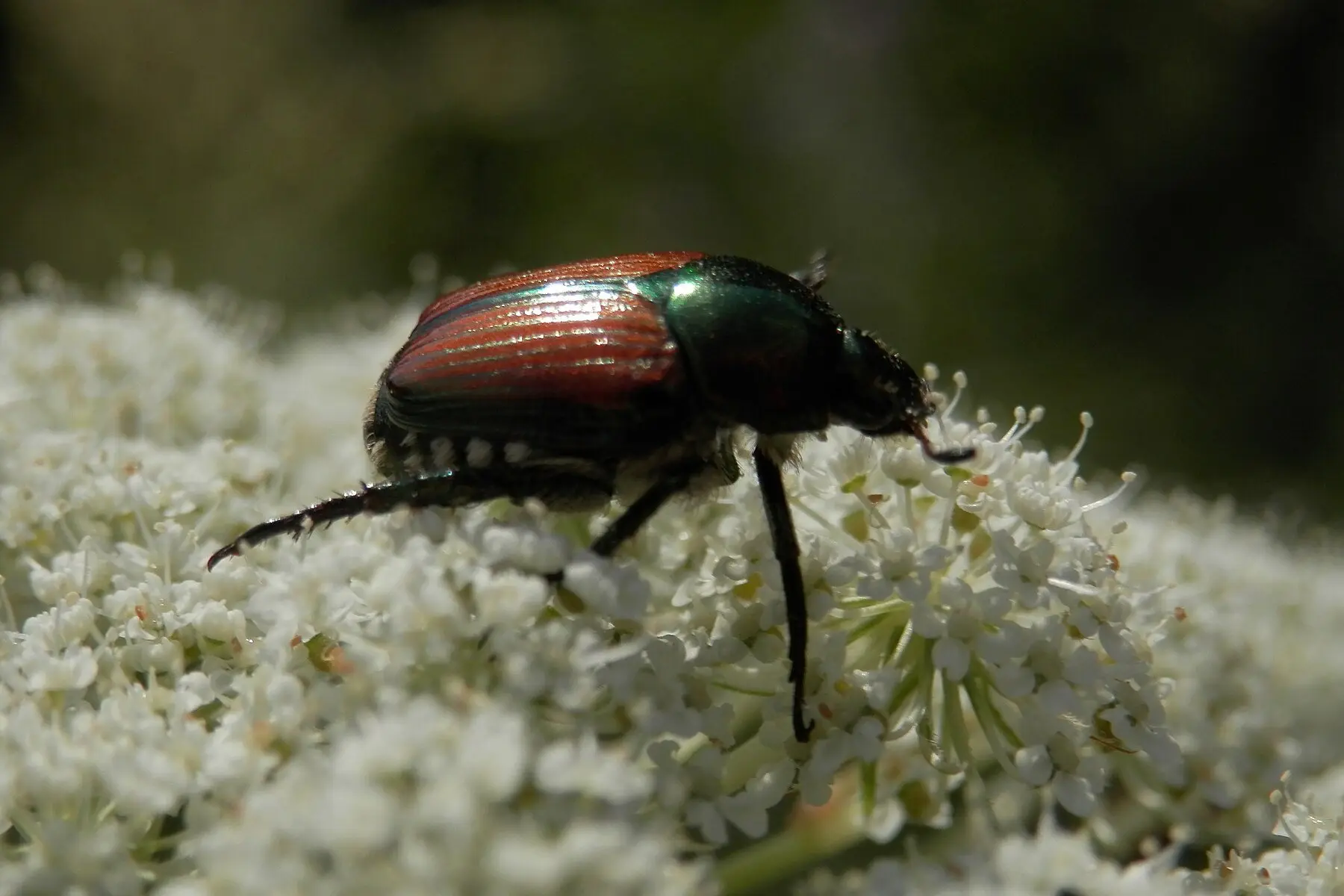
Japanese beetles have chewing mouthparts built for leaves and cannot break human skin. The pinch people feel is the grip of their leg spines.
 By

On this page
No. Their mouthparts are built for chewing soft leaf tissue and cannot break human skin — and they have no stinger. The pinch people report is real, but it is the grip of their legs, not a bite.
What people are actually feeling
Their legs are built to hold onto leaves in wind
Each leg ends in hooked claws and carries rows of stiff spines. A beetle that has taken hold resists being shaken off, and the grip drags across skin when you pull it straight up.
Brush them off sideways. It stops almost all of the scratching.
Are they harmful at all?
Not to people:
- No disease that affects humans
- Not venomous
- Handling is harmless beyond the scratchy grip
The only minor points: some people get mild irritation from handling large numbers, and a distressed beetle may release a dark fluid that briefly stains fingers.
The harm is entirely to plants — a large population strips a shrub in days.
What they do to plants
They feed on the tissue between the leaf veins and leave the veins behind, which produces a lacy skeletonized look that identifies the damage instantly.
Over 300 host species, with favourites including:
- Roses, grapes, linden, birch
- Raspberries, beans, fruit trees
The grubs live underground and eat grass roots, which is a separate problem in lawns and the place to break the cycle.
Getting rid of them
| Method | Verdict |
|---|---|
| Hand-picking into soapy water, early morning | Most effective at garden scale |
| Milky spore or nematodes on the lawn | Reduces next year’s emergence |
| Pheromone traps | Makes it worse — see below |
The traps sold for Japanese beetles attract more than they catch
The lure draws beetles from a wide area into your garden. A reliable proportion never reach the trap and settle on your plants instead.
They are one of the few garden products that measurably worsen the problem they are sold for.
Early morning is the moment for hand-picking — the beetles are cold and slow, and drop rather than fly.
Lookalikes that do bite
| Insect | Risk |
|---|---|
| Blister beetle | Chemical that genuinely blisters skin on contact |
| Green June beetle, June bug | Harmless |
| Stag beetle, some longhorns | A real nip if handled roughly |
Blister beetles are the one to actually avoid touching.
Common questions
Do Japanese beetles bite people?
Are Japanese beetles harmful to humans at all?
What do Japanese beetles eat?
Why do Japanese beetles cling to you so hard?
How do you get rid of Japanese beetles?
What insects that look similar do bite or sting?
Backyard Weekly
Know what to plant, week by week
Join the weekly email for seasonal jobs, fixes for what is going wrong, and gear worth buying.
Not ready to subscribe? The planting calendar is free and needs no email.
By subscribing you agree to our privacy policy. Grow In Backyard will never sell your address.
Keep reading
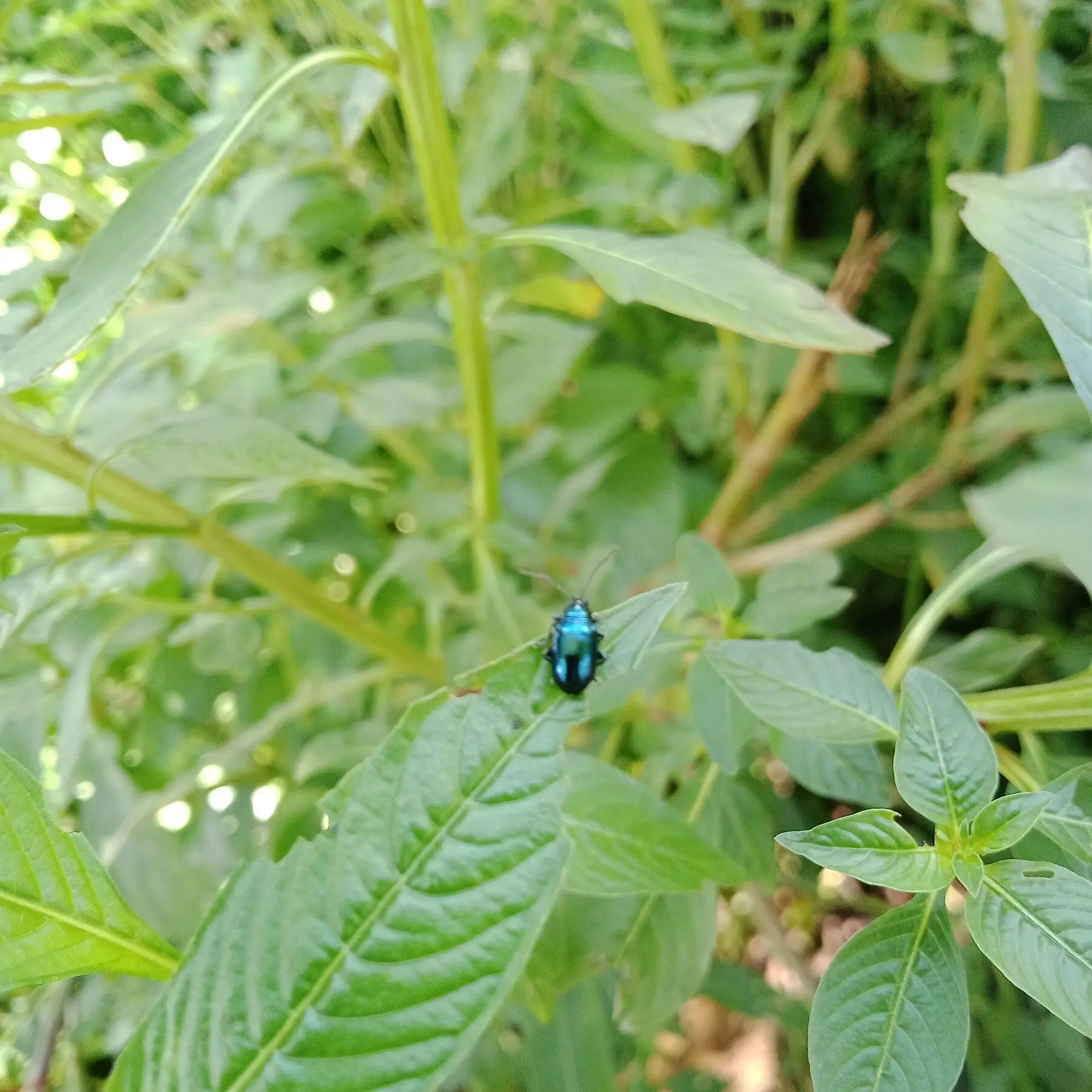
Flea Beetles: Shotholes in Leaves, and What Actually Stops Them
Tiny jumping beetles that pepper brassica and eggplant leaves with holes. Why seedlings are the only real risk, and the controls that work in order.
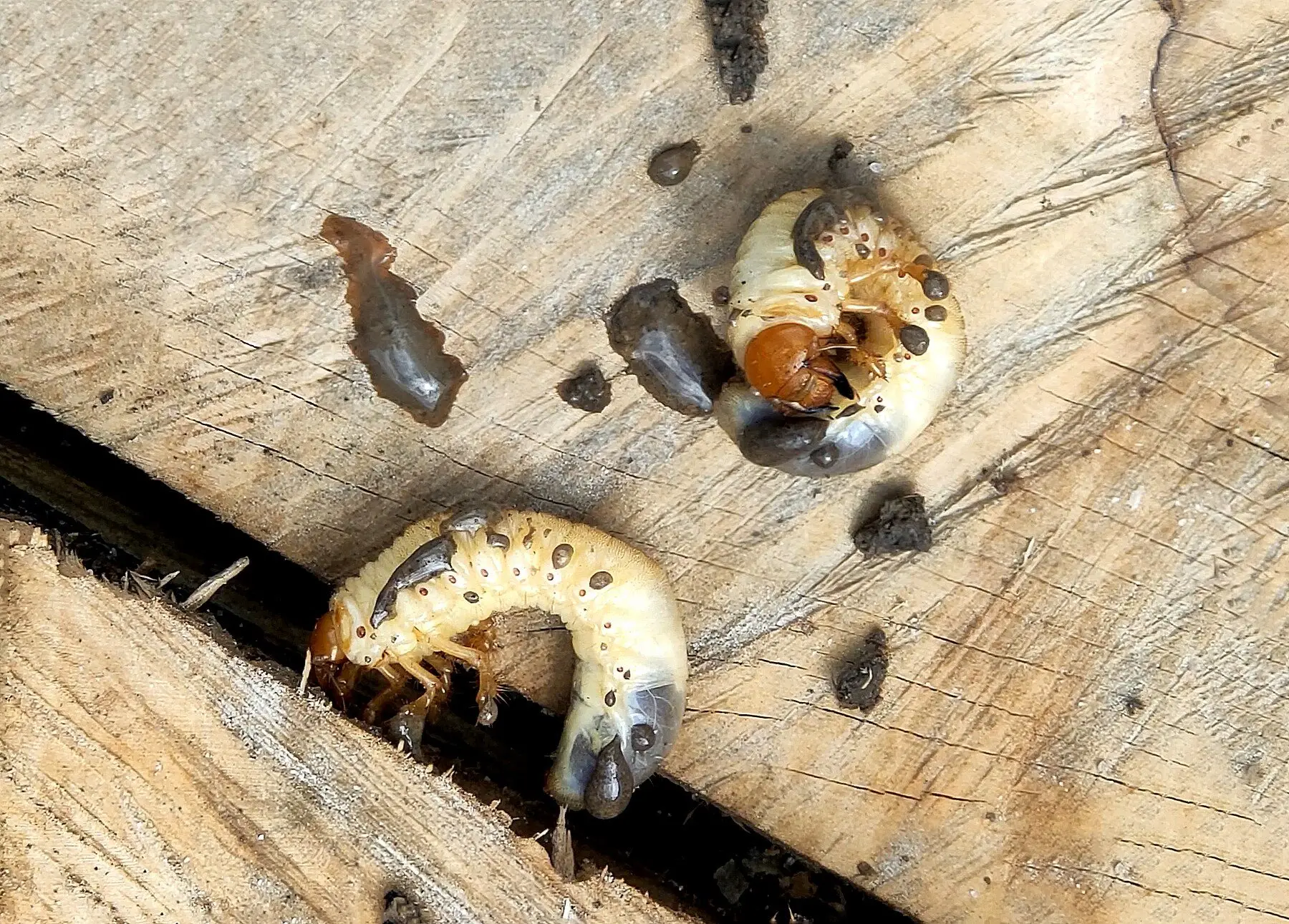
Grub Worm: How to Tell If You Have Them, and When to Treat
Most lawns carry grubs harmlessly. The threshold is 6 to 10 per square foot — how to count them, and why timing matters more than the product.
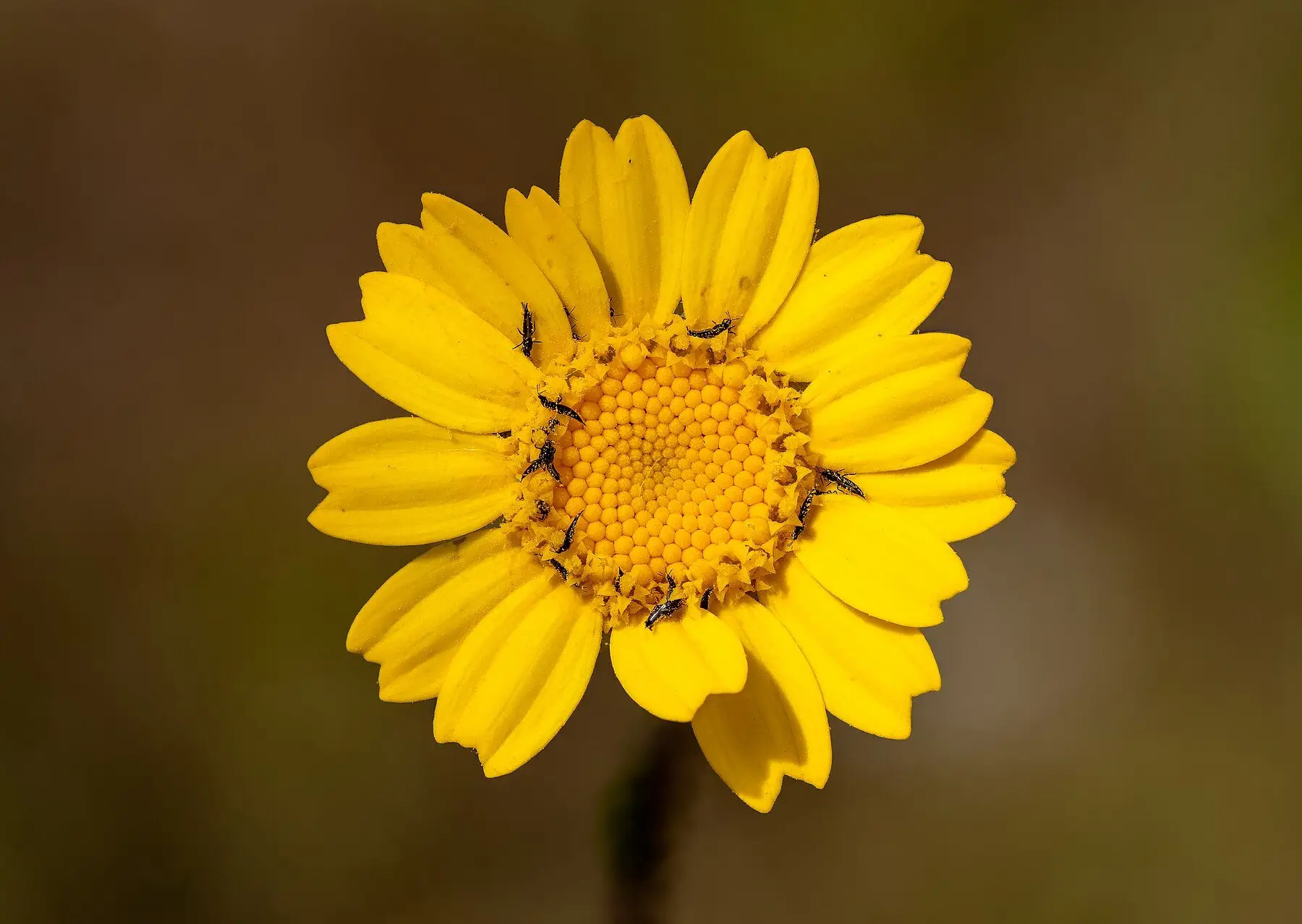
Does Neem Oil Kill Thrips? Slowly, and Only on Contact
Neem disrupts thrips rather than killing on contact, so it takes repeat sprays every 5–7 days. The pupae in the soil are what defeat most attempts.
Does Mulch Attract Bugs? Some, and Mostly Useful Ones
Mulch shelters insects rather than creating them, and most are decomposers doing the work. The few that matter, and how depth and placement fix them.