
Flea Beetles: Shotholes in Leaves, and What Actually Stops Them
Tiny jumping beetles that pepper brassica and eggplant leaves with holes. Why seedlings are the only real risk, and the controls that work in order.
 By

On this page
Leaves peppered with small round holes, and something black that jumps when you lean in. On a mature plant that is cosmetic. On a seedling it is fatal, and that distinction decides everything you do next.
Identifying them
- Under ⅛ inch, often much smaller than people expect
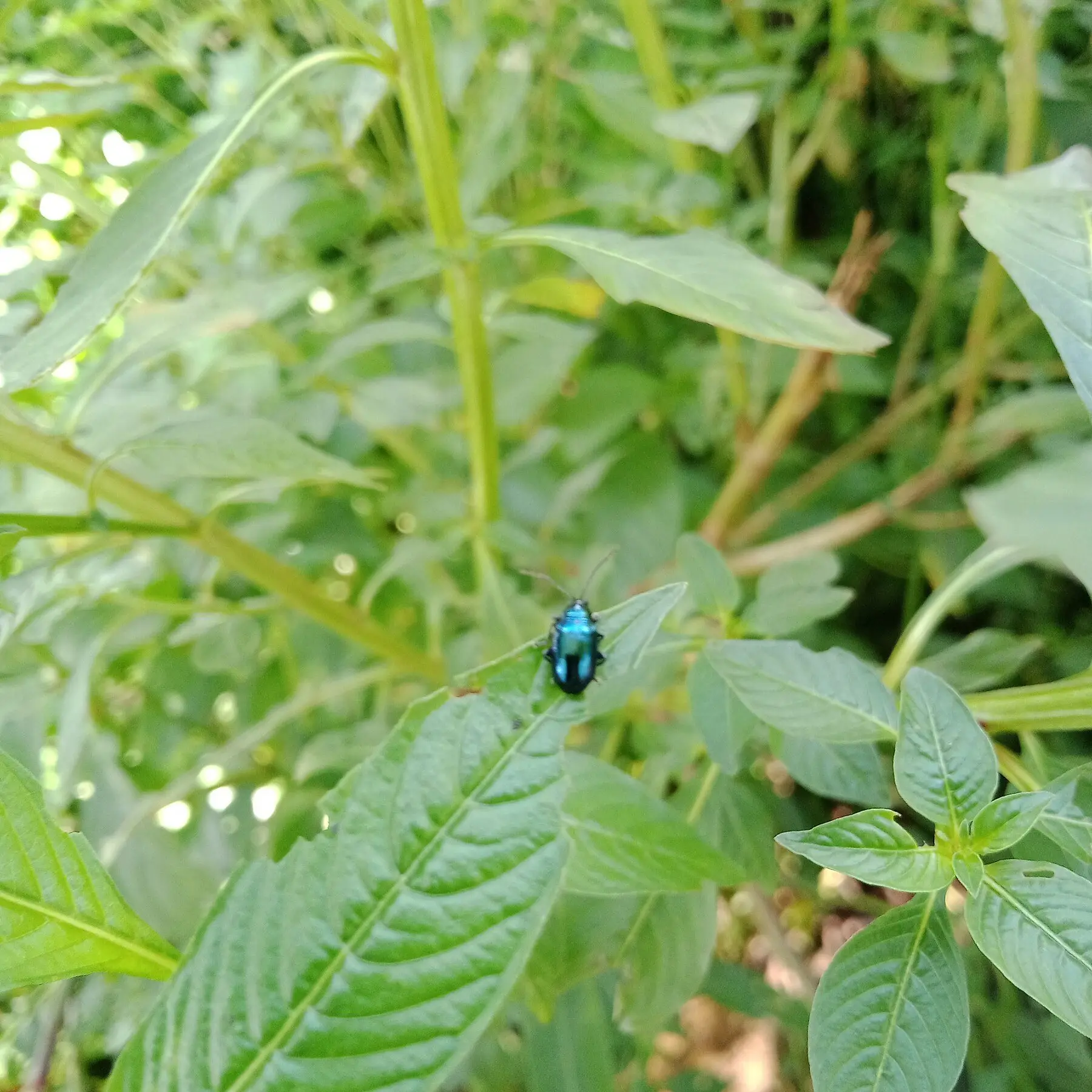
- Shiny black, bronze, or metallic blue-green; some striped
- Enlarged hind legs — they jump hard when disturbed. This is the giveaway
- Found on the upper leaf surface, scattering as your shadow falls on them
- Damage is small round pits and holes, evenly scattered — “shothole” or “buckshot”
What it is not
Slugs and snails leave large ragged holes and slime, usually working from leaf edges at night.
Cabbage white caterpillars leave big irregular holes and green droppings.
Leafminers make pale winding tunnels inside the leaf rather than holes through it.
If the holes are small, round, numerous and nothing is visible until you disturb the plant, it is flea beetles.
What they attack
| Crop | Severity |
|---|---|
| Rocket, mustard, mizuna, bok choy | Severe — often shredded in days |
| Radish, turnip | Severe on leaves; roots usually fine |
| Eggplant | Severe, and it genuinely reduces the crop |
| Kale, cabbage, broccoli | Moderate; bad on young plants |
| Potato | Moderate; some species spread disease |
| Tomato, pepper | Mild once established |
| Spinach, beet, corn, sunflower | Occasional |
The species tend to be host-specific — the crucifer flea beetle on brassicas, the potato flea beetle on nightshades — so a population destroying your rocket may leave the tomatoes next to it untouched.
The lifecycle, which tells you when to act
- Adults overwinter in leaf litter, soil, hedge bottoms and weedy field edges
- They emerge in spring, hungry, and move onto the first suitable leaves available
- Eggs go into the soil at the base of host plants
- Larvae feed on roots — unseen, and usually of little consequence except in potatoes
- A new generation of adults appears in mid to late summer
The spring emergence is the dangerous window, because it coincides exactly with seedlings and transplants. By midsummer, plants are big enough that the second generation is a nuisance rather than a threat.
Controls, in the order worth trying
1. Floating row cover. The one that genuinely works.
- On from the day of sowing or transplanting, not after damage appears
- Seal the edges — buried, weighted or pinned. Beetles walk in under a loose edge
- Leave it on for three to four weeks, until plants are robust
- Remove it for anything that needs pollinating. Brassicas grown for leaves do not; squash and eggplant flowers do
- Do not cover a bed where brassicas grew last year — emerging adults will be inside the cover
2. Grow past them. A plant growing fast tolerates far more feeding.
- Transplant rather than direct sow where you can. A four-leaf transplant is a much smaller target than a cotyledon
- Water and feed to keep growth moving
- Sow thickly and thin later, accepting losses
- Delay sowing past the spring peak for crops that allow it — a late-June rocket sowing is often untouched compared with an April one
3. Break the overwintering.
- Clear crop debris and leaf litter in autumn near vegetable beds
- Remove weedy brassicas — shepherd’s purse, wild mustard, charlock — which host them
- Rotate brassicas away from last year’s bed
4. Trap crops and monitoring.
- A sacrificial row of mustard or radish at the bed edge pulls beetles away from the main crop
- Yellow sticky traps tell you when emergence has started, which is more useful than the small number they catch
5. Sprays, last and selectively.
| Option | Honest assessment |
|---|---|
| Neem oil | Repellent and antifeedant, not a knockdown. Weekly, and after rain |
| Kaolin clay | Works well on eggplant — a white film they dislike landing on |
| Insecticidal soap | Poor. They jump before it lands |
| Spinosad | Effective, but toxic to bees when wet — evening only, never on flowers |
| Pyrethrin | Effective and broad-spectrum; kills beneficials too. A last resort |
Do not spray a mature plant for cosmetic holes
A grown kale, tomato or potato plant carries a remarkable amount of shothole damage with no measurable effect on yield. Spraying it kills ladybirds, ground beetles and parasitic wasps that are keeping other pests down, and achieves nothing you can eat.
Spray only when a young or slow-growing crop — eggplant is the usual case — is being visibly held back.
What does not work
- Waiting until damage appears to cover. The beetles are already underneath
- Loose row cover. They walk in at the edges
- Diatomaceous earth, which stops working the moment it is damp and kills pollinators on flowers
- Companion planting alone. Mint, catnip and basil are widely recommended; nothing in the evidence suggests they clear an infestation
- Chasing every beetle. They jump, they fly, and there are more next door
The realistic aim is getting seedlings through the first month. After that the plant wins on its own.
Common questions
What are flea beetles?
What damage do flea beetles do?
How do I get rid of flea beetles?
What plants do flea beetles attack?
Will neem oil kill flea beetles?
Do flea beetles come back every year?
Backyard Weekly
Know what to plant, week by week
Join the weekly email for seasonal jobs, fixes for what is going wrong, and gear worth buying.
Not ready to subscribe? The planting calendar is free and needs no email.
By subscribing you agree to our privacy policy. Grow In Backyard will never sell your address.
Keep reading
How to Use Neem Oil on Plants Without Burning Them
The right dilution, why it needs soap to mix, when to spray, and which pests it works on. Neem is slow and specific — treat it as a knockdown and it fails.
How to Grow Cabbage: Firm Soil, Wide Spacing, Mesh
Cabbages need firmer ground than most crops, more room than people give them, and a physical barrier against pests. Splitting heads and clubroot, explained.
How to Grow Broccoli Without It Bolting or Buttoning
Broccoli bolts in heat and buttons when checked as a seedling. Timing the sowing, spacing for a decent head, and cutting so the side shoots keep coming.
Grub Worm: How to Tell If You Have Them, and When to Treat
Most lawns carry grubs harmlessly. The threshold is 6 to 10 per square foot — how to count them, and why timing matters more than the product.