
Are Darkling Beetles Harmful? Not to You, Sometimes to Seedlings
Darkling beetles do not bite or sting and mostly eat decaying matter. The larvae chew seedling stems, and in a poultry coop they are a real pest.
 By
On this page
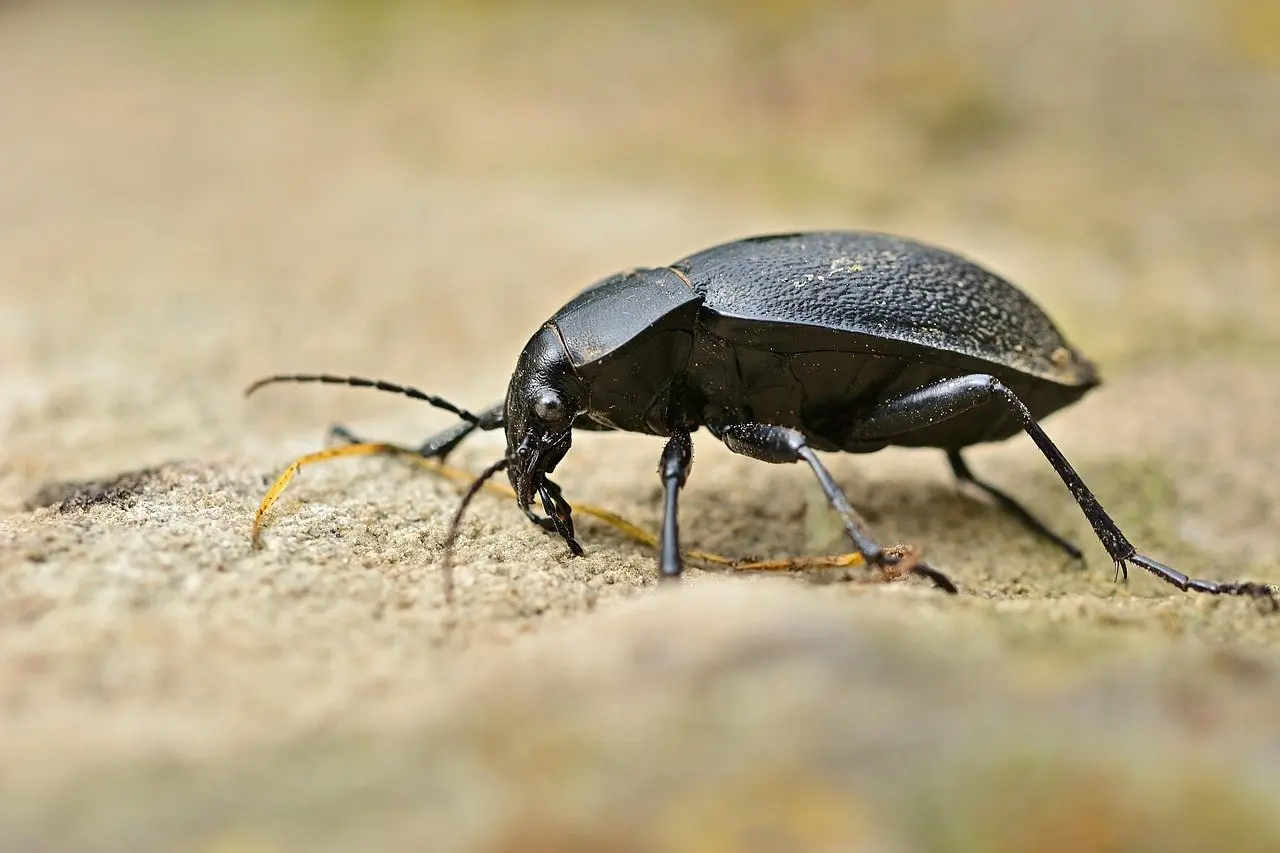
Not to you. They do not bite, sting or carry anything to people — the worst is a sharp defensive smell. Two real exceptions: larvae cutting seedlings in dry soil, and a poultry coop, where they are a genuine pest.
What they are
Over 20,000 species, dark, slow-moving, often found under logs, in mulch, in compost and in dry grassland. The larvae are mealworms — the same insect sold as reptile and bird food. They are detritivores: dead leaves, dry plant debris, seeds, fungal matter.
The smell, not a bite
Some species raise the rear end and release a quinone-based secretion. It is sharp, it stains fingers, and it is harmless. That defensive posture is the origin of “stink beetle” and “pinacate beetle”.
Where they are and are not a problem
| Setting | Harmful? | Why |
|---|---|---|
| On your hands | No | No functional bite; odour only |
| Compost heap, mulch, under logs | No | Breaking down dead matter |
| A dry spring seedbed | Yes | Larvae sever emerging stems |
| Stored grain or feed | Yes | They eat it and contaminate it |
| A poultry coop | Yes, seriously | Insulation damage; pathogen carriers |
The seedling problem
Darkling larvae are false wireworms — slim, tan, hard-bodied, working at and just below soil level. In dry soil a germinating seed is one of the few moist things on offer, so they go for it. The damage looks exactly like cutworm damage: a seedling toppled at the base.
Fixes, in order of effect:
- Keep the seedbed consistently moist through germination. This removes most of the incentive.
- Pull loose debris and mulch back from the row — that is where they shelter.
- Sow when soil is warm enough for fast emergence. Speed through the vulnerable stage.
- Firm the soil around the row; loose dry tilth is their habitat.
In a coop, treat it seriously
The lesser mealworm tunnels into polystyrene insulation and timber and carries Salmonella, E. coli and other pathogens between flocks. Full litter removal between flocks, cleaning the floor, sealing exposed insulation behind a hard surface, and keeping spilled feed down. Dry diatomaceous earth in the litter kills beetles and larvae; it stops working the moment it is damp.
What to do in a garden
Usually nothing. A dark beetle under a log or in the compost is doing the job compost needs doing. Act only if seedlings are being cut — and then the answer is water and tidiness, not an insecticide.
Common questions
Are darkling beetles harmful?
Do darkling beetles bite?
What do darkling beetles eat?
Are the larvae bad for a vegetable garden?
Why are there darkling beetles in my chicken coop?
How do I get rid of darkling beetles?
Backyard Weekly
Know what to plant, week by week
Join the weekly email for seasonal jobs, fixes for what is going wrong, and gear worth buying.
Not ready to subscribe? The planting calendar is free and needs no email.
By subscribing you agree to our privacy policy. Grow In Backyard will never sell your address.
Keep reading
Grub Worm: How to Tell If You Have Them, and When to Treat
Most lawns carry grubs harmlessly. The threshold is 6 to 10 per square foot — how to count them, and why timing matters more than the product.
Does Mulch Attract Bugs? Some, and Mostly Useful Ones
Mulch shelters insects rather than creating them, and most are decomposers doing the work. The few that matter, and how depth and placement fix them.

What Is Diatomaceous Earth — 3 Rules Before You Buy
What is diatomaceous earth doing when it works is cutting insect cuticles while dry. 3 rules cover grade, use and a dust mask. See whether it fits your pest.
Can Carpenter Ants Kill a Tree? They Follow Decay, Not Cause It
Carpenter ants excavate wood that is already soft and wet. They do not eat live wood, so they are a symptom of internal rot rather than its cause.