Mushroom Compost: What It Is and Where Not to Use It
Spent mushroom substrate is cheap, alkaline and salty when fresh. Excellent on clay and vegetable beds, actively harmful around acid-loving plants and seedlings.

On this page
Mushroom compost is one of the cheapest bulk soil improvers available, and it is genuinely good material — used in the right places.
It has two properties that decide those places: it is alkaline, and when fresh it is salty. Neither is a defect. Both make it wrong for specific plants.
What it actually is
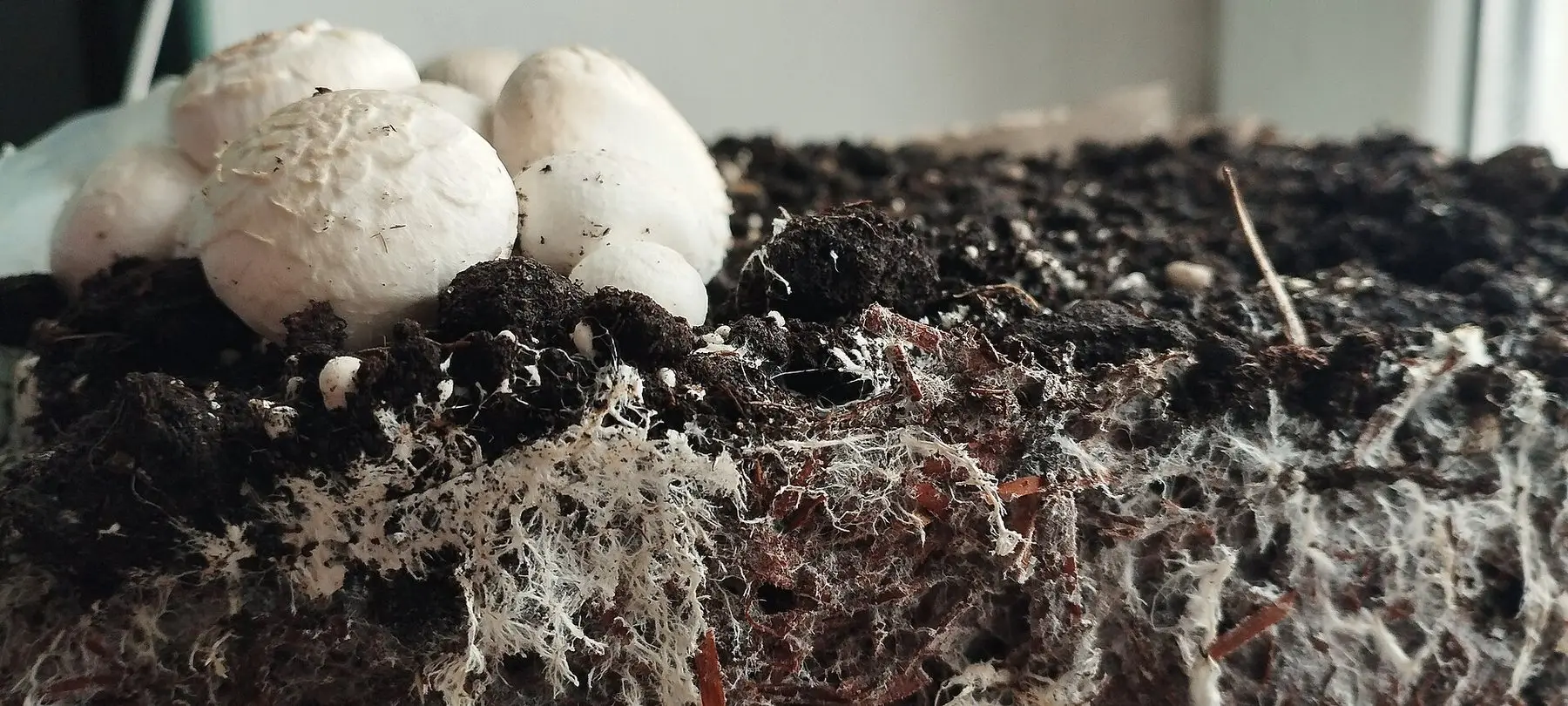
Commercial mushroom growers make a substrate — usually straw, horse or poultry manure, gypsum, and a casing layer of chalk or peat — pasteurise it, grow a crop of mushrooms in it, and then remove it.
That removed material is spent mushroom compost, also sold as spent mushroom substrate or SMS. It contains no mushrooms, and it will not grow any.
Because it has already been through a hot composting process, it is stable and can be used immediately — unlike fresh manure, which needs rotting down first.
| Property | Typical value | Consequence |
|---|---|---|
| pH | 6.6–8.0 | Raises soil pH; wrong for acid-lovers |
| Soluble salts (fresh) | High | Scorches seedlings and shallow roots |
| Soluble salts (aged 6–12 mo) | Low | Largely solved by weathering |
| Nitrogen | Low — roughly 1–2% | Not a fertiliser; a conditioner |
| Calcium | High | From the gypsum and chalk |
| Organic matter | High | The reason to use it |
Where it is genuinely good
On clay soil. This is its best use. The bulk organic matter opens up clay structure and improves drainage and workability — the mechanism described in loam soil, where structure rather than texture is the thing you can change.
On sandy soil, for the opposite reason: it adds water- and nutrient-holding capacity.
For alkaline-tolerant vegetables. Brassicas in particular actively benefit, because higher pH suppresses clubroot. Beans, peas, onions, garlic and leeks all do well.
As a mulch, one to two inches, on established beds and around fruit trees.
On lawns, as a thin topdressing after aerating.
Where it does damage
Never around acid-loving plants
Blueberries, azaleas, rhododendrons, camellias, heathers, pieris and cranberries all need acidic soil — blueberries want pH 4.5 to 5.5. Mushroom compost pushes soil the other way, and at higher pH these plants cannot take up iron. The symptom is yellow leaves with green veins, followed by a slow decline over several seasons. This is the single most consequential misuse of the material.
Potatoes. Alkaline soil encourages common scab — the corky brown patches on the skin. Potatoes want slightly acidic ground, so this is one bed to keep it out of.
Seedlings and young transplants. Fresh material’s salt content draws water out of fine roots. Do not use it in seed compost, in modules, or dug in immediately before sowing.
Containers, as the main medium. Too alkaline, too salty, and the wrong structure. See potting soil for what a container actually needs.
Already alkaline soil. If your soil is chalky and pH 7.5 already, adding more alkalinity does not help. Use ordinary compost or leaf mould instead.
Ageing it fixes the salt
The salt problem is entirely solvable by leaving the material outside for six to twelve months. Rain leaches soluble salts out, and aged mushroom compost is far gentler.
If you are buying in bulk, buy in autumn, stack it, and use it the following year. If you must use it fresh, keep it away from seedlings and water the bed thoroughly after application.
The pH is not solved by ageing. That is a permanent property of the material.
Against the alternatives
| Material | pH | Nitrogen | Best for |
|---|---|---|---|
| Mushroom compost | 6.6–8.0 | Low | Clay improvement, brassicas, bulk value |
| Well-rotted manure | ~7 | Medium–high | Heavy feeders, general enrichment |
| Garden compost | 6.5–7.5 | Variable | Everything; free |
| Leaf mould | Slightly acidic | Very low | Structure, mulch, seed compost |
| Ericaceous compost | 4.5–5.5 | Low | Acid-loving plants only |
| Worm castings | ~7 | Medium | Concentrated; small quantities |
Mushroom compost’s advantage is price per cubic yard. For improving a large area of clay, nothing else comes close on cost, and the alkalinity is irrelevant or helpful for most vegetables.
Its disadvantage is that it is not a fertiliser. Nitrogen is low, so you still need to feed — see organic fertilizers.
Two things worth checking before you buy
Pesticide residues. Commercial mushroom growing sometimes uses fungicides and insecticides in the substrate. Most break down during cropping and composting, but if you garden organically, ask the supplier what was used and whether the material is certified.
What is actually in it. “Mushroom compost” is not a regulated term, and quality varies between suppliers — some is well-aged and consistent, some is fresh and very salty. Buy from somewhere that can tell you the age and the pH, particularly for a bulk load.
How much to use
One to three inches, worked into a bed or spread as mulch, once a year.
It should be a component of your soil, not the substance of it — no more than about a quarter to a third of a bed’s volume. Used neat, the pH and salt work against you, and the low nitrogen shows.
Common questions
What is mushroom compost made of?
Is mushroom compost good for vegetables?
Why can mushroom compost harm plants?
What plants should not get mushroom compost?
Is mushroom compost better than manure?
How much mushroom compost should you use?
Backyard Weekly
Know what to plant, week by week
Free planting calendar. Join the weekly email for seasonal jobs, fixes for what is going wrong, and gear worth buying.
Set MONETIZATION.email.endpoint in src/config/site.ts to enable this form.
By subscribing you agree to our privacy policy. Grow In Backyard will never sell your address.
Keep reading
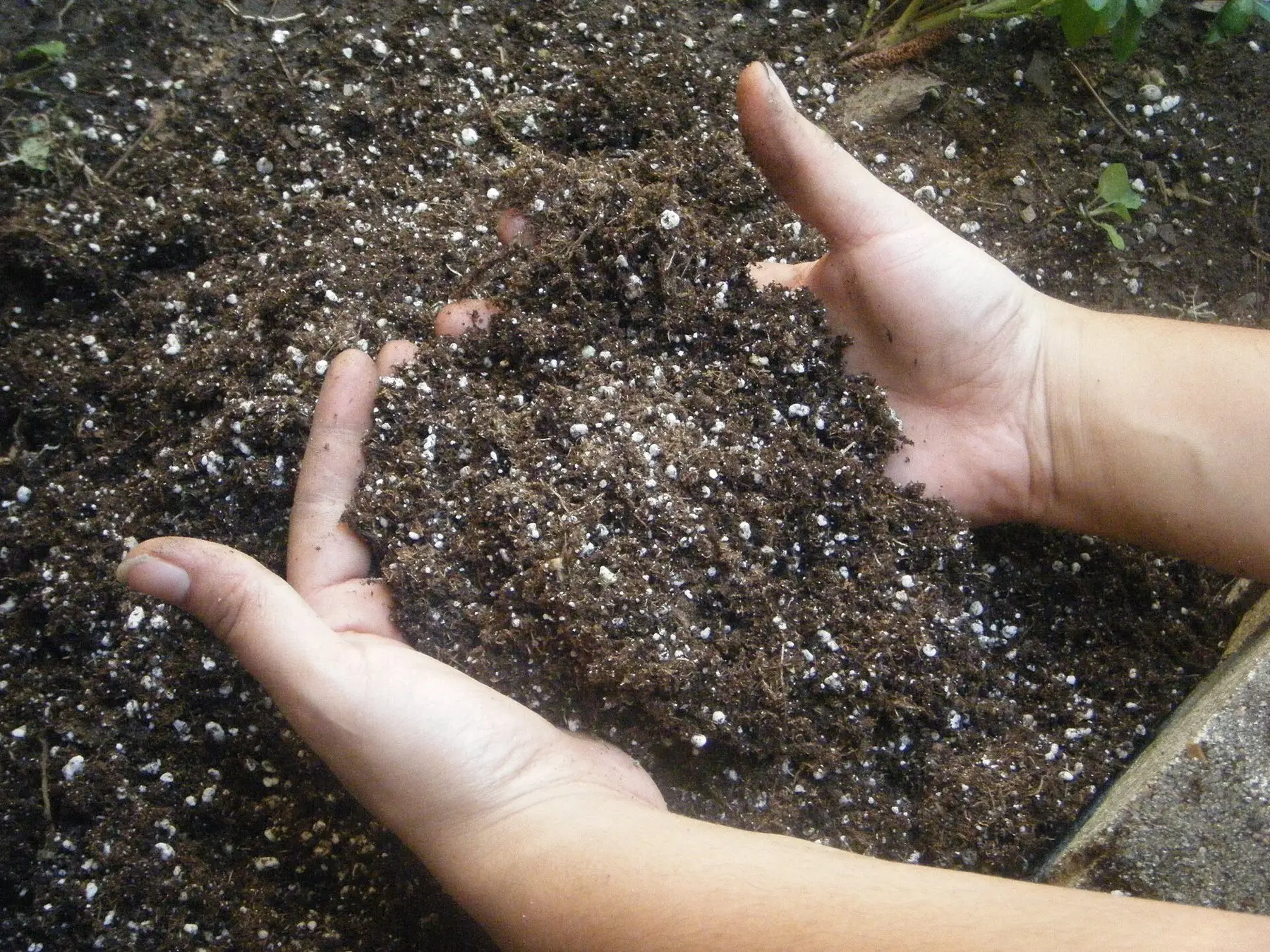
Loam Soil: What It Is, and How to Get It From Clay or Sand
Loam is a particle-size ratio, not a product you buy. How to test what you have with a jar of water, and the only method that genuinely changes it.
Organic Fertilizers: What Each One Is Actually For
Blood meal, bone meal, kelp, fish emulsion and compost do different jobs at different speeds. The NPK numbers, and which to reach for when.
How to Grow Blueberries: It Is All About Soil pH
Blueberries need pH 4.5 to 5.5 and will slowly starve above it. Getting the soil right, why you want two varieties, and the pruning that keeps fruit coming.
How to Make a Compost Bin: Three Designs That Work
A heap needs about a cubic yard to heat up, air to keep going, and a lid in wet climates. Pallet, wire and bin designs, plus what actually goes in.