How to Grow Blueberries: It Is All About Soil pH
Blueberries need pH 4.5 to 5.5 and will slowly starve above it. Getting the soil right, why you want two varieties, and the pruning that keeps fruit coming.
.jpg)
On this page
Blueberries are not difficult. They are specific, in one way that no other common garden fruit is: they need soil at pH 4.5 to 5.5, which is far more acidic than most gardens have.
Get that right and they are close to trouble-free for twenty years. Get it wrong and the plant does not die quickly — it yellows, sulks, and slowly starves over three or four seasons.
Why pH decides everything
Blueberries are in the Ericaceae — the same family as rhododendrons, azaleas and heathers — and they evolved on acidic, peaty, low-nutrient ground.
At pH above roughly 5.5, iron in the soil becomes chemically unavailable to them, even though it is physically present. The plant cannot make chlorophyll, and you see it as yellow leaves with green veins, worst on the newest growth.
That is not a disease and it is not a feeding problem in the ordinary sense. Adding more fertiliser makes no difference; the pH has to come down.
Do not try to acidify naturally alkaline ground
Sulfur will lower the pH of a bed, but surrounding soil and groundwater constantly push it back up, so you are re-treating forever and the plant lives on a slow oscillation. If a test says your soil is neutral or alkaline, put the blueberries in containers and be done with it — they crop just as well. Lowering soil pH covers what is realistic.
Choosing varieties
| Type | Winter chill | Height | Notes |
|---|---|---|---|
| Northern highbush | Cold winters | 4–7 ft | The standard garden blueberry |
| Southern highbush | Mild winters | 4–6 ft | Low chill requirement |
| Rabbiteye | Hot, mild-winter regions | 6–10 ft | Vigorous, needs a pollen partner |
| Half-high | Very cold | 2–4 ft | Highbush × lowbush cross |
| Lowbush | Very cold, exposed | 1–2 ft | Small intense berries; spreads |
Buy two varieties whose flowering overlaps. Most modern blueberries are partly self-fertile, so a single plant does crop — but cross-pollination gives visibly larger berries, more of them, and earlier ripening. Rabbiteye types in particular need a partner.
Spreading early, mid and late varieties across two or three plants also stretches the harvest from a glut into several weeks.
Planting
In the ground, if your pH allows: dig in a lot of composted pine bark, leaf mould, or ericaceous compost. Blueberry roots are fine and hair-like, sit in the top few inches, and have no root hairs — they need an open, damp, organic medium and they die in both drought and waterlogging.
Space highbush 4 to 5 feet apart, rabbiteye 6 feet.
In a pot, otherwise: a 15 to 20 inch container filled with ericaceous compost. This is the right answer for most gardens, not a compromise — it gives total control of pH, it makes netting easy, and you can move the pot.
Plant at the same depth it was in the nursery pot, and mulch immediately.
Mulch, water, feed
Mulch 2 to 3 inches deep with pine bark, pine needles or composted sawdust. It keeps the shallow roots cool and damp and helps hold the pH down. Keep it slightly clear of the stems.
Water consistently, especially from flowering through fruit development. Use rainwater if you can — hard tap water is alkaline and will gradually raise the pH of a container over a season or two, which is the most common slow failure of potted blueberries.
Feed in spring with an ericaceous fertiliser. These supply nitrogen as ammonium rather than nitrate, which is what blueberries can actually use, and usually include chelated iron.
Never apply lime, wood ash, mushroom compost, or general-purpose fertiliser. All of them raise pH.
Pruning
Do nothing for the first two years except remove damaged wood, and pinch off the flowers in year one so the plant builds roots instead of fruit.
Blueberries fruit best on two- to four-year-old wood. Older stems produce less and smaller berries. So from the third winter, while dormant:
- Remove anything dead, damaged, crossing, or lying on the ground.
- Cut about a quarter of the oldest stems — the thickest, darkest, most branched ones — right down to the base.
- Thin any dense congestion in the centre for airflow.
That rotation means no stem is ever more than about four years old, and the bush stays productive indefinitely. It is the same principle as pruning currants, and it is far more effective than trimming the outside into a shape.
Birds
Birds will take the entire crop, and they will take it the day before you would have. Netting is not optional if you want fruit.
Use netting with a mesh small enough that birds cannot get through, held on a frame rather than draped on the bush — draped netting traps birds and they can be injured in it. Container plants are much easier to cover than a row.
Step by step
- Time
- P1095D
- Cost
- $40
- You need
- Two blueberry varieties that flower at the same time, Ericaceous compost, or sulfur to acidify a bed, Pine bark or pine needle mulch, Ericaceous fertiliser
- Tools
- Soil pH test kit, Spade, Secateurs, Netting
Test the soil pH before buying anything
Blueberries need pH 4.5 to 5.5. Above about 5.5 they cannot take up iron and the leaves yellow between the veins while the plant slowly declines. A cheap test kit tells you in minutes whether you are planting in the ground or in a container, and that is the single most important decision here.
Choose two varieties that overlap in flowering
Most blueberries are partly self-fertile but crop far better with a second variety flowering at the same time — bigger berries, more of them, and earlier ripening. Match the type to your climate: northern highbush for cold winters, southern highbush or rabbiteye for mild ones, lowbush for very cold and exposed sites.
Plant in acidic, free-draining, high-organic soil
Dig in plenty of composted pine bark, leaf mould or ericaceous compost. Blueberries are shallow-rooted with fine, hair-like roots that dislike both drying out and waterlogging, so an open, moisture-retentive medium matters as much as the pH.
Or plant in a large pot of ericaceous compost
If your soil is neutral or alkaline, do not fight it. A 15 to 20 inch pot of ericaceous compost gives complete control, and blueberries crop well in containers. Trying to acidify open ground that is naturally alkaline is a permanent, losing battle against the surrounding soil.
Mulch with pine bark or needles, and never lime
A 2 to 3 inch acidic mulch keeps the shallow roots cool and damp and helps hold the pH down. Keep lime, wood ash, mushroom compost and hard tap water away from blueberries — all of them push pH upward.
Water with rainwater wherever possible
Hard tap water is alkaline and raises soil pH over time, which is a slow way to lose a potted blueberry. Collect rainwater if you can. Keep the soil consistently moist, especially from flowering through to harvest, but never waterlogged.
Feed with an ericaceous fertiliser in spring
Use a fertiliser formulated for acid-loving plants, which supplies nitrogen as ammonium rather than nitrate and includes chelated iron. Ordinary general-purpose feed can raise pH and does not supply iron in a form the plant can use at these levels.
Prune from year three, removing the oldest wood
Blueberries fruit best on wood that is two to four years old. From the third winter, cut out a quarter of the oldest, thickest, darkest stems at the base each year, plus anything dead, crossing or lying on the ground. This keeps a constant supply of productive young wood.
Common questions
What soil pH do blueberries need?
Do you need two blueberry bushes?
Why are my blueberry leaves turning yellow?
Can you grow blueberries in pots?
When and how do you prune blueberries?
How long until a blueberry bush produces fruit?
Backyard Weekly
Know what to plant, week by week
Free planting calendar. Join the weekly email for seasonal jobs, fixes for what is going wrong, and gear worth buying.
Set MONETIZATION.email.endpoint in src/config/site.ts to enable this form.
By subscribing you agree to our privacy policy. Grow In Backyard will never sell your address.
Keep reading
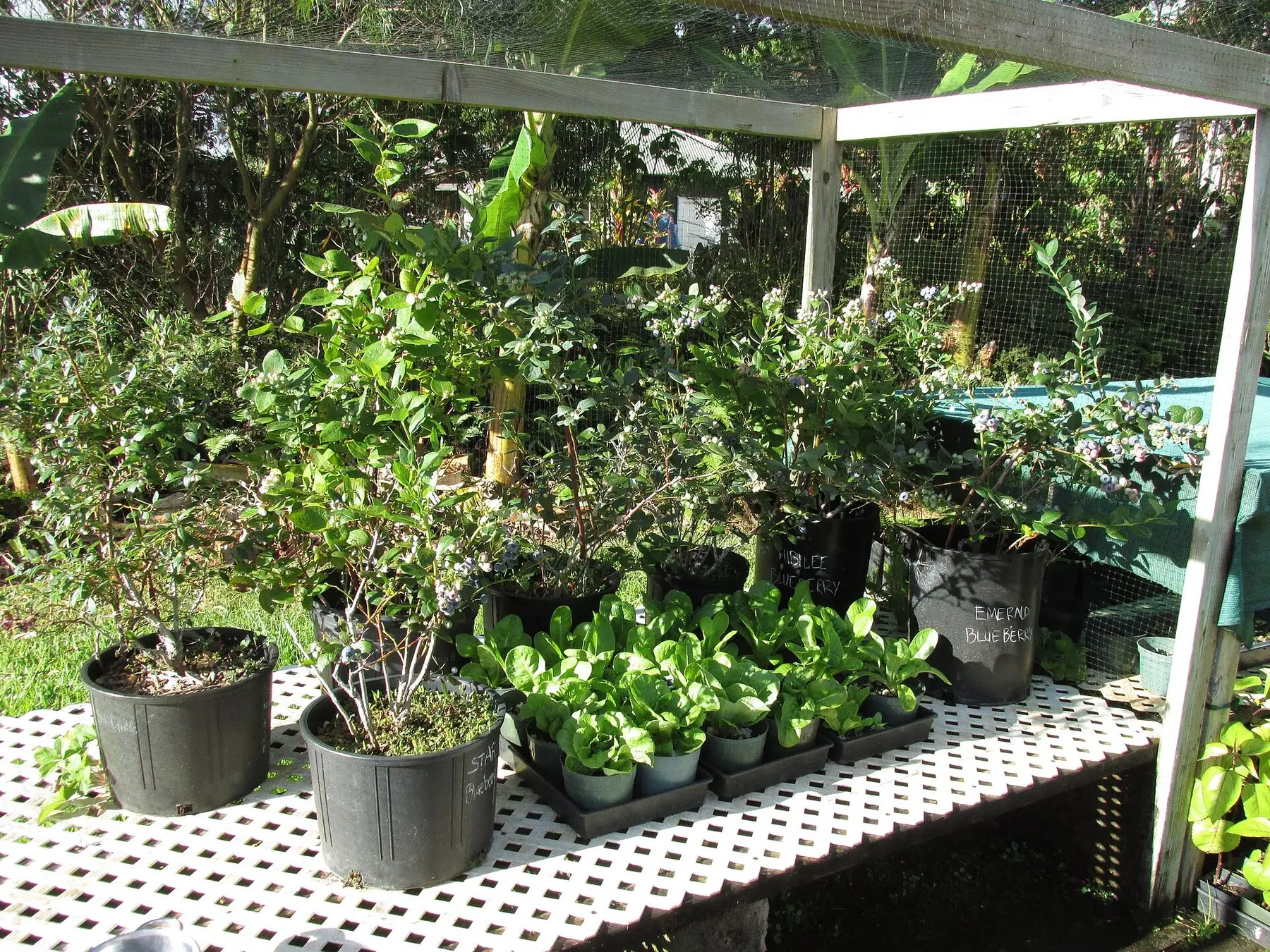
How to Lower Soil pH: What Works and How Long It Takes
Elemental sulfur is the reliable way to acidify soil, and it takes months. What to use, how much, and why coffee grounds and vinegar do not work.
How to Grow Strawberries (And Get Fruit the First Year)
Strawberries are easy to grow and easy to get wrong. Which of the three types to plant, why you pinch the first flowers, and how to keep a bed producing.
Potting Soil: What Is Actually in the Bag, and Which to Buy
Potting mix contains no soil at all, and that is the point. What each ingredient does, why garden soil fails in a container, and how to read a bag honestly.
How to Grow Blackberries: Planting, Pruning and Picking
Thornless erect varieties on a two-wire trellis, pruned on the floricane-primocane cycle. Planting, feeding, and the one pruning rule that decides your crop.