How to Grow Strawberries (And Get Fruit the First Year)
Strawberries are easy to grow and easy to get wrong. Which of the three types to plant, why you pinch the first flowers, and how to keep a bed producing.
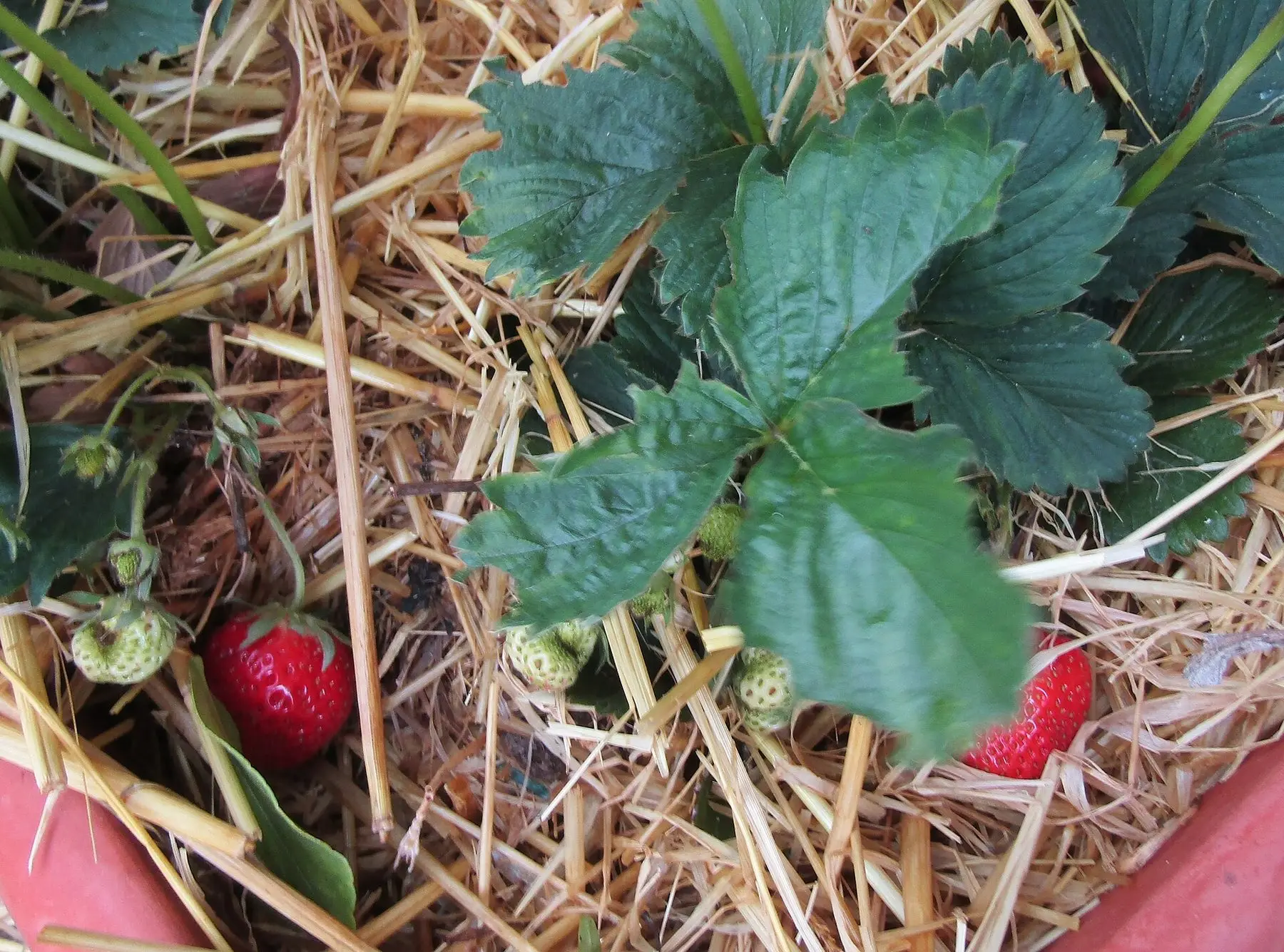
,_Trimingham.JPG)
On this page
Strawberries are one of the few crops that give you fruit in a single season from a plant that costs about a dollar. They are also one of the easiest to quietly ruin — by planting the crown at the wrong height, or by letting a first-year plant fruit itself into exhaustion.
Which type to plant
This is the only decision that really changes the outcome, and it should follow what you want to do with the fruit.
| Type | When it fruits | Yield | Runners | Best for |
|---|---|---|---|---|
| June-bearing | One heavy crop, 2–3 weeks in early summer | Highest | Many | Freezing, jam, a glut |
| Everbearing | Two or three smaller flushes, summer to fall | Medium | Few | Fresh eating |
| Day-neutral | Steadily from June to frost | Lowest per plant | Very few | Containers, small spaces |
If you want to fill a freezer, plant June-bearing. If you want a handful of berries most weeks through summer, plant day-neutral. Planting one when you wanted the other is the most common disappointment.
Getting the crown height right
This is the detail that decides whether the plant lives.
The crown is the thickened point where the roots meet the leaves. It must sit exactly level with the soil surface — not below it, not above it. Planted too deep, the crown rots within weeks; planted too high, the roots dry out and the plant never establishes.
Spread the roots out in the hole rather than bunching them, firm the soil, and water in.
Do not plant where tomatoes or potatoes grew
Strawberries share verticillium wilt with the nightshade family. Planting into ground that grew tomatoes, potatoes, peppers, or aubergines within the last three years is a reliable way to lose a bed to a soil disease you cannot see coming.
Why you pinch the first year’s flowers
It is counterintuitive, and it is the advice most often ignored.
A first-year June-bearing plant that is allowed to fruit puts its energy into a small crop of berries instead of into roots and crown. Remove every flower in that first season and the plant builds the structure to carry a much heavier crop the following June — commonly around double.
On day-neutral and everbearing types, pinch flowers only until late June, then let them fruit for the rest of the season.
Through the season
Water an inch a week, more as the fruit swells, always at soil level. Strawberries are shallow rooted and dry out fast, but wet leaves invite botrytis — the grey mould that turns a ripening berry to fuzz overnight.
Mulch with straw as soon as fruit sets, tucking it under the developing berries. It keeps fruit off wet soil, stops mud splash, and suppresses weeds.
Net the bed before the fruit colours, not after. Birds find ripening strawberries the day before you plan to pick them.
Runners are free plants
Each runner that roots is a new plant identical to the parent. Peg three or four per plant into small pots of compost sunk into the bed, and cut them free once rooted — that is your replacement bed, at no cost, ready to go into fresh ground.
Renovating and replacing
After the June crop finishes, renovate: shear the old leaves back to about 4 inches, thin crowded plants to roughly 6 inches apart, remove weeds, and top-dress with compost. The bed looks brutal for a fortnight and comes back stronger.
Yields fall off sharply after the third or fourth year as plants age and soil disease builds. Plan on starting a fresh bed on new ground every three years, using runners from your best plants — so the replacement costs nothing but the space.
Step by step
- Time
- P120D
- Cost
- $25
- You need
- Bare-root crowns or runners (10–25), Compost, Straw mulch
- Tools
- Trowel, Netting or mesh
Pick the right type for your goal
June-bearing gives one big crop in early summer and the most fruit overall — plant it if you want to freeze or make jam. Everbearing and day-neutral give smaller harvests spread from June to frost, which suits eating fresh.
Plant in early spring, or fall in mild zones
Set bare-root crowns as soon as the soil is workable, usually 4–6 weeks before your last frost. In zones 8 and warmer, plant in fall for a spring crop instead.
Get the crown height exactly right
The crown — where roots meet leaves — must sit level with the soil surface. Buried, it rots; exposed, it dries out. This single detail kills more new strawberry plants than anything else.
Space 12–18 inches apart in full sun
Allow 12–18 inches between plants and 3 feet between rows for June-bearers, which spread by runners. Strawberries need 6–8 hours of direct sun and soil that drains; they will not tolerate wet feet.
Pinch off the first year's flowers
On June-bearers, remove every flower in the first season. It feels wrong, but it forces the plant into root and crown growth and roughly doubles the second-year crop. On day-neutral types, pinch flowers only until the end of June, then let them fruit.
Mulch with straw once fruit sets
Tuck straw under the developing fruit to keep berries off the soil. It prevents rot and mud splash, suppresses weeds, and is where the name strawberry most likely comes from.
Water an inch a week at soil level
Strawberries are shallow-rooted and need consistent moisture, especially as fruit swells. Water the soil, not the leaves — wet foliage invites botrytis, the grey mould that turns ripening fruit to fuzz overnight.
Manage the runners
For the biggest berries, cut runners off so the plant feeds fruit rather than offspring. To fill a bed, peg three or four runners per plant into the soil and cut the rest.
Renovate after fruiting, and replace every 3–4 years
After the June crop, mow or shear old leaves to about 4 inches, thin plants to 6 inches apart, and top-dress with compost. Yields decline sharply after the third or fourth year — start a new bed from runners on fresh ground.
Common questions
How long do strawberries take to grow?
Should I really pinch off the first year's flowers?
How many strawberry plants do I need per person?
Can you grow strawberries in containers?
Why are my strawberries small and misshapen?
Backyard Weekly
Know what to plant, week by week
Free planting calendar. Join the weekly email for seasonal jobs, fixes for what is going wrong, and gear worth buying.
Set MONETIZATION.email.endpoint in src/config/site.ts to enable this form.
By subscribing you agree to our privacy policy. Grow In Backyard will never sell your address.
Keep reading
How to Grow Garlic: Plant in Fall, Harvest in July
Garlic is the easiest crop in the garden if you plant it at the right time. Here is the full cycle — choosing bulbs, planting depth, mulch, scapes, and harvest.
Companion Plants for Tomatoes (And 5 to Keep Away)
Basil, marigolds, and borage earn their place next to tomatoes. Fennel, potatoes, and brassicas do not. What to plant together, and why each pairing works.
How to Grow Grapes: Prune Hard, and Prune in Winter
Grapes fruit on shoots from last year's wood, so timid pruning gives a huge vine and no crop. The two training systems, and why summer pruning is separate.
How to Grow Blackberries: Planting, Pruning and Picking
Thornless erect varieties on a two-wire trellis, pruned on the floricane-primocane cycle. Planting, feeding, and the one pruning rule that decides your crop.