
Do Weeds Die in the Winter? Annuals Yes, the Rest No
Summer annuals die at the first frost, but winter annuals and perennials carry straight through. Which is which, and why autumn is the best time to act.
 By
On this page
Some do, most do not, and the ones that die have already won — they set seed before the frost arrived.
The three groups
| Summer annuals | Winter annuals | Perennials | |
|---|---|---|---|
| Examples | Crabgrass, purslane, lambsquarters, spurge | Chickweed, henbit, deadnettle, annual bluegrass | Dandelion, bindweed, couch grass, ground elder, dock |
| Winter | Killed by frost | Actively growing | Top dies, roots live |
| Returns from | Seed bank | Seed, germinating in autumn | The same roots |
| Best time to act | Pre-emergent in spring | Pre-emergent in autumn | Systemic in autumn |
Winter annuals are the ones people notice, because a lawn goes dormant and brown while the chickweed stays green. That is not new growth appearing — it germinated in September and has been there all along.
Why autumn beats spring for perennials
This is the single most useful piece of timing in weed control.
From late summer, a perennial weed moves sugars downward into its roots to store for winter. A systemic herbicide applied then is carried down with that flow and reaches the whole root system.
The same product in spring is working against upward sap flow. It burns the visible leaves, the plant looks dead, and it regrows from an untouched root.
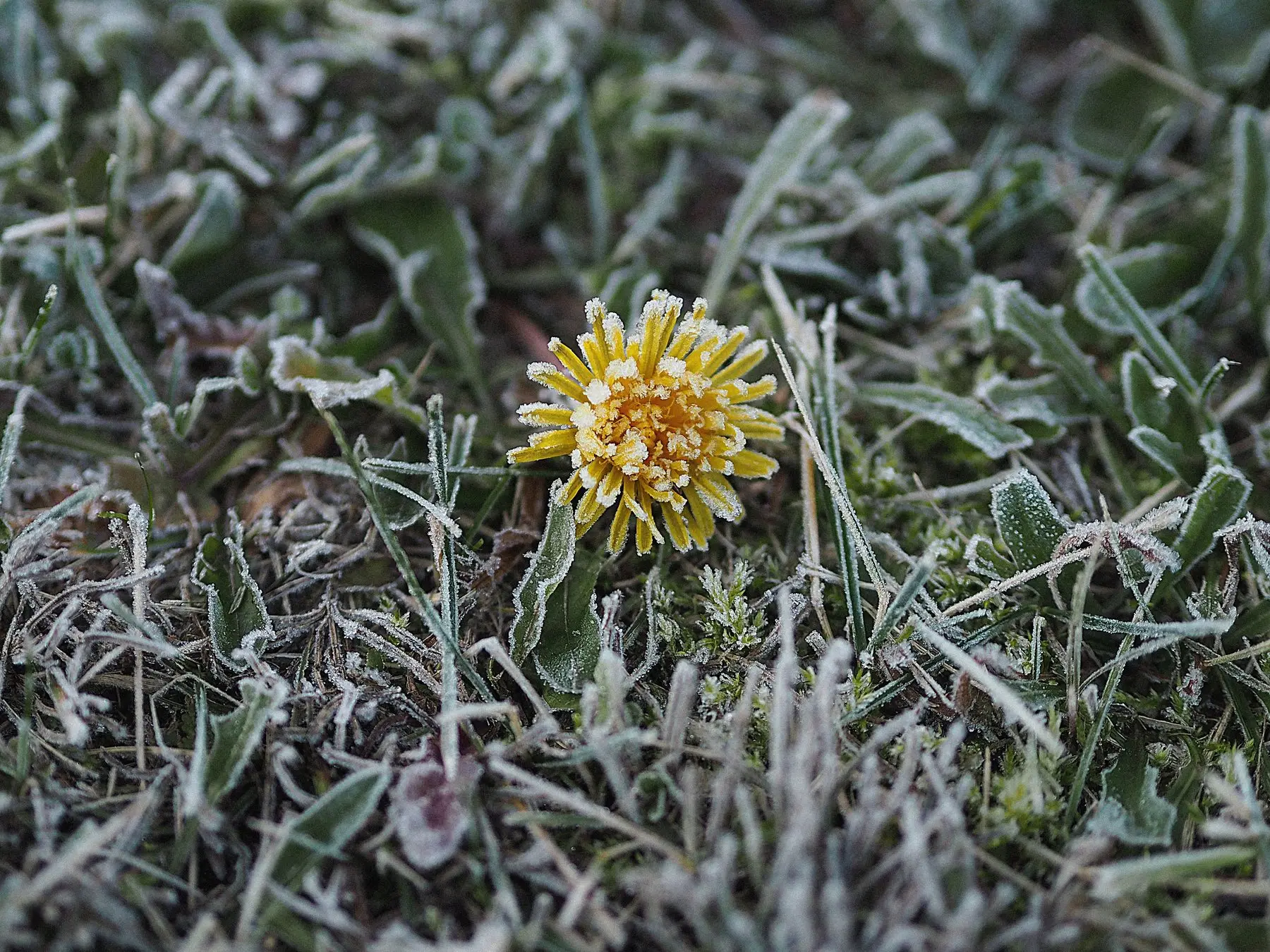
A frost-blackened dandelion is not a dead dandelion
Top growth collapsing is the most misleading thing winter does. The taproot is intact and will produce a full rosette in March.
The seed bank
For annuals, the enemy is not the plant — it is the seed already in the soil, viable for years, and sitting in the top inch waiting for light.
Which gives three rules:
- Never let them seed. One season’s seeding genuinely is several years’ weeding
- Stop digging beds over repeatedly. Every turn brings a fresh layer of viable seed to the surface
- Mulch bare ground. Two to three inches denies light to the whole top layer
What to do over winter
- Treat or dig out perennials in autumn, while translocation is still running
- Pull winter annuals in mild spells, when soft ground lets them come up whole
- Mulch anything bare before spring
- Leave the soil alone where you can
Almost none of this is work done in January. It is work done in October that makes April easy.
Common questions
Do weeds die in the winter?
Does frost kill weeds?
Do weeds grow in winter?
When is the best time to treat lawn weeds?
Why do the same weeds come back every year?
What should I actually do over winter?
Backyard Weekly
Know what to plant, week by week
Join the weekly email for seasonal jobs, fixes for what is going wrong, and gear worth buying.
Not ready to subscribe? The planting calendar is free and needs no email.
By subscribing you agree to our privacy policy. Grow In Backyard will never sell your address.
Keep reading
Does Vinegar Kill Weeds — 4 Checks on What It Misses
Does vinegar kill weeds down to the root, or only the leaves? Only the leaves, and 4 checks cover strength, gear and perennials. See where it earns use.
Can You Compost Weeds? Yes, With Two Real Exceptions
Most weeds compost fine. Seed heads and perennial roots are the two that survive a cool heap — how to handle them without losing the material.
How to Get Rid of Goat Head Weeds (Puncturevine)
Goat heads set seed within weeks and the burrs stay viable for years. Pull before it flowers, sweep up every burr, and never rotary-mow a mature plant.
Does Mowing the Lawn Kill Ticks? It Dries Them Out Instead
Mowing kills almost no ticks directly. What it does is remove the humid shade they need, which is a slower but far more effective control.