
How to Get Rid of Goat Head Weeds (Puncturevine)
Goat heads set seed within weeks and the burrs stay viable for years. Pull before it flowers, sweep up every burr, and never rotary-mow a mature plant.
 By

On this page
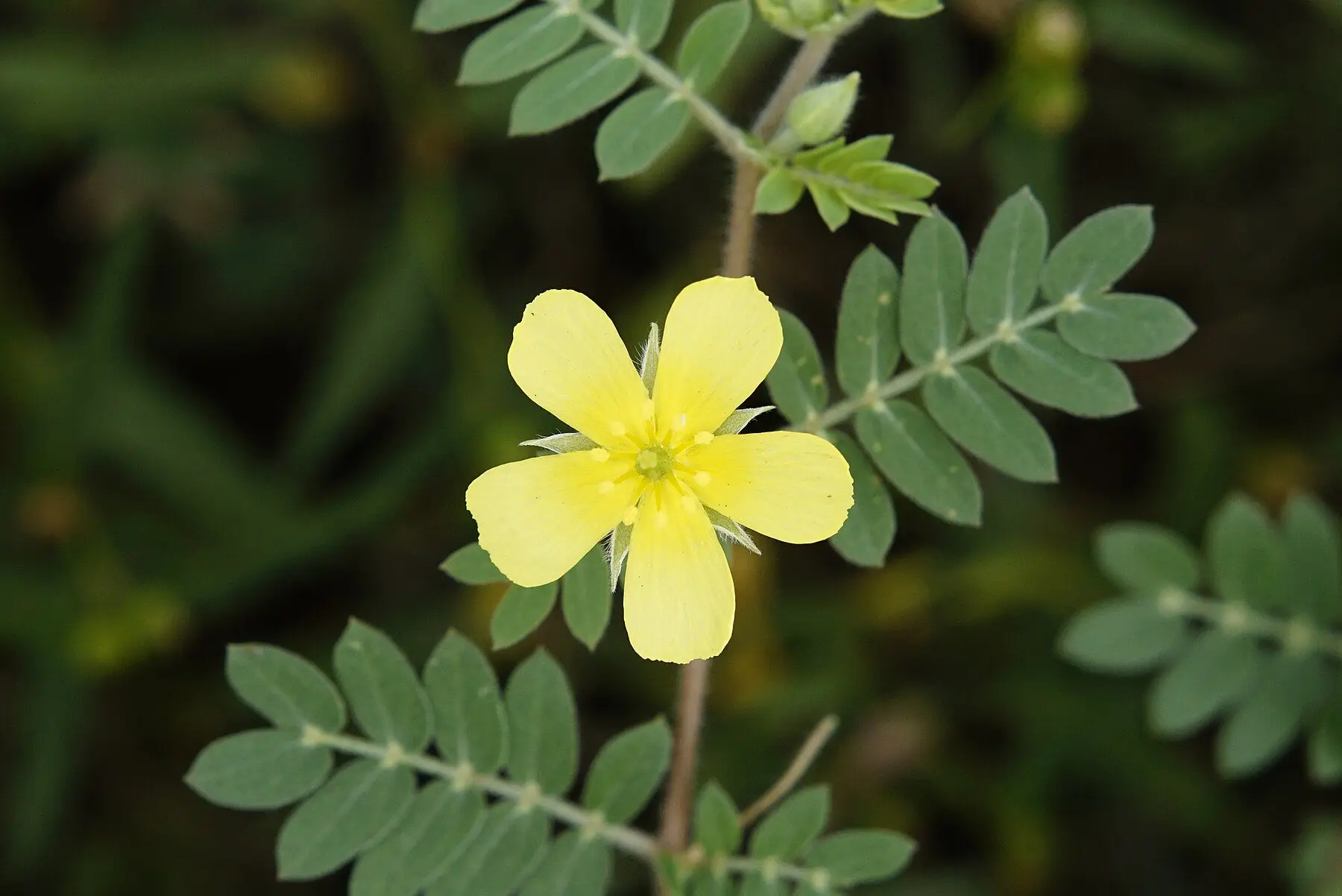
Goat head — puncturevine, Tribulus terrestris — is a weed with a specific weakness and a specific cruelty. The weakness is that it is trivially easy to pull. The cruelty is that the burrs stay viable in soil for four to five years, so one missed season restarts the clock.
Identifying it
- Growth habit: a flat mat radiating from a central taproot, hugging the ground, up to several feet across
- Leaves: small, opposite, divided into 4 to 8 pairs of leaflets, slightly hairy
- Flowers: small, yellow, five petals, easy to miss
- The burr: a hard seed pod that splits into segments, each with two sharp upward-pointing spines — sharp enough to go through a thin shoe sole and to puncture a bicycle tyre
- Where: bare compacted ground, driveway and path edges, gravel, roadsides, poor thin soil in full sun
The look-alike is puncturevine’s harmless relative Kallstroemia, which has similar foliage and yellow flowers but produces no spiny burr. If there are no spines, leave it alone.
Why timing beats effort
| Stage | Time from germination | What to do |
|---|---|---|
| Seedling, small mat | Days | Easiest pull of all. Do it now |
| Flowering, small yellow flowers | ~2 weeks | Still safe — no viable seed yet |
| Green burrs forming | ~3 weeks | Pull carefully; bag everything |
| Hard brown burrs | 3–4 weeks+ | Damage done; collect burrs meticulously |
| Burrs in soil | Up to 4–5 years | Pre-emergent and patience |
A plant caught at two weeks costs you nothing. The same plant at four weeks has already cost you five years. That is the whole strategy in one line.
Removal, properly
Hand-pull or hoe while the soil is damp, cutting below the crown — it regrows from any crown left behind. Gloves and closed shoes, always.
Collect the burrs. This is the part that decides whether you win:
- Drag a carpet offcut or a purpose-made burr drag over gravel and bare ground; the spines catch in the pile and lift out
- Sweep hard surfaces with a stiff yard broom
- Check the edges of paths and driveways, the gravel under gates, and wherever vehicles park — burrs concentrate where tyres and feet stop
Do not mow it, and do not compost it
A rotary mower flings burrs many feet in every direction and embeds them in the tyres, spreading an infestation across a property in one pass. And a home compost heap does not get hot enough for long enough to kill the seed, so composting pulled plants spreads them to every bed you later mulch. Bag it and bin it.
Never leave pulled plants lying. A plant with immature burrs continues ripening them after it has been uprooted.
Chemical options, honestly
| Method | Effect |
|---|---|
| Hand pulling before flowering | Best — removes plant and seed together |
| Pre-emergent in early spring | Very effective on the next germination flush |
| Broadleaf post-emergent | Kills growing plants; does nothing to burrs on the ground |
| Boiling water | Burns top growth, leaves the taproot and the burrs |
| Vinegar | Same — a spot treatment at best |
| Flame weeding | Works on seedlings; a fire risk on dry ground where this weed grows |
| Salt | Do not. It sterilises the soil long after the weed is gone |
Nothing chemical addresses burrs already on the ground, which is why the sweeping matters more than the spraying.
Closing the ground
Puncturevine is a coloniser of bare, compacted, poor soil in full sun. It competes badly with anything established, which is the long-term answer:
- Mulch bare areas thickly — 3 to 4 inches
- Seed dense groundcover or turf on any open soil you can plant
- Fix the compaction that created the gap in the first place
- Gravel over landscape fabric where planting is not an option, and keep the gravel swept
- Pay attention to edges — driveway shoulders and path margins are where it always starts
Living with it while you win
- Closed shoes on any infested ground. Thin soles are not enough.
- Check dogs’ paws after walks — between the toes and in the pad creases. Remove spines with tweezers, and see a vet if one has broken off under the skin or the paw swells.
- Thorn-resistant tyres or sealant on bikes, which is standard practice in infested regions and is the reason for the name.
- Pull a spine straight out, not at an angle, or it snaps off under the skin. Wash the wound; these spines are dirty as well as sharp.
- Hose or brush vehicle tyres before leaving an infested area, which is how it gets to new properties.
The weevils
Two weevils — Microlarinus lareynii, which attacks the seed, and M. lypriformis, which attacks the stem — were introduced in the US specifically for this plant and are established across much of the southwest. They suppress large infestations slowly and rarely clear one alone, so they are a landscape- scale help rather than a garden solution. Your extension office will know whether they are present locally.
Step by step
- Time
- P90D
- Cost
- $30
- You need
- Thick gloves and closed shoes, Heavy-duty carpet offcut or a burr drag, Pre-emergent herbicide, if you use one, Mulch or dense groundcover seed
- Tools
- Hoe with a sharp blade, Stiff yard broom and a dustpan
Pull or hoe before it flowers
Goat head goes from seedling to viable burr in as little as three weeks, so timing beats effort. Hoe or hand-pull while the plant is small and still flat, cutting below the crown — it has a taproot and it resprouts from any crown left behind. A young plant with small yellow flowers and no burrs yet is the one worth catching.
Collect every burr you find
The burrs are the entire problem, and each seed pod contains several seeds that stay viable in soil for four to five years or more. Drag a carpet offcut or a purpose-made burr drag over gravel and bare ground to lift them, sweep hard surfaces with a stiff broom, and check the edges of paths, driveways and the gravel under gates where they collect.
Bag the plants — do not compost them
Put pulled plants and swept burrs straight into a sealed bag and into the trash. A home compost heap does not get hot enough for long enough to kill the seed, and spreading that compost plants the problem across the whole garden. Never leave pulled plants lying, because a plant with immature burrs continues ripening them after it is uprooted.
Never rotary-mow a plant that has set burrs
A mower flings burrs many feet in every direction and embeds them in the tyres, which is the single fastest way to spread an infestation across a property. If a patch has already set seed, pull it by hand or cut it at the crown with a hoe and remove it whole.
Deny it the bare ground it needs
Puncturevine is a coloniser of bare, compacted, poor soil and it competes badly with anything established. Mulch bare areas thickly, seed dense groundcover or turf, and fix the compaction that created the gap — a driveway edge or a path shoulder left bare is exactly the habitat it wants.
Use a pre-emergent the following spring
Because the seed bank persists for years, expect to be dealing with it over several seasons. A pre-emergent applied in early spring before soil temperatures rise stops the next flush germinating, and spot-treating survivors with a post-emergent handles what gets through. Follow the label for your region and keep it off anything you are trying to establish.
Common questions
How do I get rid of goat head weeds permanently?
How fast do goat heads spread?
What kills goat head weeds?
How do I get goat head thorns out of my foot or a dog's paw?
Are goat heads dangerous to pets or bike tyres?
Is there a biological control for puncturevine?
Backyard Weekly
Know what to plant, week by week
Join the weekly email for seasonal jobs, fixes for what is going wrong, and gear worth buying.
Not ready to subscribe? The planting calendar is free and needs no email.
By subscribing you agree to our privacy policy. Grow In Backyard will never sell your address.
Keep reading
Does Vinegar Kill Weeds — 4 Checks on What It Misses
Does vinegar kill weeds down to the root, or only the leaves? Only the leaves, and 4 checks cover strength, gear and perennials. See where it earns use.
Will Vinegar Kill Grass — Yes, and 4 Reasons to Pause
Will vinegar kill grass and stop there? No — 4 cautions cover reach, roots and soil. See where it is safe to use.
What Do Rolly Pollies Eat? Mostly Dead Things, Occasionally Yours
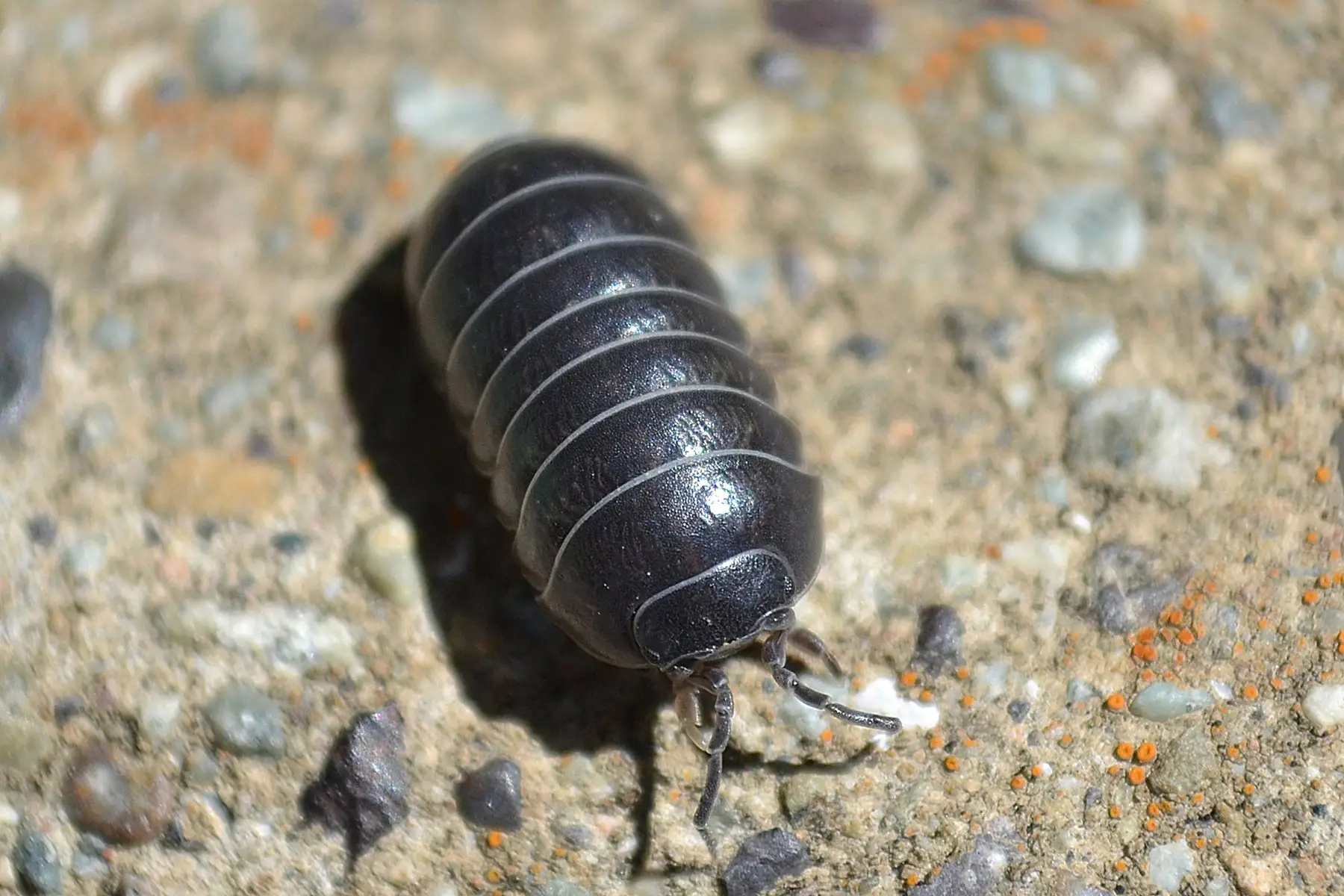
Pillbugs are decomposers that eat decaying plant matter — but they will graze seedlings and soft fruit when the population gets high and the ground stays damp.
How to Get Rid of Leaf Miners: Sprays Cannot Reach Them
How to get rid of leaf miners: the larva feeds inside the leaf, so contact sprays miss it. The 3 things that work, and why row cover beats everything else.