
How to Grow Chayote: Plant the Whole Fruit
Chayote is grown from a sprouting fruit, not seed. It needs 120–150 frost-free days, a structure that can hold 20 kg, and short days to set fruit.
 By
On this page
Two things make chayote unlike anything else in the vegetable garden: you plant the whole fruit, and it will not flower until the days shorten, however big it gets.
Why the fruit is the seed
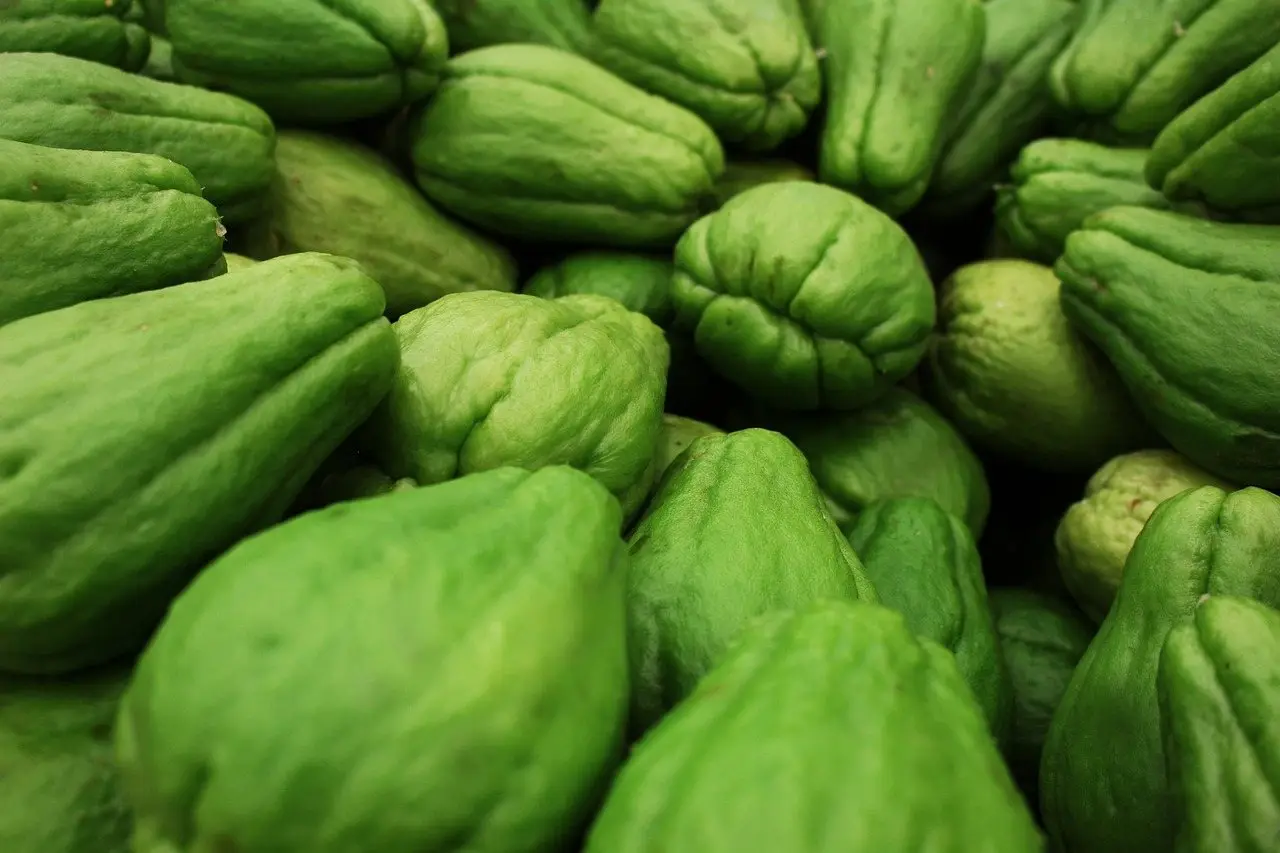
Chayote contains one large flat seed, fused to the surrounding flesh, and it does not separate out in any useful way. It is also viviparous — the seed frequently germinates while still inside the fruit, which is why supermarket chayotes sometimes arrive with a shoot already pushing out of the broad end.
So the planting unit is the entire fruit.
Refrigeration often kills it
A chayote that has been in cold storage for a long period frequently will not sprout, because chilling damages the embryo.
Look for one that is firm, unblemished, and ideally already showing a shoot. Fruit from a market or grocer that stores at room temperature is a better bet than one from a chilled display.
Sprouting and planting
- Leave the fruit somewhere warm and dark — a cupboard, a paper bag — until a shoot emerges. Several weeks is normal
- Do not bury it. Plant on its side at a slight angle, sprouting end up, with about a third of the fruit above the soil
- Warm soil, after all frost danger has passed
- Rich, free-draining ground with plenty of compost worked in
- Full sun
- Space plants 3 m apart if growing more than one. They need it
In short-season regions, start the sprouting fruit in a large pot indoors in late winter, so the vine is already substantial when it goes out. That head start is often the difference between a crop and a very large green sculpture.
The trellis problem
This is where chayote surprises people. A single plant commonly produces nine to twelve metres of growth in one season, and a mature fruiting vine is heavy.
| Structure | Verdict |
|---|---|
| Strong pergola or arbour | Ideal |
| Overhead horizontal frame | Traditional, and the best for picking |
| Chain-link fence | Good |
| Heavy post-and-wire frame | Good |
| Garden shed roof, strong shed | Works, if the shed is sound |
| Standard cucumber trellis | Collapses |
| Netting on canes | Collapses |
The overhead frame used in its native range is worth copying: the weight is carried in compression by posts rather than by a vertical panel, and the fruit hangs below where it is easy to see and pick.
The short-day problem, which is the real limit
Chayote is a short-day plant. It sets flowers in response to day length falling, not in response to reaching a certain size or age.
The consequence in a temperate garden:
- The vine grows enormously through June and July
- It sets nothing
- Flowering begins as days shorten, late August or September
- Fruit needs several more weeks to develop
- Frost arrives
That sequence is why chayote has a reputation for being easy to grow and hard to harvest. The countermeasures:
- Start indoors in late winter so the vine is mature when the trigger comes
- Choose the warmest, most sheltered site you have
- Grow in a large container that can be moved under cover in autumn
- Protect from early frost with fleece — often buying the final two or three weeks needed
- In zones 8 and warmer, the plant may survive the winter and crop far more reliably in its second year
Growing on
- Water consistently. A vine that size transpires heavily
- Mulch to hold moisture and keep the roots cool
- Feed moderately — too much nitrogen produces more vine and no fruit at all, which is the last thing this plant needs
- Pinch the growing tips once it has filled the structure, to encourage side shoots
- Expect nothing until autumn, and do not conclude it has failed in July
Harvest and storage
Pick fruit at tennis-ball size or a little larger, while the skin is still tender and before the seed hardens. A productive vine yields a great many — 50 or more from a single plant in a good year, which is another thing worth knowing before planting three.
Chayote stores well: several weeks at room temperature, longer somewhere cool, and far better than most summer squash.
And keep one back. A mature fruit saved from your own vine is next year’s plant, which makes this one of the few vegetables where the seed cost falls to zero after the first season.
Step by step
- Time
- P150D
- Cost
- 20
- You need
- A mature chayote fruit, ideally already sprouting, Well-rotted compost
- Tools
- A strong trellis, arbour or fence, A large container if growing in a pot
Choose a fruit that has not been chilled
Firm, unblemished, ideally already showing a shoot at the broad end. Long refrigeration often kills the embryo, so a room-temperature market fruit beats one from a chilled display.
Sprout it somewhere warm and dark
Leave the whole fruit in a cupboard or a paper bag until a shoot emerges, which can take several weeks. The seed is fused to the flesh, so the fruit is the planting unit.
Start it indoors in a large pot in short-season areas
Late winter, so the vine is already substantial when it goes outside. This head start is usually what decides whether a temperate garden gets fruit at all.
Plant on its side with a third exposed
Set the fruit at a slight angle with the sprouting end up and about a third above the soil. Burying it completely causes it to rot.
Build support before the vine needs it
A pergola, arbour, overhead frame, chain-link fence or heavy post-and-wire structure. A single plant makes nine to twelve metres of heavy growth and a cucumber trellis will collapse.
Water consistently and mulch
A vine this size transpires heavily. Mulch holds moisture and keeps the roots cool through the summer growth period.
Feed moderately, not generously
Excess nitrogen produces still more vine and no fruit, which is the opposite of what this plant needs help with.
Expect fruit only as days shorten
Chayote flowers in response to shortening day length rather than size, so nothing sets until late summer. Protect from early frost with fleece to buy the final weeks.
Pick at tennis-ball size and save one
Harvest while the skin is tender and the seed soft. Keep one mature fruit back as next year's plant, which makes the crop free from the second season on.
Common questions
How do you grow chayote from a fruit?
How long does chayote take to fruit?
How big a trellis does chayote need?
Can you grow chayote in a pot?
Is the whole chayote plant edible?
Backyard Weekly
Know what to plant, week by week
Join the weekly email for seasonal jobs, fixes for what is going wrong, and gear worth buying.
Not ready to subscribe? The planting calendar is free and needs no email.
By subscribing you agree to our privacy policy. Grow In Backyard will never sell your address.
Keep reading
How to Prune Cucumbers: Only Vining Types Need It
Vining cucumbers benefit from removing the bottom foot of growth and the side shoots. Bush types need nothing — pruning them costs you fruit.
Best Way to Store Squash: Cure It, Then Keep It Cool
Winter squash needs ten days of curing at 27°C, then 10–15°C and dry air. Butternut keeps six months that way; acorn squash should not be cured at all.
Vegetables to Plant in July: A Second Season
July sowings catch the autumn window that spring crops miss. Count back from your first frost, add the short-day factor, and sow accordingly.
How to Grow Collard Greens: Sowing to Harvest
Collards tolerate more heat and more cold than any other brassica, and frost genuinely sweetens them. Sow, space wide, and pick from the bottom up.