
Best Way to Store Squash: Cure It, Then Keep It Cool
Winter squash needs ten days of curing at 27°C, then 10–15°C and dry air. Butternut keeps six months that way; acorn squash should not be cured at all.
 By
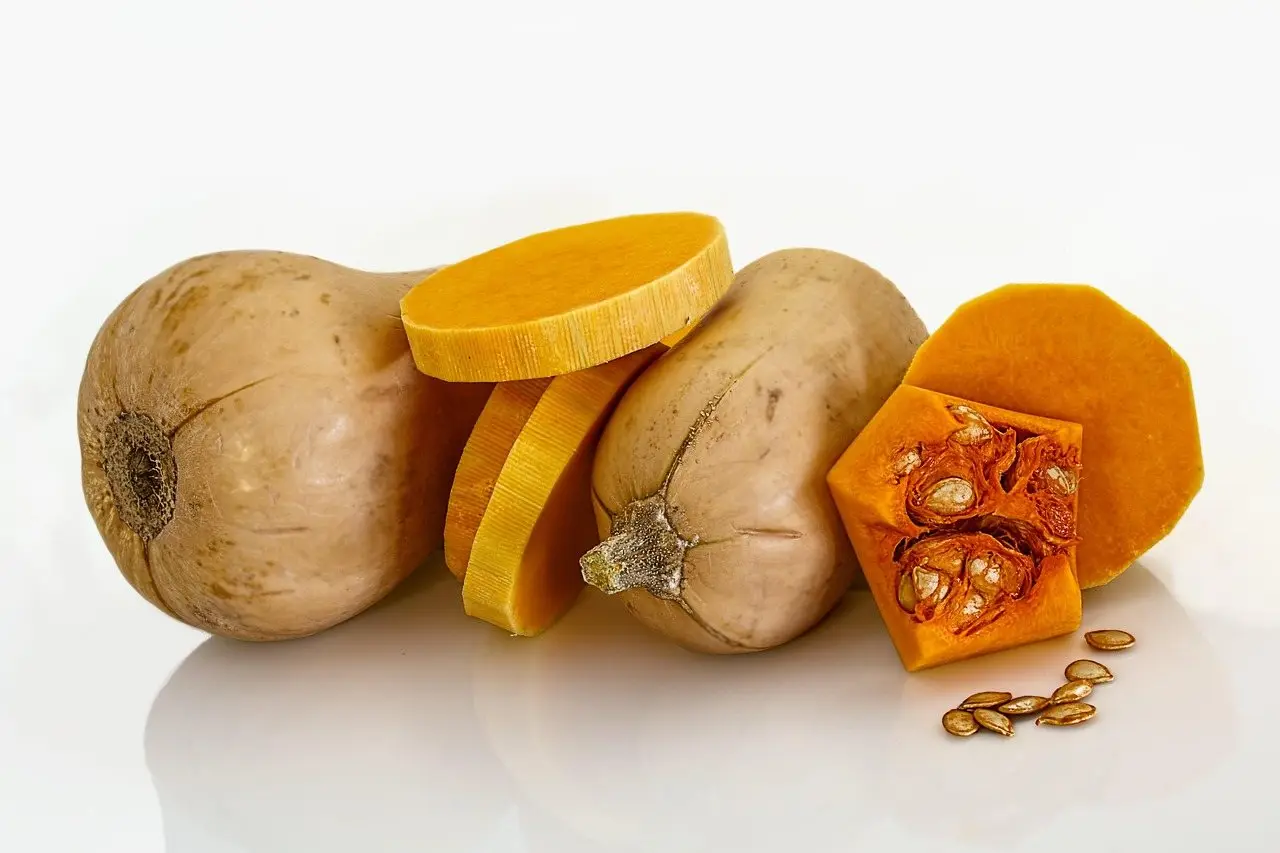
On this page
Cure it, then keep it cool and dry. Ten days of warmth turns a squash that lasts a month into one that lasts six — except for acorn squash, which you must not cure at all.
Harvest first, and harvest properly
Storage life is decided partly before the squash ever leaves the garden.
- Wait for a hard rind. A thumbnail pressed firmly should not mark it
- Check the stem — it should be dry, firm and corky, not green and fleshy
- Harvest before a hard frost. Light frost on the foliage is survivable; frost on the fruit is not, and frosted squash rots in storage
- Cut with secateurs, leaving 5–10 cm of stem
- Never carry by the stem
- Handle gently. Bruises invisible today become soft patches in November
The stem is a wound waiting to happen
A stem that pulls out, or snaps flush with the fruit, leaves an open hole in the exact spot where rot starts — and one rotting squash will spoil its neighbours.
Cut the stem. Carry the squash in two hands, like fruit.
Curing: what it does and who needs it
Curing is ten to fourteen days somewhere warm (25–30°C), dry and well ventilated. During that time the skin hardens, small scratches heal over, and some starch converts to sugar, which improves flavour as well as keeping quality.
A greenhouse, a sunny porch, a spare room or a shed in late summer all work. The requirements are warmth and moving air, not light.
| Squash | Cure? | Storage life |
|---|---|---|
| Butternut | Yes | 5–6 months |
| Hubbard | Yes | 5–6 months |
| Kabocha | Yes | 3–4 months |
| Spaghetti | Yes | 3–4 months |
| Pumpkin (culinary) | Yes | 3–4 months |
| Delicata | Yes, briefly | 6–8 weeks |
| Acorn | No | 1–2 months |
| Summer squash, courgette | No | 1–2 weeks, fridge |
Storage conditions
10 to 15°C, dry, dark, with air moving.
- Not the fridge. Below about 10°C most winter squash suffers chilling injury — pitting, then rapid rot
- Not a damp cellar. Humidity encourages mould at the stem
- Not the garage in a cold region, unless it stays reliably above 10°C
- Good options: a spare bedroom, a cool cupboard, an unheated but frost-free room, a shelf in a dry outbuilding
Arrangement matters more than people expect:
- Single layer, not stacked
- Not touching — a rot spreads by contact
- On slatted shelving or cardboard, never bare concrete, which is cold and damp
- Off the floor, where temperature is lowest and air movement least
- Check every two weeks and remove anything soft immediately
Eat them in the right order
This is the practical skill that turns a big harvest into food rather than compost:
First: acorn, delicata, summer squash Middle: spaghetti, kabocha, pumpkin Last: butternut, hubbard
Eating the long-keepers first and leaving the short-keepers to spoil is the common mistake, and it is entirely avoidable by labelling or by shelf position.
When something goes wrong
- Soft patch → use it immediately, cutting well around the area, or compost it
- Mould at the stem → usually a damaged or short stem, or humidity too high
- Pitting on the skin → chilling injury. It was stored too cold
- Shrivelling → air too dry, or it was never cured
- A sweet fermented smell → it has gone. Remove it before it reaches the others
And if you have too many
Cooked squash purée freezes extremely well and takes up a fraction of the space. Roasting a glut and freezing it in portions is a better use of a surplus than watching the short-keeping varieties go over in November.
Common questions
How do you store winter squash so it lasts?
Why should acorn squash not be cured?
How long does winter squash keep?
Can you store squash in the fridge or a cellar?
Does the stem matter when storing squash?
Backyard Weekly
Know what to plant, week by week
Join the weekly email for seasonal jobs, fixes for what is going wrong, and gear worth buying.
Not ready to subscribe? The planting calendar is free and needs no email.
By subscribing you agree to our privacy policy. Grow In Backyard will never sell your address.
Keep reading
When to Harvest Okra: The Three-Day Window That Decides It
Pick pods at 2–4 inches, every day or two. Past about four days they turn woody, and leaving one on the plant slows everything that follows.
How to Dry Garlic: Curing It So It Keeps Until Spring
Curing takes two to four weeks in shade with moving air. Get it right and hardneck keeps six months, softneck ten. Get it wrong and it rots by October.
When to Pick Tomatillos: The Husk Tells You, Not the Colour
Pick when the fruit fills the husk and the husk starts to split. Waiting for them to turn yellow means waiting past their best.
How to Harvest Amaranth: Grain and Leaves From One Plant
Amaranth gives leaves all season and grain at the end. Harvest seed when it shakes loose, dry it fully, and never let the heads get rained on standing.