
How to Harvest Amaranth: Grain and Leaves From One Plant
Amaranth gives leaves all season and grain at the end. Harvest seed when it shakes loose, dry it fully, and never let the heads get rained on standing.
 By

On this page
One amaranth planting gives you two crops: leaves all season, grain at the end. The grain is the part people get wrong, and the error is almost always moisture — either rain on standing heads or storing seed before it is properly dry.
Leaves first
In much of the world amaranth is grown for leaves, not seed, and they are the more practical return in a small garden.
- From about six weeks, take young outer leaves
- No more than a third of the plant at once
- Leave the central growing tip — it keeps both the leaves and the eventual seed head coming
They cook like spinach but sturdier, holding their texture under heat rather than collapsing.
Knowing when the grain is ready
Two signals, then one test.
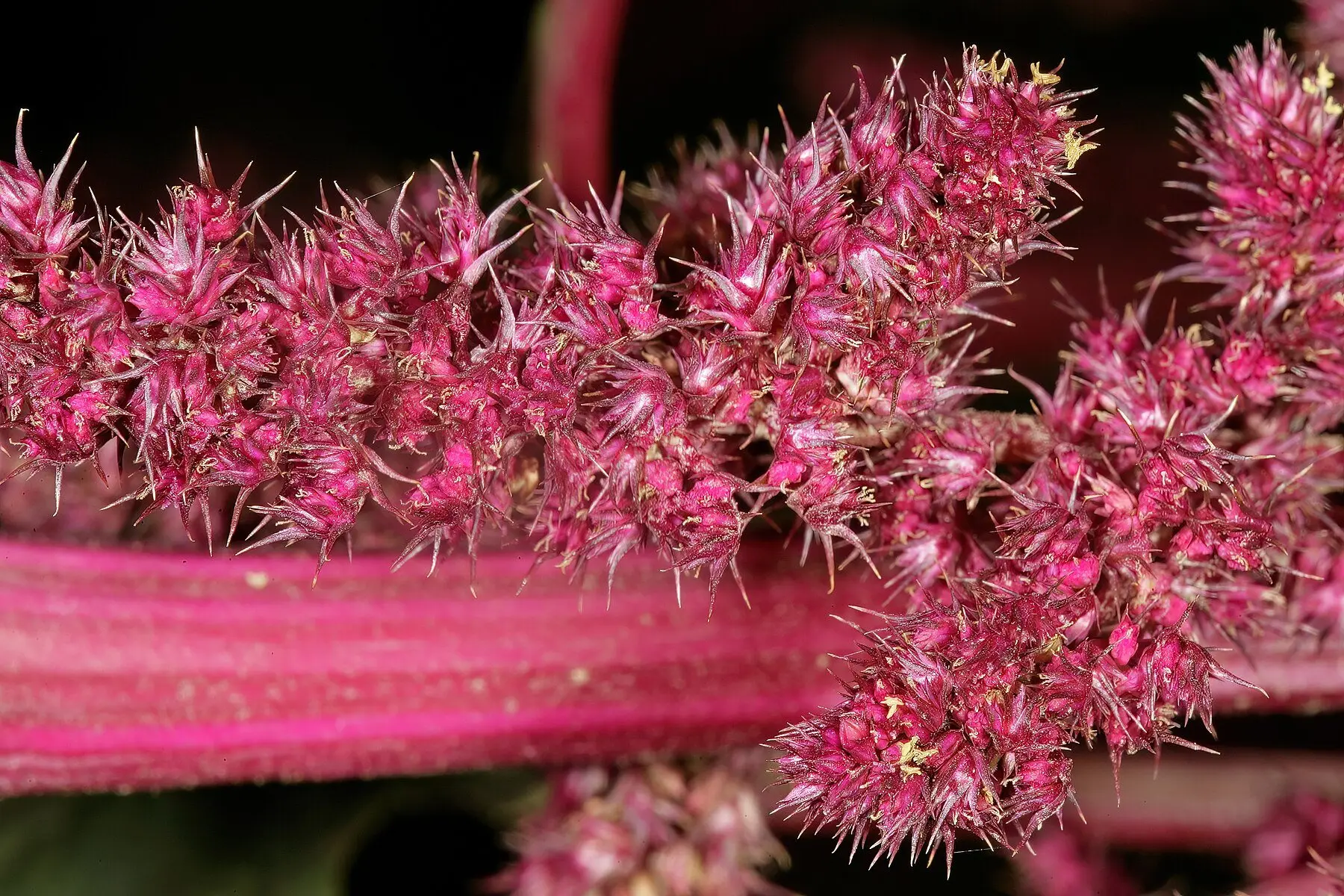
Signals: the flower heads lose their bright colour and start to dry and fade; the lower leaves begin to yellow.
The test: rub or shake a head over your palm. If seed falls freely, it is ready. This beats judging by date or appearance, both of which mislead because varieties fade at different rates.
Do not let ripe heads sit through rain
Ripe amaranth left standing in wet weather sprouts in the head or goes mouldy, and either ruins the grain.
If the seed shakes loose and rain is forecast, cut now. Finishing the drying under cover is always safer than leaving it another week on the plant for a little more fill.
Cutting and drying
Hold a bag under each head as you cut it. This sounds fussy and is not — ripe amaranth sheds seed at a touch, and a careless harvest leaves most of the crop on the soil.
Then one to two weeks drying: heads spread on a tarpaulin or hung in paper bags somewhere dry and airy.
Do not rush this. Everything that follows depends on it.
Threshing and cleaning
| Step | How |
|---|---|
| Thresh | Rub heads between your hands, or tread gently on a tarpaulin |
| Sieve | Fine mesh to hold back stalk. Two passes, two mesh sizes |
| Winnow | Pour between containers in a breeze or before a fan |
Amaranth seed is very small — much smaller than millet or barley — so the sieve mesh matters more here than with other grains, and a single pass rarely gets it clean.
Storing
Seed should be hard enough to shatter rather than squash between your fingernails. If it squashes, it goes back to dry.
Airtight jar, cool and dark. Keep a portion aside as next year’s sowing seed.
Mouldy stored amaranth is nearly always one of two things: seed sealed away slightly damp, or heads that caught rain before cutting. The seed is small enough to hold moisture you cannot feel.
On yield, and on volunteers
A large well-grown plant gives roughly half a cup to a cup of cleaned seed. A short garden row is enough for occasional use, not a staple.
And amaranth self-seeds readily — a single head carries thousands of seeds. Decide in advance: either let the volunteers come up and thin them, or cut every head before it sheds. Grain amaranths are less aggressive than wild pigweed, but the habit is the same.
Step by step
- Time
- P14D
- Cost
- 0
- You need
- A mature amaranth planting, Paper bags or a tarpaulin
- Tools
- Secateurs or a sickle, Fine sieve, Fan for winnowing
Pick leaves from the bottom up all season
Take young outer leaves from about six weeks on, no more than a third of the plant at a time. Leaving the growing tip intact keeps both the leaf supply and the eventual seed head coming.
Watch the flower heads change colour
Grain is approaching when the heads lose their bright colour and begin to dry and fade. The plant itself often starts yellowing from the lower leaves at the same time.
Test by shaking a head over your palm
Rub or shake a head gently. If seed falls freely, it is ready. This is the single reliable test, and it beats judging by date or by appearance alone.
Harvest before heavy rain, not after
Ripe heads left standing through rain sprout in place or go mouldy, which ruins the grain. If rain is forecast and the seed shakes loose, cut now.
Cut whole heads into a bag
Hold a paper bag or bucket under each head as you cut, because ripe amaranth sheds seed freely and most of a harvest can end up on the soil.
Dry the heads for one to two weeks
Spread them on a tarpaulin or hang them in paper bags somewhere dry and airy. Seed that goes into storage damp will mould, and amaranth seed is small enough to hide moisture well.
Thresh by rubbing over a tarpaulin
Rub the dried heads between your hands or tread them gently on a sheet. The seed separates easily once properly dry, which is why the drying step cannot be rushed.
Sieve out the coarse chaff
Pass everything through a fine sieve that holds back stalk fragments and lets the small seed through. Two passes with different mesh sizes work better than one.
Winnow in a breeze or in front of a fan
Pour the seed slowly between two containers in moving air. The light chaff blows away and the heavier grain falls. Repeat until the seed looks clean.
Store airtight once fully dry
Seed should feel hard and shatter rather than squash. Store in a sealed jar somewhere cool and dark, and keep a portion separately as next year's sowing seed.
Common questions
When is amaranth ready to harvest?
How do you thresh amaranth seed by hand?
Can you eat amaranth leaves as well as the grain?
How much grain does one amaranth plant produce?
Why did my amaranth seed go mouldy?
Will amaranth self-seed in the garden?
Backyard Weekly
Know what to plant, week by week
Join the weekly email for seasonal jobs, fixes for what is going wrong, and gear worth buying.
Not ready to subscribe? The planting calendar is free and needs no email.
By subscribing you agree to our privacy policy. Grow In Backyard will never sell your address.
Keep reading
When to Harvest Kale: Bottom Leaves First, and Why Frost Helps
Pick outer leaves from the bottom once they reach hand size, never the growing tip. Frost genuinely sweetens it — the plant converts starch to sugar.
How to Grow Millet: Grain, Birdseed or Cover Crop
Millet matures in 60 to 90 days on poor dry soil where other grains fail. Decide early whether you want grain, birdseed or a summer cover crop.
When to Harvest Spinach: Cut-and-Come-Again vs One Cut
Baby leaves at 3–4 weeks, full leaves at 6–8. Picking outer leaves keeps a plant going for weeks — until it bolts, which heat decides, not you.
How to Store Cilantro So It Lasts More Than Two Days
Cilantro wilts fast because it is mostly water with thin leaves. The jar method, what actually freezes well, and why drying it is largely a waste.