
When to Harvest Kale: Bottom Leaves First, and Why Frost Helps
Pick outer leaves from the bottom once they reach hand size, never the growing tip. Frost genuinely sweetens it — the plant converts starch to sugar.
 By
On this page
Outer leaves from the bottom, hand-sized, never the growing tip. And wait for frost if you can — it is not folklore.
How the plant is built, and why it matters
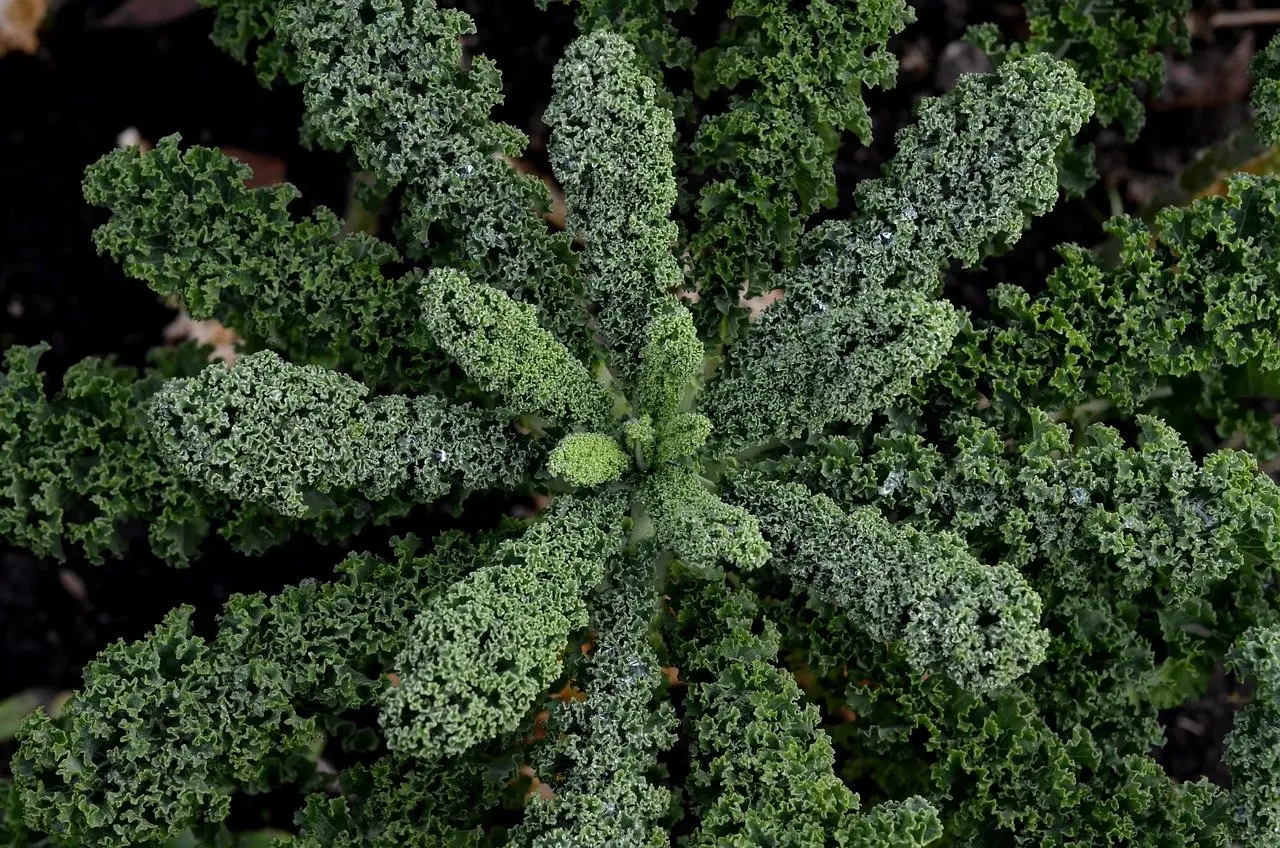
Kale grows from one growing point at the top, producing leaves that radiate outward as the stem extends. It is effectively a slow vertical trunk.
That architecture dictates the harvest. Take leaves from the bottom, where they are oldest, and the top keeps producing. Cut out the top and the plant is finished — it has no reserve growing point to replace it.
| Leaf | Use |
|---|---|
| Small, central | Leave it. This is next month’s crop |
| Young, upper | Salad — tender enough raw |
| Medium, hand-sized | The target. Anything, raw or cooked |
| Large, lower | Cooking. Braise or stew; strip the midrib |
| Yellowing, holed, ancient | Remove and compost. Dead weight on the plant |
The frost thing is real
Cold triggers the plant to convert stored starch into sugars, which lower the freezing point of the cell contents — the plant’s own antifreeze. The sugars are what you taste.
The effect is noticeable after a few hard frosts, and it is why a kale crop sown in midsummer for autumn and winter is better eating than the same variety in July.
Harvest in the middle of the day in winter
Frozen leaves bruise and go limp when handled. Wait until they have thawed in the day’s warmth, then pick.
Winter picking
- Curly and Siberian types are hardiest; cavolo nero is noticeably less so
- Growth nearly stops below about 4°C — picking becomes occasional, not weekly
- Fleece or a cloche keeps leaf quality up in severe cold rather than keeping the plant alive
- Clear the dead lower leaves through winter. Rotting leaves against a wet stem invites problems
- Watch for aphids sheltering in the crown even in cold weather
A note on yield
One well-kept kale plant can produce for six months or more. Four or five plants supply a household indefinitely, which makes it one of the highest-return crops per square metre in a small garden — on the condition that you keep picking.
A plant left unpicked stalls: large old leaves stay on, shading the stem and drawing resources, and production slows. Harvesting is the maintenance.
Common questions
When should you start harvesting kale?
Does frost really make kale sweeter?
How do you pick kale so it keeps growing?
Can you harvest kale all winter?
Can kale leaves get too big or too old?
Backyard Weekly
Know what to plant, week by week
Join the weekly email for seasonal jobs, fixes for what is going wrong, and gear worth buying.
Not ready to subscribe? The planting calendar is free and needs no email.
By subscribing you agree to our privacy policy. Grow In Backyard will never sell your address.
Keep reading
When to Harvest Spinach: Cut-and-Come-Again vs One Cut
Baby leaves at 3–4 weeks, full leaves at 6–8. Picking outer leaves keeps a plant going for weeks — until it bolts, which heat decides, not you.
When to Harvest Radish: Pull at 1 Inch, Not by the Calendar
Most salad radishes are ready 3–4 weeks from sowing, at about an inch across. Left longer they go pithy and hot — and the leaves tell you nothing.
When to Harvest Okra: The Three-Day Window That Decides It
Pick pods at 2–4 inches, every day or two. Past about four days they turn woody, and leaving one on the plant slows everything that follows.
When to Harvest Potatoes: Two Crops From One Plant
New potatoes come at flowering; storage potatoes need the tops to die back first. How to tell which stage you are at, and how to cure them so they keep.