
How to Dry Garlic: Curing It So It Keeps Until Spring
Curing takes two to four weeks in shade with moving air. Get it right and hardneck keeps six months, softneck ten. Get it wrong and it rots by October.
 By
On this page
Two to four weeks, in shade, with air moving. Heat is not the point and sun actively ruins it.
Why curing is not just drying
Two things happen at once. The outer wrappers dry into a papery shell that protects the cloves, and the neck seals, closing the route rot would otherwise take into the bulb.
The second is why the stems stay attached. Cut a green neck off a freshly lifted bulb and you have made an open wound at the top of something you intend to keep until spring.
The neck test is the only test that matters
Papery outer wrappers tell you the outside is dry. They tell you nothing about the inside.
Squeeze the neck just above the bulb. Firm and dry all the way through means cured. Any give at all means wait — and trimming at that point is how a good harvest turns soft in October.
Airflow beats everything
| Factor | Matters? |
|---|---|
| Moving air | The main one. A fan in still conditions is worth more than warmth |
| Shade | Essential. Sun scalds and cooks outer cloves |
| Space between bulbs | Essential — touching bulbs trap moisture and go mouldy |
| Warmth | Helpful, not required. 20–25°C is ample |
| Humidity | Slows everything. Humid climates need longer and more air |
| Time | 2–4 weeks, judged by the neck, not the calendar |
Storage, once it is cured
- 10–15°C, dark, with air movement
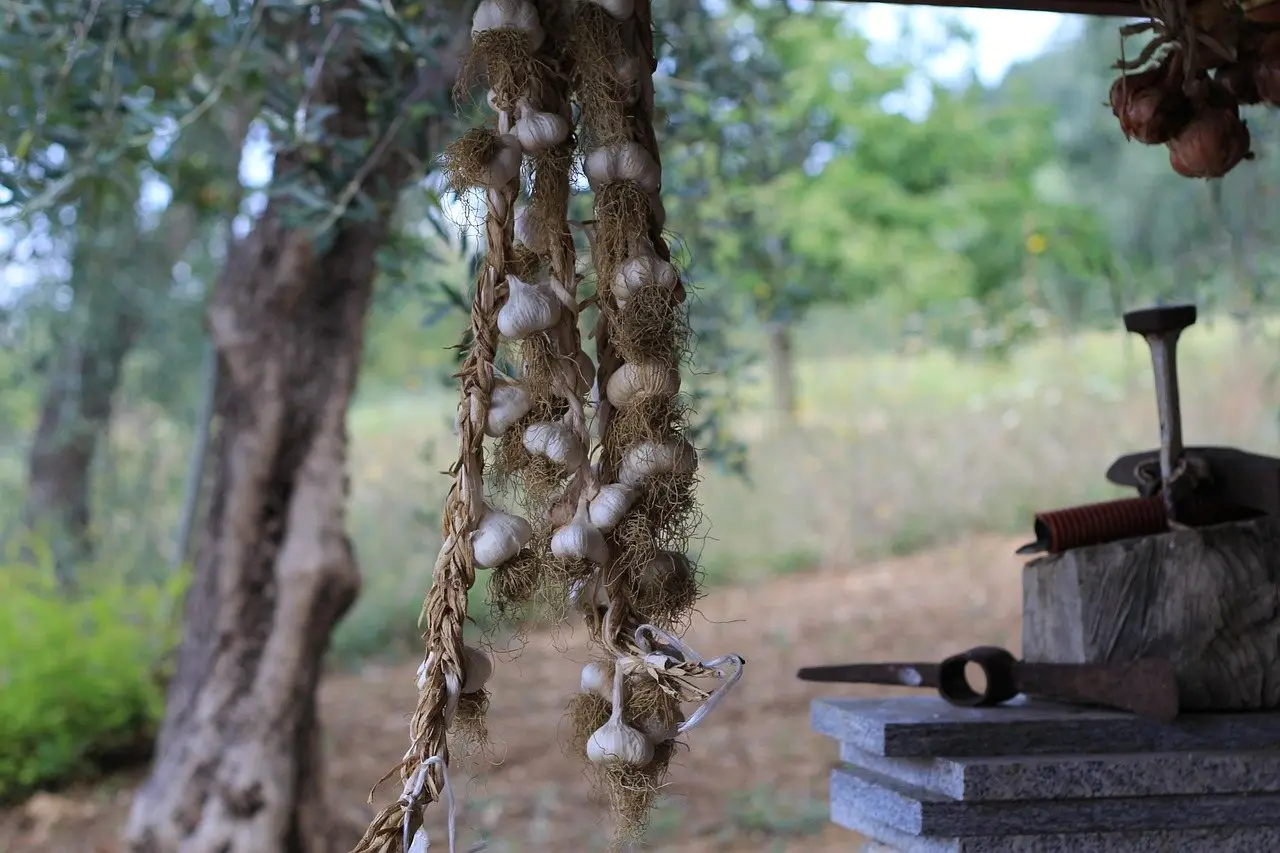
- Mesh bags, baskets, or plaits — never sealed plastic
- Not the fridge. Around 4°C signals winter and triggers sprouting on removal
- Not above the stove. Warm and humid is the worst combination
- Check monthly and pull anything soft before it affects its neighbours
Softneck varieties plait well and keep eight to ten months. Hardnecks have a stiff stem and looser wrappers, keep perhaps six, and are worth eating first.
Save the biggest bulbs for planting, not the kitchen
Garlic is clonal — next year’s crop is this year’s bulb. Set aside the largest, cleanest bulbs from the cure for autumn planting and eat the rest. Doing that for a few seasons measurably improves the size of what you harvest.
Step by step
- Time
- P21D
- Cost
- 0
- You need
- Freshly lifted garlic with stems and roots attached, Twine, if hanging
- Tools
- A shaded airy space — shed, porch, garage with the door open, A fan, if the air is still
Lift, do not pull
Loosen with a fork and lift. Pulling tears the neck, and a damaged neck is the route rot takes into the bulb during curing.
Leave the stems and roots on
The plant moves resources into the bulb for days after lifting, and an intact neck seals itself as it dries. Trimming now shortens the storage life.
Do not wash
Water on the wrappers is exactly what curing is removing. Brush soil off gently once dry, and accept that the outer wrapper will come away with it.
Get it out of the sun
Full sun scalds the bulbs and cooks the cloves. Shade with moving air is the whole requirement — a shed, a porch, a garage with the door propped.
Space it so air moves
Hang in bunches of eight to ten, or lay in a single layer on racks or mesh. Bulbs touching in a pile is how a whole harvest goes mouldy.
Add a fan if the air is still
Moving air matters more than heat. A slow fan in a closed shed does more for curing than any amount of warmth.
Wait two to four weeks
It is cured when the neck is dry and tight all the way through, the outer wrappers rustle like paper, and the roots are brittle. Squeeze the neck — any softness means it needs longer.
Trim and store
Cut stems to about 2.5 cm, or leave them for plaiting softneck. Trim roots to a stubble. Store at 10 to 15°C in the dark with air movement, in mesh or a basket, never a sealed bag.
Common questions
How long does garlic take to dry?
Should I wash garlic before drying it?
Can I dry garlic in the sun?
How long does cured garlic keep?
Why is my stored garlic going soft or mouldy?
Backyard Weekly
Know what to plant, week by week
Join the weekly email for seasonal jobs, fixes for what is going wrong, and gear worth buying.
Not ready to subscribe? The planting calendar is free and needs no email.
By subscribing you agree to our privacy policy. Grow In Backyard will never sell your address.
Keep reading
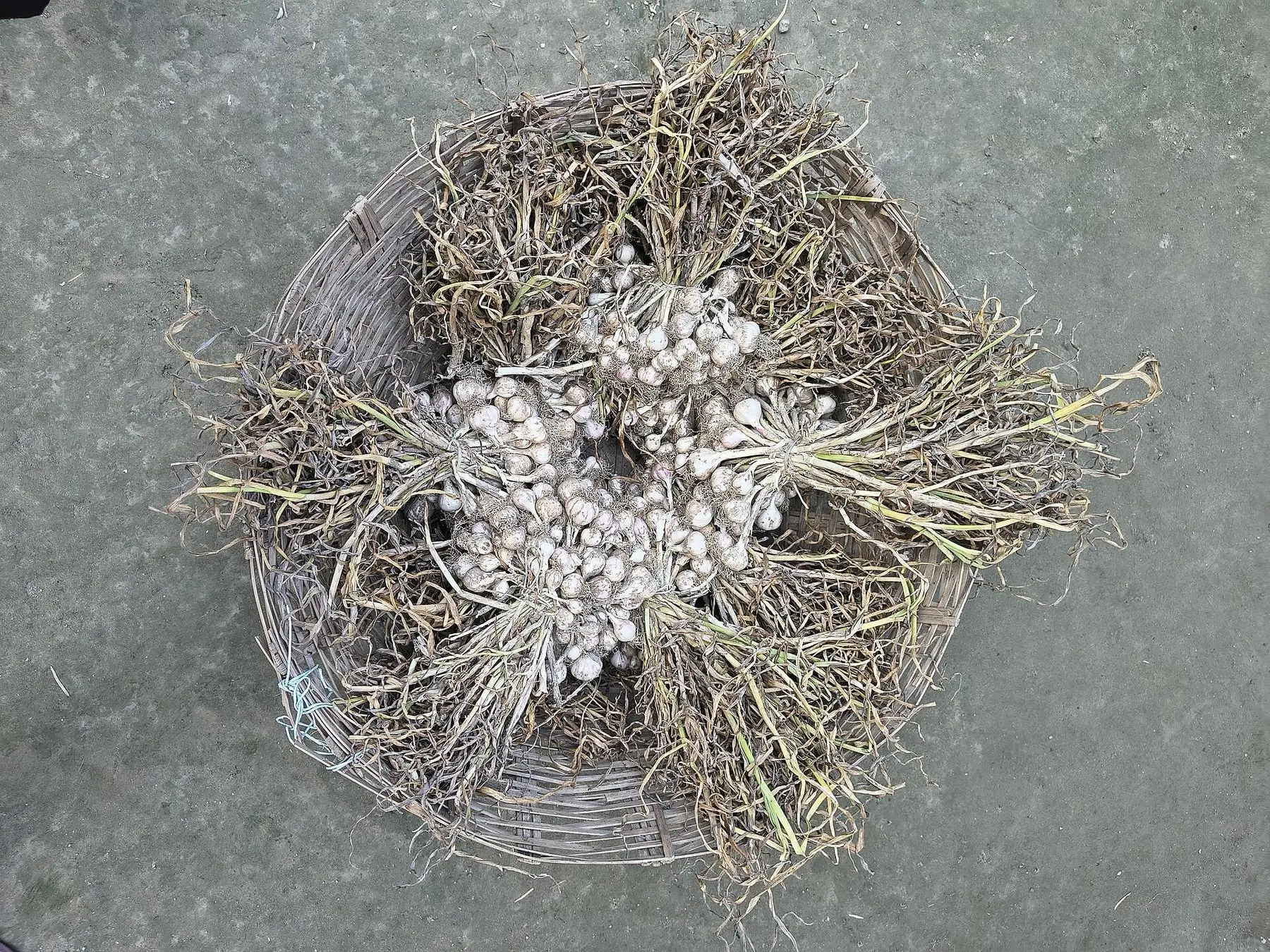
When to Harvest Garlic (Count the Brown Leaves)
Garlic is ready when three or four lower leaves have browned and five or six are still green — usually July. How to read the plant and test before you dig.
How to Grow Garlic: Plant in Fall, Harvest in July
Garlic is the easiest crop in the garden if you plant it at the right time. Here is the full cycle — choosing bulbs, planting depth, mulch, scapes, and harvest.
How to Spread Wood Ash on Lawn: Rates, Timing and Risks
Wood ash raises pH fast and supplies potassium, which makes it useful on acid soil and harmful everywhere else. Test first, then apply at a measured rate.
How to Grow Alfalfa: Lime First, Then Years of Cutting
Alfalfa roots 15 feet down and fixes its own nitrogen, but it fails on acid soil. Test and lime before sowing — you cannot fix pH afterwards.