
How to Spread Wood Ash on Lawn: Rates, Timing and Risks
Wood ash raises pH fast and supplies potassium, which makes it useful on acid soil and harmful everywhere else. Test first, then apply at a measured rate.
 By
On this page
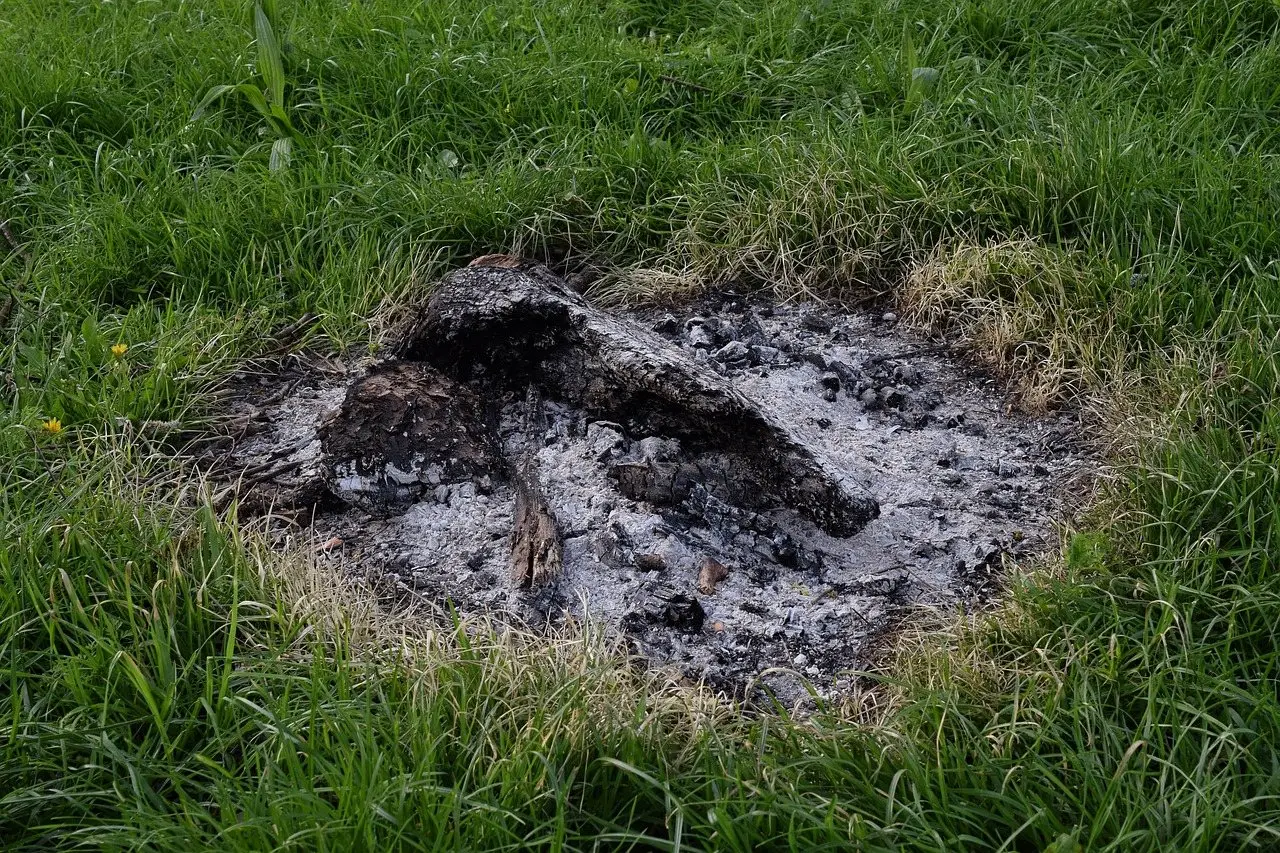
Wood ash is free potassium and a fast liming agent — which makes it genuinely useful on acid soil and genuinely damaging on everything else.
What is actually in it
| Element | Notes |
|---|---|
| Potassium (K) | The main reason to use it. Good for drought and cold tolerance |
| Calcium carbonate | The liming action — this is what moves pH |
| Magnesium, phosphorus | Present in useful but modest amounts |
| Trace elements | Boron, manganese, zinc |
| Nitrogen | None. Burned off completely |
The missing nitrogen matters: ash is not a substitute for a lawn feed, and it will not green anything up on its own.
Test before you spread
This is the step that decides whether ash helps or hurts
Most lawn grasses want pH 6.0 to 7.0. Wood ash only ever pushes upward, and it cannot be taken back out — correcting an over-limed lawn means sulphur and a season of waiting.
A soil test kit costs little. Spreading ash on soil that is already at 7.2 buys you a yellow lawn and no way to undo it.
How to spread it
Timing, and what not to mix it with
Late autumn through winter is the window. The ash gets months to react with the soil before growth resumes, and a dormant lawn is not trying to use nutrients at the same time.
Never with nitrogen
Ash is alkaline. Applied with nitrogen fertiliser, fresh manure or ammonium sulphate, it drives nitrogen off as ammonia gas — you lose the feed and gain the smell.
Separate the two by at least a month.
What must never go on
- Treated, pressure-treated or painted timber — preservatives and heavy metals
- Plywood, chipboard, MDF, pallets — glues and binders
- Charcoal briquettes — binders and additives
- Anything burned with household rubbish — plastics, printed card, foil
- Coal or coke ash — sulphur and heavy metals, and it is acidic, not alkaline
The lawn is ground children, pets and bare feet use. The test for what goes on it is not “does it look like ash” but “do I know exactly what burned”.
When to use lime instead
If a test calls for a specific, substantial pH correction, garden lime is the better tool — it is sold with a stated neutralising value, it acts slowly and predictably, and it does not come with a potassium load you may not need.
Ash is best treated as what it is: a useful by-product to recycle in modest amounts on acid soil, not a planned lawn programme.
Step by step
- Time
- PT1H
- Cost
- 0
Test the soil pH
Test the soil pH. Below 6.0, proceed. 6.0–7.0, only if the test also shows low potassium. Above 7.0, stop here
Use only clean wood ash
Use only clean wood ash — untreated, unpainted timber. Cold and fully out
Sieve it
Sieve it. Nails, screws, clinker and charcoal lumps out
Weigh it
Weigh it. Aim for no more than 10–20 lb per 1,000 sq ft across the year, split into two passes
Pick the day
Pick the day. Dormant or slow-growing lawn, no wind, rain forecast within a day or two
Spread thinly and evenly
Spread thinly and evenly. A drop spreader works if the ash is dry and sieved; otherwise cast it by hand in a dust, wearing a mask and goggles
Water it in
Water it in if no rain arrives within two days
Retest next season
Retest next season before deciding whether to repeat
Common questions
Is wood ash good for a lawn?
How much wood ash can I put on a lawn?
When should I apply wood ash to a lawn?
Can I use wood ash instead of lime?
What wood ash should never go on a lawn?
Backyard Weekly
Know what to plant, week by week
Join the weekly email for seasonal jobs, fixes for what is going wrong, and gear worth buying.
Not ready to subscribe? The planting calendar is free and needs no email.
By subscribing you agree to our privacy policy. Grow In Backyard will never sell your address.
Keep reading
Waiting Too Long to Mow New Grass: What It Costs You
New grass left past about 4 inches goes thin, floppy and weak-rooted. The first cut matters more than any other, and the one-third rule still applies.
Too Much Lime on Lawn: Signs, Damage and How to Fix It
Over-liming yellows a lawn by locking up iron and manganese, and it cannot be mown out. Elemental sulphur and a season of patience is the only real fix.
How to Level a Lawn by Hand: Topdressing Without Machinery
Shallow dips fill with topdressing half an inch at a time. Anything deeper needs the turf lifted. The mistake is burying grass in one go.
Lawn Edging Ideas That Actually Keep Grass Out of Beds
Grass invades beds by rhizome and by seed, and most edging only stops one. Depths that work, materials compared, and why plastic roll edging fails.