
Too Much Lime on Lawn: Signs, Damage and How to Fix It
Over-liming yellows a lawn by locking up iron and manganese, and it cannot be mown out. Elemental sulphur and a season of patience is the only real fix.
 By
On this page
Over-liming does not burn a lawn. It starves it — by locking up iron and manganese the roots can no longer reach, which is why feeding it harder makes it worse.
How to tell
| Sign | Over-liming | Something else |
|---|---|---|
| Yellow between the veins, veins stay green | Classic iron chlorosis | Nitrogen hunger yellows the whole blade |
| Feeding makes it grow, not green | Classic | A fed lawn that greens up was just hungry |
| White crust or grit on the surface | Undissolved lime | — |
| Clover thriving, grass struggling | Common at high pH | Also happens on low nitrogen |
| Moss in thin areas | Secondary — gaps, not pH | Moss alone usually means shade, wet or compaction |
| Test reads above 7.2 | Confirmed | — |
Moss is not evidence of lime
It is worth saying plainly, because the folk wisdom runs the other way. Moss in a lawn usually means shade, poor drainage, compaction or scalping — not acidity, and not alkalinity. Liming a mossy lawn on that reasoning is one of the common routes to this problem in the first place.
Why the grass goes yellow
Nutrient availability is pH-dependent. As soil moves past about 7.2, iron and manganese convert to forms roots cannot take up — they are still in the soil, they are simply out of reach.
The result is interveinal chlorosis: pale blades with the veins still green. Nitrogen is unaffected, so a feed produces growth, and the new growth comes up just as yellow. That cycle — feed, grow, still yellow — is the most reliable signal you have a pH problem rather than a hunger problem.
Fixing it
Sulphur is slow by nature, not by accident
It is converted by soil bacteria, which are active only in warm, moist soil. Applied in autumn in a cold region, almost nothing happens until spring.
Over-applying out of impatience swings the lawn the other way, and then you are liming again to fix the sulphur. Test, wait, retest.
Avoiding it next time
- Only lime against a test, never on a schedule and never because of moss
- Match the rate to the soil. Clay needs far more than sand for the same shift, which cuts both ways
- Split large corrections across two applications six months apart
- Retest before repeating. Annual liming “to keep on top of it” is how lawns end up here
- Count the wood ash. It limes too, and people rarely include it in the sums
- Know your area. Rates are quoted per 1,000 square feet, and guessing at how big the lawn actually is is half of every overdose
Most lawns in most gardens never need lime at all. The ones that do need it once, measured, and then leaving alone.
Step by step
Test, properly
Test, properly. Several samples from around the lawn, mixed. Note your soil type — clay resists change far more than sand
Stop all lime and wood ash
Stop all lime and wood ash. Immediately, and for the foreseeable future
Apply elemental sulphur
Apply elemental sulphur at the rate your test and soil type indicate, split across applications rather than all at once
Use ammonium sulphate
Use ammonium sulphate as your nitrogen source meanwhile — it feeds and acidifies gently
A chelated iron treatment
A chelated iron treatment will green the lawn within days. Understand that this treats the symptom and nothing else
Water it in
Water it in and keep the soil moist — the bacteria that oxidise sulphur need warmth and moisture to work
Wait, then retest
Wait, then retest. Months, not weeks. Do not apply more sulphur on the assumption the first dose failed
Common questions
What are the signs of too much lime on a lawn?
Can lime kill grass?
How do I lower the pH of my lawn after over-liming?
Will the lime wash out on its own?
How much lime should a lawn actually get?
Backyard Weekly
Know what to plant, week by week
Join the weekly email for seasonal jobs, fixes for what is going wrong, and gear worth buying.
Not ready to subscribe? The planting calendar is free and needs no email.
By subscribing you agree to our privacy policy. Grow In Backyard will never sell your address.
Keep reading
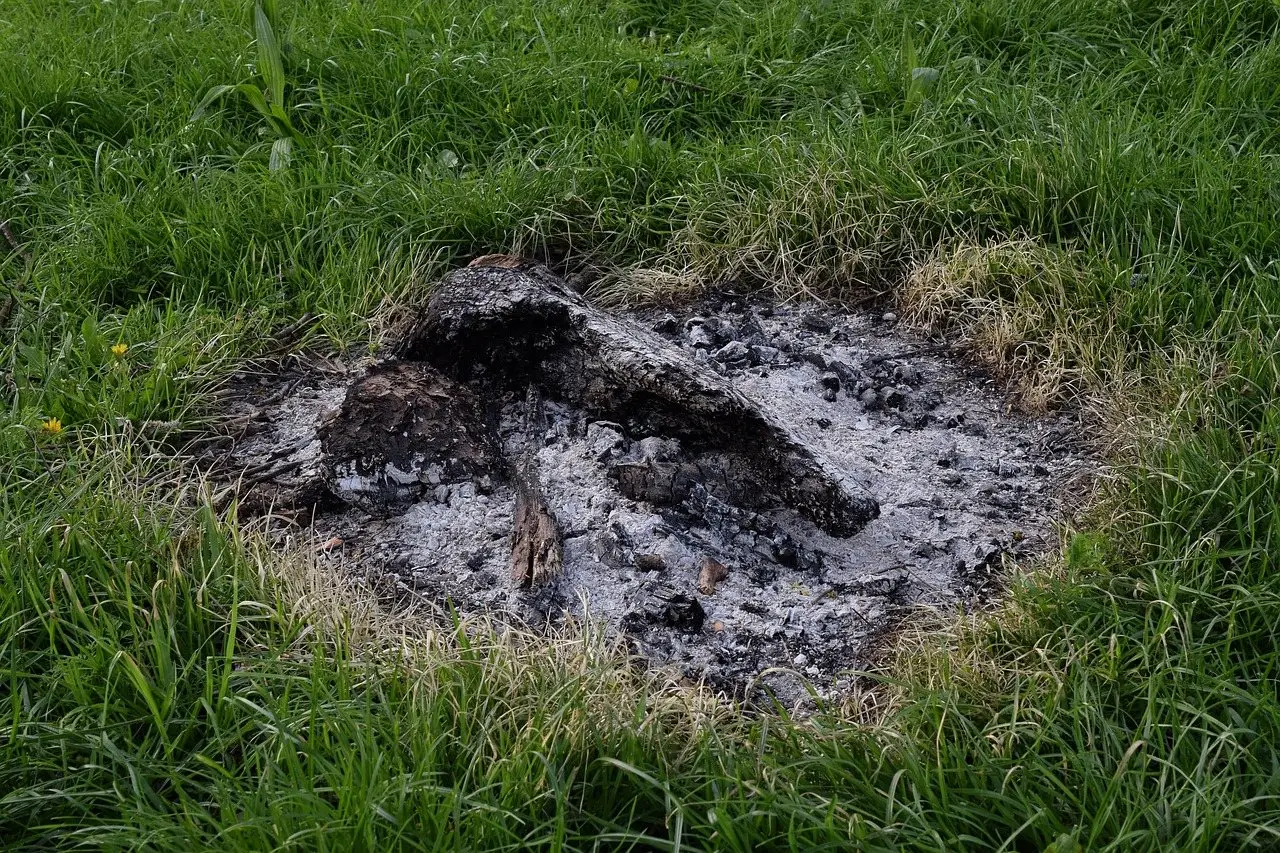
How to Spread Wood Ash on Lawn: Rates, Timing and Risks
Wood ash raises pH fast and supplies potassium, which makes it useful on acid soil and harmful everywhere else. Test first, then apply at a measured rate.
Waiting Too Long to Mow New Grass: What It Costs You
New grass left past about 4 inches goes thin, floppy and weak-rooted. The first cut matters more than any other, and the one-third rule still applies.
How to Level a Lawn by Hand: Topdressing Without Machinery
Shallow dips fill with topdressing half an inch at a time. Anything deeper needs the turf lifted. The mistake is burying grass in one go.

Tree Sprouts in Lawn: Why They Appear and How to Stop Them
Shoots coming up across a lawn are usually root suckers from one living tree, not seedlings. Which they are decides whether mowing ever ends it.