
How to Grow Alfalfa: Lime First, Then Years of Cutting
Alfalfa roots 15 feet down and fixes its own nitrogen, but it fails on acid soil. Test and lime before sowing — you cannot fix pH afterwards.
 By

On this page
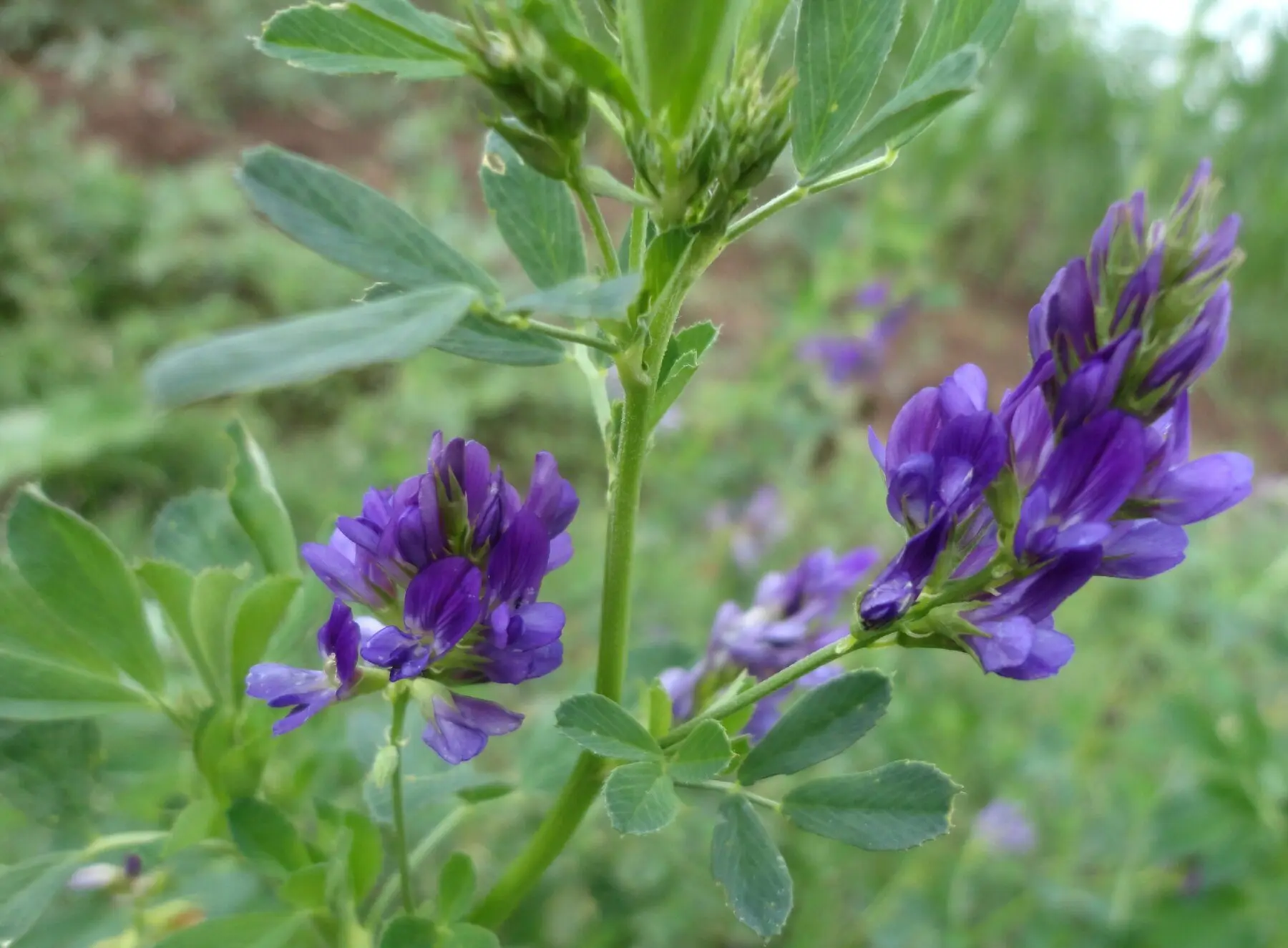
Alfalfa is a perennial legume that roots ten to fifteen feet down, fixes its own nitrogen and crops for years. It also fails on acid soil — and that is a decision you make before sowing, not after.
pH decides it
This is the step that separates a stand that crops for six years from one that never establishes.
Alfalfa wants 6.5 to 7.0. Below about 6.2 it struggles, and on genuinely acid ground it fails — partly because the Rhizobium bacteria it depends on for nitrogen fixation do not thrive there either.
Lime the season before, not at sowing
Lime takes three to six months to move pH measurably. Applying it at sowing achieves nothing for the crop you are planting.
Autumn liming for a spring sowing is the standard pattern. And once a perennial stand is in, you cannot incorporate lime without destroying it — so this genuinely is a one-chance decision.
Feed it, just not nitrogen
Alfalfa supplies its own nitrogen through root nodules. Adding nitrogen fertiliser is wasted money and can actually suppress fixation.
But taking several cuts a year removes a great deal of phosphorus and potassium, and alfalfa is a heavy user of both. Follow a soil test, and retest every few years on an established stand.
Site: deep and well drained
The ten to fifteen foot taproot is where the drought tolerance comes from — and it is also what the site has to allow.
Shallow soil over rock, a high water table, or a compacted pan all stop that root developing. A stand on such ground never achieves the drought tolerance alfalfa is known for, and it will not last.
Sowing
- Inoculate the seed — pre-inoculated, or treat it yourself. Essential on ground that has not grown alfalfa before
- Fine, firm seedbed. The seed is tiny and needs soil contact; loose cloddy ground gives a thin stand
- A quarter to half an inch deep, no more
- Spring in cold regions, late summer in milder ones — but allow six weeks of growth before frost
- Control weeds in year one. Established alfalfa competes well; seedlings smother easily
Cutting, and the two timing rules
Cut at early bloom — about 10% of the stand flowering.
Earlier gives richer, higher-protein forage, and it draws down root reserves faster, which shortens the life of the stand. Much later gives coarse, stemmy material. Early bloom is the compromise that keeps both quality and longevity.
Stop cutting six weeks before the first hard frost. The plants need that window to rebuild root reserves for winter. A late final cut is the single commonest cause of winter kill.
How long it lasts, and why you cannot patch it
Four to six years typically, sometimes eight or more with good management.
One thing worth knowing: alfalfa is autotoxic — it suppresses its own seedlings. So you cannot thicken a thinning stand by reseeding into it. When a stand goes, it is rotated to something else for a year or two before alfalfa returns.
In a garden
A good cover crop for ground you can rest for a season or more: the taproot breaks compaction and the plant adds nitrogen.
But it is a perennial and slow to establish, so it suits a bed being rested rather than a gap between vegetables. For a short window, clover or field beans do the same job far faster.
Step by step
- Time
- P365D
- Cost
- 40
- You need
- Alfalfa seed, inoculated or with inoculant, Agricultural lime if the soil test calls for it, Phosphorus and potassium per the soil test
- Tools
- Soil test kit or lab test, Rake or seed drill
Test the soil before buying seed
Alfalfa needs a pH of roughly 6.5 to 7.0 and fails on acid ground. This is the step that decides the stand, and it cannot be corrected once the crop is sown.
Lime well ahead of sowing
Lime takes three to six months to move pH measurably, so apply it the season before rather than at sowing. Autumn liming for a spring sowing is the usual pattern.
Correct phosphorus and potassium too
Alfalfa is a heavy feeder on P and K even though it supplies its own nitrogen. Follow the soil test rather than a general rate.
Choose a deep, well-drained site
The taproot goes down 10 to 15 feet, which is where the drought tolerance comes from. Waterlogged or shallow soil over rock defeats it entirely.
Inoculate the seed
Alfalfa fixes nitrogen only in partnership with the right Rhizobium bacteria. Buy pre-inoculated seed or treat it yourself, especially on ground that has not grown alfalfa before.
Prepare a fine firm seedbed
Alfalfa seed is tiny and needs good soil contact. Rake level and firm the surface rather than leaving it loose and cloddy.
Sow shallowly in spring or late summer
A quarter to half an inch deep, no more. Spring sowing suits cold regions; late summer suits milder ones, but allow six weeks of growth before frost.
Keep weeds down in the first year
Establishment is the vulnerable period. Once the stand closes alfalfa competes well, but young seedlings are easily smothered.
Cut at early bloom, not before
Cut when about a tenth of the stand is flowering. Cutting earlier gives richer forage but exhausts the root reserves and shortens the life of the stand.
Leave the last cut early enough to regrow
Stop cutting about six weeks before the first hard frost so the plants rebuild root reserves for winter. A late cut is the main cause of winter kill.
Common questions
What soil pH does alfalfa need?
When should you cut alfalfa?
How deep do alfalfa roots go?
Does alfalfa need fertiliser if it fixes its own nitrogen?
How long does an alfalfa stand last?
Can you grow alfalfa as a cover crop in a garden?
Backyard Weekly
Know what to plant, week by week
Join the weekly email for seasonal jobs, fixes for what is going wrong, and gear worth buying.
Not ready to subscribe? The planting calendar is free and needs no email.
By subscribing you agree to our privacy policy. Grow In Backyard will never sell your address.
Keep reading
How to Grow Soybeans: Edamame in a Backyard, Honestly
Soybeans are easy to grow and harvest in one short window — pods fill, then go hard within about a week. Here is the timing and what yield to expect.
How to Grow Millet: Grain, Birdseed or Cover Crop
Millet matures in 60 to 90 days on poor dry soil where other grains fail. Decide early whether you want grain, birdseed or a summer cover crop.
How to Add Calcium to Soil Without Changing the pH
Lime adds calcium and raises pH. Gypsum adds calcium and leaves pH alone. Which you need depends on a soil test, not on blossom end rot.
How to Grow Asparagus: Three Years to the First Real Cut
Asparagus is a twenty-year perennial that pays nothing for two seasons. Bed preparation, crowns versus seed, and the cutting discipline that keeps it going.