
How to Grow Collard Greens: Sowing to Harvest
Collards tolerate more heat and more cold than any other brassica, and frost genuinely sweetens them. Sow, space wide, and pick from the bottom up.
 By
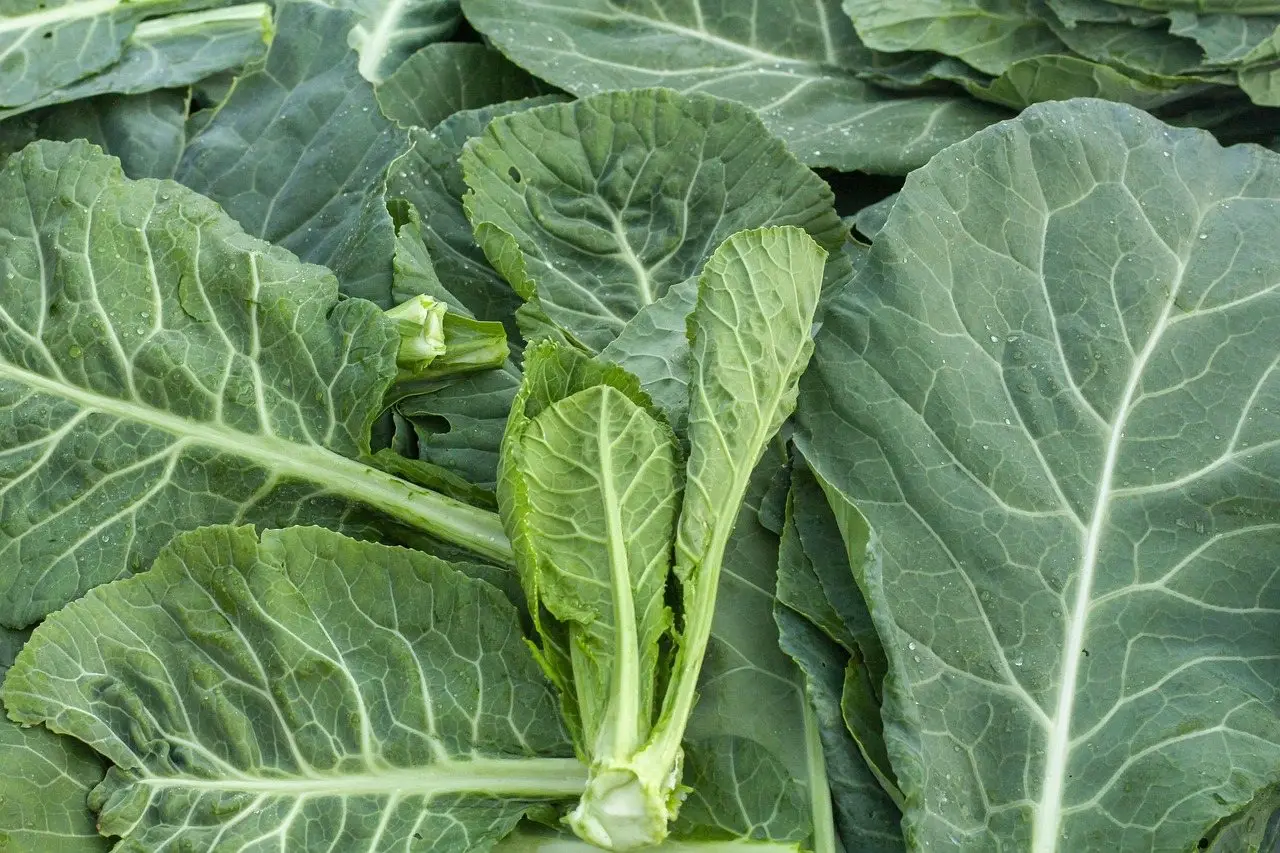
On this page
Collards are the most forgiving brassica there is — they take more heat and more cold than kale, cabbage or broccoli — and the only two things people reliably get wrong are spacing and when to sow.
Two sowing windows, and one is better
| Sowing | Harvest | Flavour |
|---|---|---|
| Late summer (6–8 wks before first frost) | Autumn into winter | Sweet — frost-improved |
| Early spring (6–8 wks before last frost) | Early summer | Harsher; bolts in heat |
The autumn crop is the one to plan around. Collards mature into falling temperatures, and cold converts stored starch into sugars — a genuine physiological change that acts as antifreeze in the leaf and tastes markedly sweeter.
The spring crop works, but it runs into summer heat, which drives up the bitter glucosinolates and eventually causes bolting.
In mild regions collards are simply a winter standing crop, picked as needed from October through March.
Spacing: the mistake almost everyone makes
Eighteen to twenty-four inches. Not twelve, not eight.
A mature collard is a big plant — leaves a foot or more across on a stem that can reach three feet. Crowding costs you three ways:
- Small leaves, from competition for water and nutrients
- Disease, because still humid air between crowded plants is what downy mildew and black rot need
- Harder picking, since you cannot get at the lower leaves
If you direct-sowed thickly, thin hard and eat the thinnings — they are excellent.
Mesh before pests, not after
Cabbage whites, loopers, aphids, flea beetles and harlequin bugs all target brassicas, and by the time you see damage the population is established.
Fine insect mesh over hoops, fitted at planting, excludes essentially all of them and removes the need to spray anything. It is the single highest-return thing you can do for a brassica bed.
Check leaf undersides weekly anyway — that is where aphid colonies and caterpillar eggs sit.
Picking so the plant keeps going
This is what makes collards worth the space. They grow from a single central growing point that keeps producing new leaves, so the plant is not a one-time harvest.
- Take the outer, lower leaves, starting when they are around ten inches
- Never cut the central bud. That ends production permanently
- No more than a third at once, so the plant keeps enough foliage to fuel itself
Done this way, a handful of plants produces for months — and in a mild winter, straight through to spring.
If they taste bitter
Three causes, in order of likelihood:
Heat. Collards grown through hot weather produce more bitter compounds. Time the crop for cool conditions.
Inconsistent water. They are shallow rooted, so drying out and re-soaking toughens the leaves. An inch to an inch and a half a week, plus mulch to even out the swings.
Age. Very large old outer leaves are coarse whatever you do. Pick younger.
Feeding
Collards are grown entirely for leaf, so nitrogen is the nutrient that matters. Work plenty of compost in before planting and give a nitrogen-rich feed about four weeks after.
A hungry collard makes small, tough, bitter leaves — which is the same complaint as above arriving by a different route.
Step by step
- Time
- P75D
- Cost
- 15
- You need
- Collard seed or transplants, Compost or well-rotted manure, Mulch
- Tools
- Insect mesh or row cover, Hand fork
Pick the right sowing window
Sow in late summer for an autumn and winter crop, which is the better of the two windows, or in early spring six to eight weeks before the last frost for a summer crop. The autumn sowing runs into cold weather, which improves the flavour.
Prepare a sunny bed with rich soil
Six hours of sun minimum and plenty of compost worked in. Collards are heavy feeders and a hungry plant produces small, tough, bitter leaves.
Sow a quarter inch deep or set out transplants
Direct sow thinly, or plant transplants at the depth they were growing. Collards transplant well, unlike most root crops, so starting in modules is a reasonable option.
Space plants 18 to 24 inches apart
This is wider than most people expect and it is the step most often got wrong. A mature collard is a large plant, and crowding produces small leaves and the still, humid air that invites fungal disease.
Cover with insect mesh from day one
Cabbage white butterflies, loopers and aphids all target brassicas. Fine mesh laid over hoops before the pests arrive is far more effective than treating an infestation later.
Mulch and water consistently
An inch to an inch and a half of water a week. Collards are shallow rooted and uneven watering is what makes the leaves tough and bitter.
Feed once plants are established
A nitrogen-rich feed about four weeks after planting keeps leaf production going. Collards are grown entirely for foliage, so nitrogen is the nutrient that matters.
Start picking the lower leaves at about 10 inches
Take the outer, lower leaves and leave the central growing point untouched. The plant keeps producing from the centre for months, which is why a few plants feed a household.
Take no more than a third at a time
Leave enough foliage to keep the plant fuelled. Stripping a collard sets it back far longer than the few extra leaves are worth.
Leave them out through frost
Collards survive hard frost and down to roughly 20 F, and cold converts starch to sugar so the leaves become noticeably sweeter. Harvest right through winter in mild regions.
Common questions
When should you plant collard greens?
How far apart should collard greens be spaced?
Do collard greens taste better after a frost?
How do you harvest collards so they keep producing?
Why are my collard greens bitter and tough?
What pests attack collard greens?
Backyard Weekly
Know what to plant, week by week
Join the weekly email for seasonal jobs, fixes for what is going wrong, and gear worth buying.
Not ready to subscribe? The planting calendar is free and needs no email.
By subscribing you agree to our privacy policy. Grow In Backyard will never sell your address.
Keep reading
When to Harvest Kale: Bottom Leaves First, and Why Frost Helps
Pick outer leaves from the bottom once they reach hand size, never the growing tip. Frost genuinely sweetens it — the plant converts starch to sugar.
How to Grow Cabbage: Firm Soil, Wide Spacing, Mesh
Cabbages need firmer ground than most crops, more room than people give them, and a physical barrier against pests. Splitting heads and clubroot, explained.
What Vegetables Should Not Be Planted Together
Most bad pairings come down to four real mechanisms — shared disease, allelopathy, root competition and shade. The pairs worth actually avoiding.
How to Grow Cucumbers: Heat, Water, and Bitter Fruit
Cucumbers fail from cold soil at the start and inconsistent water later. Bush or vining, why the first flowers set nothing, and what actually makes them bitter.