Deep Water Culture: The Simplest Hydroponic System
Roots sit in aerated nutrient solution and grow fast — until the pump stops. How DWC works, the numbers to hold, and why root rot is its one real failure mode.

On this page
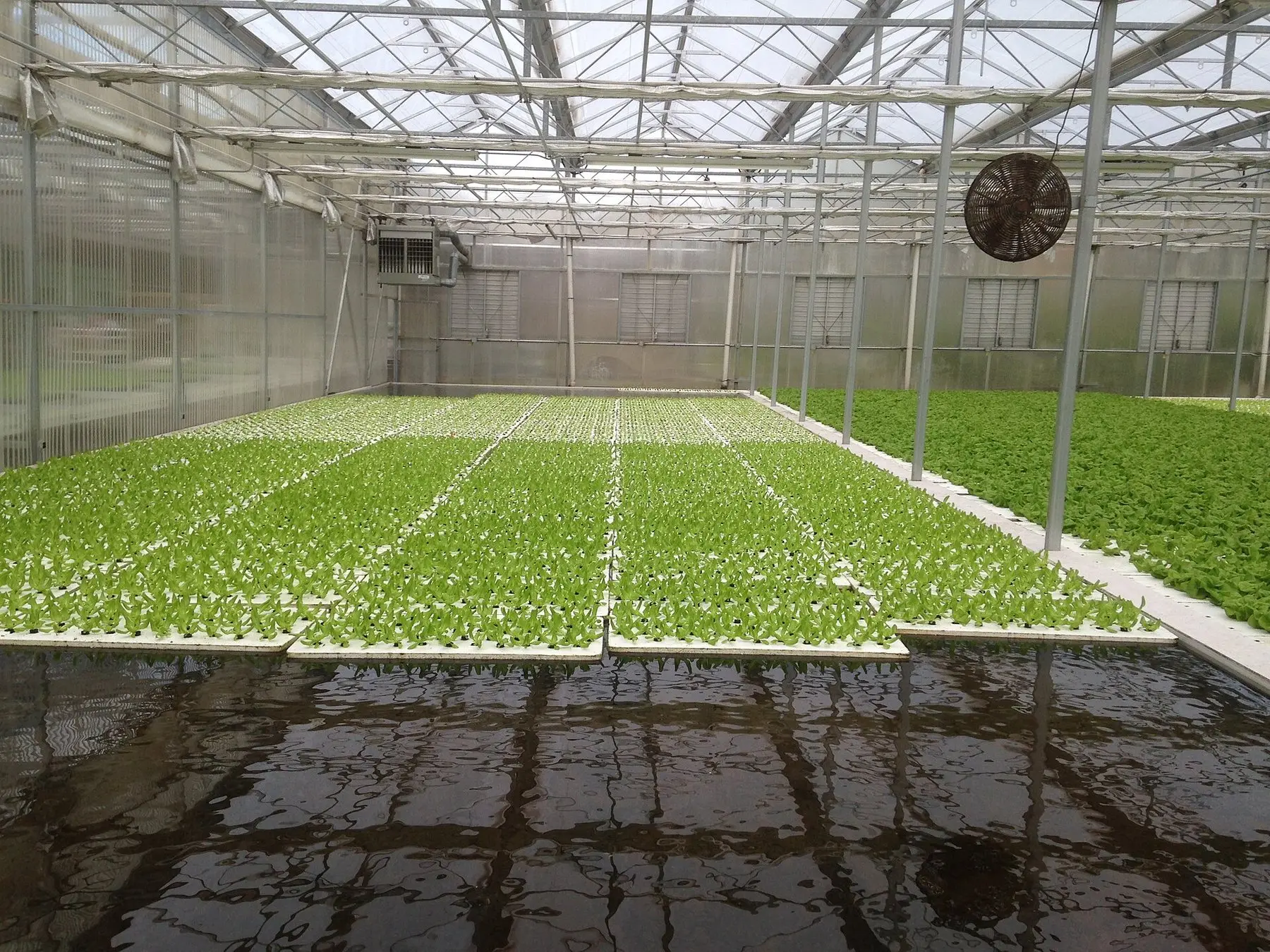
Deep water culture is the least complicated way to grow hydroponically: a bucket of nutrient solution, an air pump, and a plant sitting in a net pot with its roots hanging into the water.
Plants grow noticeably faster than in soil, because roots get water, oxygen and nutrients simultaneously without having to search for any of them. The catch is that the whole thing depends on one component. If the air pump stops, the roots suffocate within hours.
How it works
Four parts:
- A reservoir — a bucket or tote holding the nutrient solution.
- A lid with net pots, holding the plants with roots dangling through.
- An air pump and airstone, running continuously.
- Nutrient solution — water plus dissolved mineral nutrients.
Roots sit permanently submerged, except for the top inch or so of “air roots” above the water line that take oxygen directly. The airstone keeps dissolved oxygen high throughout the solution.
That is the entire mechanism, and its simplicity is the appeal: no timers, no pumps circulating solution, no growing medium, and one moving part.
Aeration is not optional and cannot be paused
Roots respire — they consume oxygen — and still water holds very little. Turn the air pump off and dissolved oxygen falls within hours, roots begin to suffocate, and anaerobic pathogens like Pythium move in. A power cut overnight can end a crop. If you build a DWC system, plan for what happens when the power fails: a battery-backed air pump is cheap insurance.
Where it sits among hydroponic systems
| System | How it works | Complexity | Tolerates a power cut |
|---|---|---|---|
| Deep water culture | Roots permanently in aerated solution | Lowest | Poorly — hours |
| Recirculating DWC | Multiple linked DWC buckets, shared reservoir | Low–medium | Poorly |
| Nutrient film technique | Thin film of solution flows over roots | Medium | Poorly — minutes to hours |
| Ebb and flow | Tray floods and drains on a timer | Medium | Well — medium holds moisture |
| Drip system | Solution dripped onto a medium | Medium | Well |
| Wick system | Passive capillary feed | Lowest | Very well; slow growth |
| Aeroponics | Roots misted in air | Highest | Very poorly — minutes |
DWC is where most people start, because you can build one from a bucket, a net pot, an aquarium air pump and an airstone.
The numbers to hold
pH: 5.5 to 6.5. This matters more in hydroponics than in soil, because there is no soil buffering anything. Outside that band, specific nutrients become chemically unavailable even though they are dissolved in the water — you see a deficiency you cannot feed your way out of, which is the same lock-up mechanism that affects blueberries in alkaline soil.
EC (electrical conductivity), a proxy for nutrient strength:
- Seedlings and cuttings: 0.8–1.2
- Leafy greens: 1.2–1.8
- Fruiting plants: 2.0–2.4
Reservoir temperature: 65–68°F. Warm water holds less dissolved oxygen and favours Pythium. This is the single most important environmental number in the system.
Water level: the base of the net pot should sit just above the solution once roots are established, leaving an air gap. Beginners commonly fill to the brim, which drowns the air roots.
Check pH and EC daily at first, then every couple of days once you know how your system drifts. Change the solution completely every one to two weeks.
Root rot: the failure mode
Healthy DWC roots are white or cream and slightly fuzzy. That fuzz is normal root hair, not disease.
Root rot presents as brown, slimy roots with a sour smell, and the plant wilts even though it is sitting in water — because the damaged roots can no longer take any up.
The causes are always the same three:
- Warm solution — above about 70°F.
- Insufficient aeration — undersized pump, blocked airstone, pump switched off.
- Light reaching the solution — which grows algae, and algae consume oxygen at night.
Prevention is simply the inverse: keep it cool, keep it aerated, keep it dark. Use opaque reservoirs or wrap clear ones. Beneficial bacteria products and peroxide-based treatments both have a role, but neither substitutes for fixing the temperature and oxygen.
What to grow
Excellent: lettuce, kale, chard, bok choy, spinach, basil, mint, parsley, coriander. Leafy crops in DWC frequently run at roughly twice the speed of the same plant in soil.
Good, in a large single-plant bucket: tomatoes, peppers, cucumbers. These need a five-gallon reservoir per plant, sturdy support, and much closer attention to EC — the trellising principles in cucumber trellis apply just as much here.
Poor: strawberries do work but prefer a drip or NFT system; anything needing a dry period is a bad fit.
Not at all: carrots, potatoes, onions, garlic and other root crops. The harvested part needs a medium to form in.
Building a simple one
- A 5-gallon opaque bucket with a lid, or a storage tote for multiple plants.
- Net pots, 3 to 6 inches, cut into the lid.
- An aquarium air pump rated for the volume, plus tubing, a check valve and an airstone.
- Growing medium for the net pot — clay pebbles, rockwool, or coco coir. This holds the plant only; it is not the root zone.
- Hydroponic nutrients — a two- or three-part mineral formulation. Ordinary houseplant feed does not contain the full range of elements a plant needs when soil is supplying none of them.
- A pH meter and an EC meter. Not optional; guessing does not work here.
- pH up and pH down solutions.
Start seeds in rockwool or coco plugs, transplant into the net pot once roots appear through the bottom, and keep the initial water level high enough to touch the base of the plug until roots reach down.
Run the solution slightly weak while you learn
Over-concentrated nutrient solution burns roots and the damage is not quickly reversible; slightly weak solution just slows growth for a few days. When you are unsure of your EC readings or your mixing, err low. It is much easier to add nutrients to a reservoir than to take them out.
Common questions
What is deep water culture hydroponics?
Why do roots need an air pump in deep water culture?
What pH and EC should a DWC reservoir hold?
What causes root rot in deep water culture, and how do you stop it?
What grows well in deep water culture?
Is deep water culture better than other hydroponic systems?
Backyard Weekly
Know what to plant, week by week
Free planting calendar. Join the weekly email for seasonal jobs, fixes for what is going wrong, and gear worth buying.
Set MONETIZATION.email.endpoint in src/config/site.ts to enable this form.
By subscribing you agree to our privacy policy. Grow In Backyard will never sell your address.
Keep reading
Potting Soil: What Is Actually in the Bag, and Which to Buy
Potting mix contains no soil at all, and that is the point. What each ingredient does, why garden soil fails in a container, and how to read a bag honestly.
How to Grow Strawberries (And Get Fruit the First Year)
Strawberries are easy to grow and easy to get wrong. Which of the three types to plant, why you pinch the first flowers, and how to keep a bed producing.
Outdoor Plants in Pots: What Survives, and What Kills Them
A pot outdoors is a harsher place than the ground — hotter, drier, and colder in winter. How to pick plants and pots that cope, and get through the cold.
How Deep to Plant Potatoes (And Why Hilling Matters More)
Four inches at planting, then hill as they grow. Why planting deep in cold spring soil backfires, and how depth differs in containers and no-dig beds.