
Why Do Crickets Make Noise at Night? It Is Only the Males
Crickets chirp at night to attract females and warn off rivals, by rubbing their wings together. Why it stops when you approach, and how to quiet one indoors.
 By
On this page
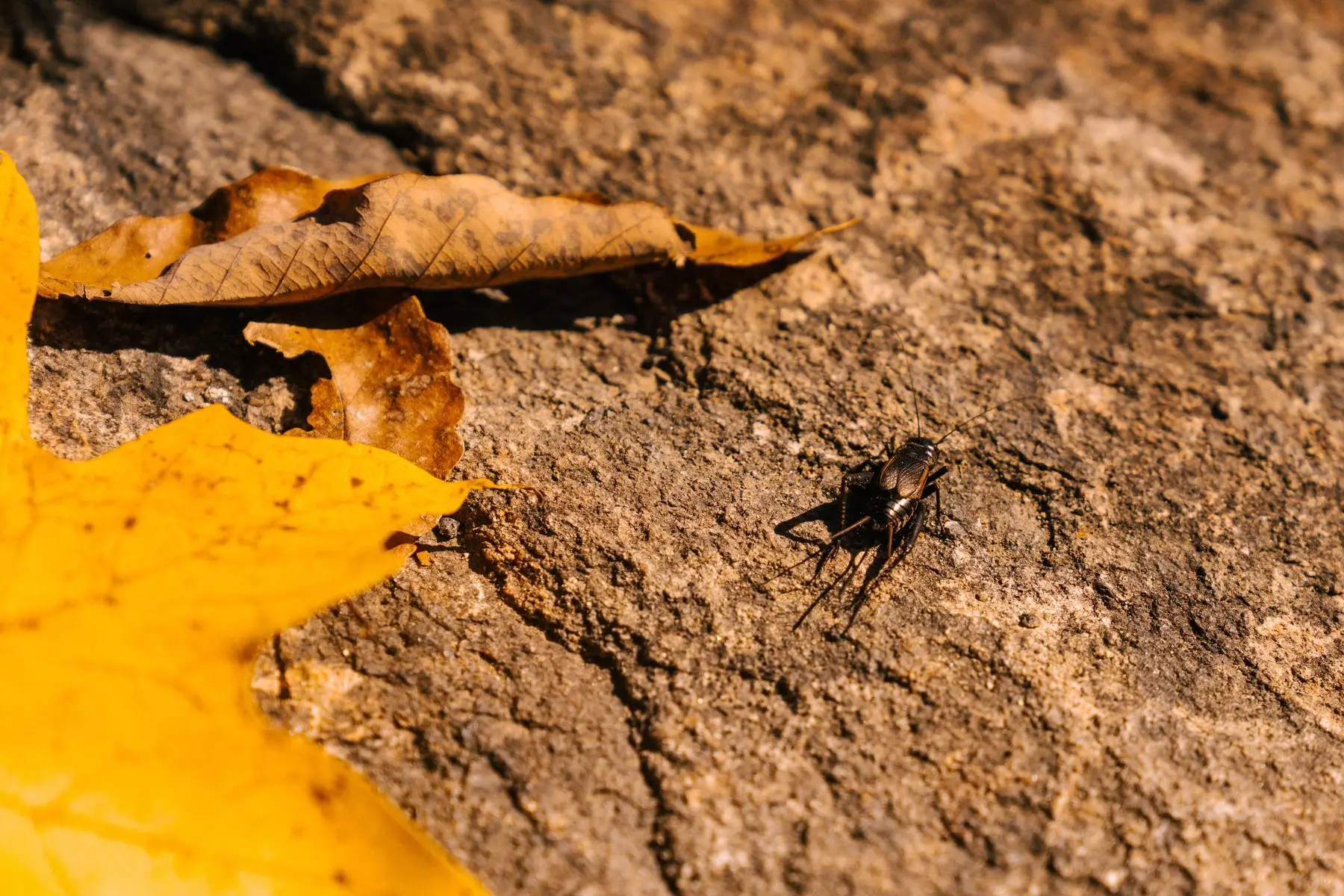
Only the males chirp, and they are doing one of two things: calling females or warning off other males. Everything else about the behaviour follows from that.
How the sound is actually made
The common description — rubbing its legs together — is wrong.
- The male raises his forewings into a vertical position
- A hardened scraper on one wing is drawn across a file of ridges on the other
- A membrane on the wing amplifies the vibration
- Some species dig burrows shaped as horns to amplify it further
That last step is why a two-centimetre insect can be audible across a garden. A mole cricket in a properly shaped burrow is closer to a loudspeaker than to an insect.
Why at night
| Day | Night | |
|---|---|---|
| Predators | Birds hunting by sight | Far fewer |
| Being located by the call | Dangerous | Much safer |
| Air | Warm, turbulent | Cool, still — sound carries further |
| Cricket activity | Sheltering | Active |
Singing is inherently risky: it tells everything nearby exactly where you are. Night reduces the cost of that without reducing the benefit.
The chirp as a thermometer
Crickets are cold-blooded, so the muscles driving the wings speed up as it warms.
Dolbear’s law, for the snowy tree cricket: count chirps in fourteen seconds, add forty, and you have a rough temperature in Fahrenheit. Species differ in the constants, but every one of them chirps faster when warmer.
Why it goes quiet when you walk over
Crickets detect ground vibration through organs in their legs and airborne sound through membranes on the front legs. Your footsteps arrive long before you do.
Stand still for a minute or two and it starts again — which is exactly the technique for finding one in a garage at midnight.
Getting one out of the house
Finding it: wait for the chirp, walk toward it, stop when it stops, wait, repeat. They like warm, dark, humid spots — near boilers and water heaters, in basements, behind appliances, under cupboards.
Keeping them out:
- Seal gaps around doors, vents, pipe entries and window frames
- Reduce damp in basements and utility spaces
- Cut outdoor lighting near doorways — lights bring them to the house, and then they come in
Outdoors they are worth leaving alone entirely: they eat plant material and organic debris and feed a great many other things. A lone cricket in a garage is a noise problem, not a pest problem.
Common questions
Why do crickets make noise at night?
How do crickets make that sound?
Why does the chirping stop when I get close?
Do crickets chirp faster in warm weather?
How do I stop a cricket chirping in the house?
Are crickets harmful?
Backyard Weekly
Know what to plant, week by week
Join the weekly email for seasonal jobs, fixes for what is going wrong, and gear worth buying.
Not ready to subscribe? The planting calendar is free and needs no email.
By subscribing you agree to our privacy policy. Grow In Backyard will never sell your address.
Keep reading
What Attracts Lightning Bugs? Darkness, Damp and Long Grass
Fireflies need unlit, undisturbed, damp ground with leaf litter and long grass. What actually draws them in, and why porch lights drive them out.

Are Butterflies Attracted to Light? Moths Are, They Aren't
Butterflies fly by day and are not drawn to lamps — moths are. What actually pulls butterflies in, and why night lighting still harms them.
How to Stop Frogs Croaking at Night in Your Yard
Croaking is breeding calling, and it stops when the breeding water does. What works, why sound deterrents do not, and how long the season actually lasts.

Why Do Deer Only Come Out at Night? They Don't — You Do
Deer are crepuscular, most active at dawn and dusk. Where they seem nocturnal it is usually learned avoidance of people, dogs and hunting pressure.