
Are Butterflies Attracted to Light? Moths Are, They Aren't
Butterflies fly by day and are not drawn to lamps — moths are. What actually pulls butterflies in, and why night lighting still harms them.
 By
On this page
No. The insects round your porch light are moths — and the confusion is worth clearing up, because the lighting question has a real answer and it is not about butterflies.
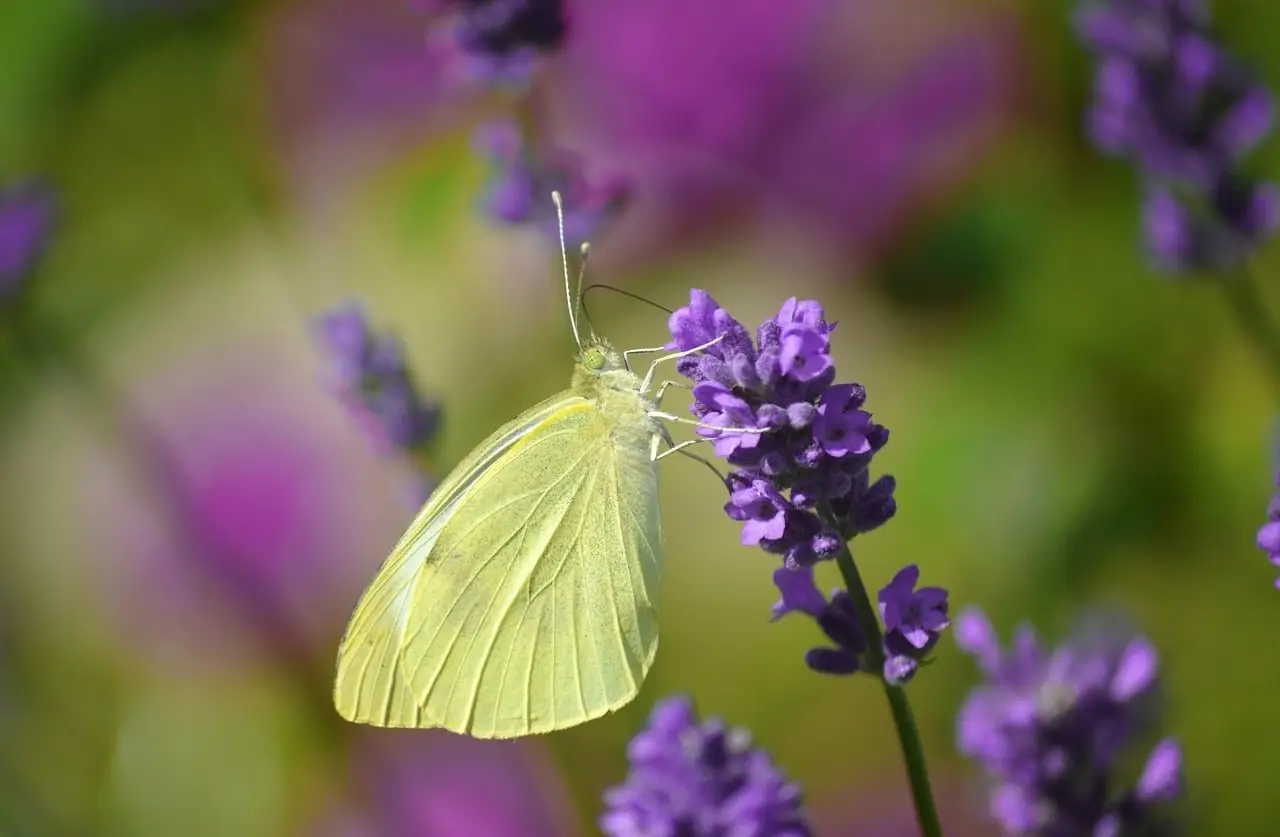
Butterfly or moth
| Butterfly | Moth | |
|---|---|---|
| Antennae | Thin with a club at the tip | Feathery, tapered, no club |
| Rest position | Wings together over the back | Flat or tented |
| Active | Day | Mostly night, some by day |
| Drawn to lamps | No | Yes |
| Pupa | Bare chrysalis | Usually a silk cocoon |
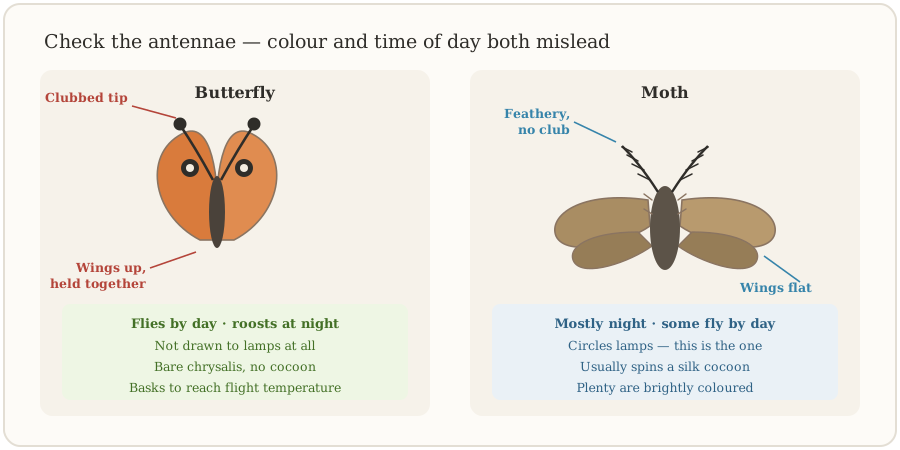
Colour and time of day are the two clues people reach for and the two that mislead: plenty of moths fly in daylight and plenty are brilliantly coloured. Check the antennae.
Why moths orbit a bulb and butterflies never do
The old account is the moon: a nocturnal insect holding a distant light at a constant angle flies straight, and a nearby lamp turns that constant angle into a spiral.
Recent high-speed filming points at something more specific — moths tilt their backs toward the brightest thing in view to know which way is up. Under the sky that works perfectly. Beside a lamp it locks them into a circling, climbing, stalling trap.
Butterflies fly by day, under a sky where up is never in question, so neither behaviour was ever selected for.
What actually pulls butterflies into a garden
- Sun. Open, sheltered, sunny spots and something flat to bask on — they cannot fly until warm
- Nectar in purple, yellow, orange, pink and red, on flat or clustered heads they can land on
- A long season. Something in flower March to October, not just a July peak
- Host plants for the caterpillars — nettles, grasses, and the specific plants each species needs. This is the part most gardens miss
- A damp patch or mud for minerals, and overripe fallen fruit in late summer
Nectar brings visitors; host plants bring residents
A garden with only nectar is a service station. Host plants are what make butterflies breed there, and they are why a nettle patch in a corner does more than another buddleia.
The lighting question, answered properly
Adult butterflies are asleep, so they are not the casualty. The damage is real anyway:
- Moths — navigation, feeding and mating disrupted, and they are significant night pollinators
- Caterpillars — artificial light at night alters feeding and development in several species
- Predation — lit areas concentrate insects where bats and spiders exploit them
If you want garden lighting that costs less: warm colour temperature, shielded and pointing down, on a motion sensor, and off when nobody is outside. That covers most of the harm without giving up the lighting.
Common questions
Are butterflies attracted to light?
Why are moths attracted to light and butterflies not?
Do butterflies come out at night?
Does outdoor lighting harm butterflies?
What are butterflies actually attracted to?
How do I tell a butterfly from a moth?
Backyard Weekly
Know what to plant, week by week
Join the weekly email for seasonal jobs, fixes for what is going wrong, and gear worth buying.
Not ready to subscribe? The planting calendar is free and needs no email.
By subscribing you agree to our privacy policy. Grow In Backyard will never sell your address.
Keep reading
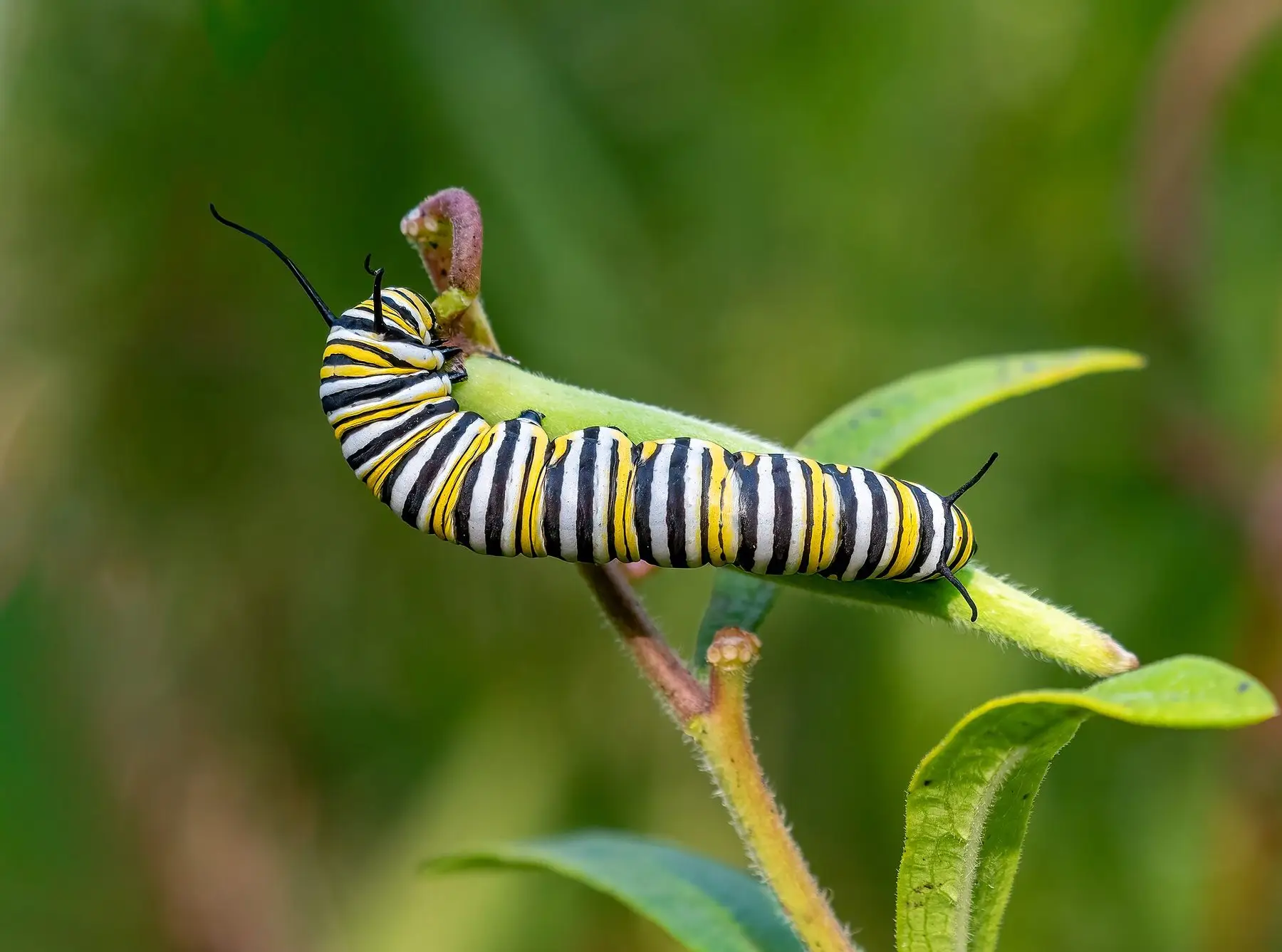
What Butterflies Need to Survive in a Backyard
Nectar flowers feed adult butterflies but cannot raise any. Caterpillars only eat specific host plants — that gap is why most butterfly gardens stay empty.
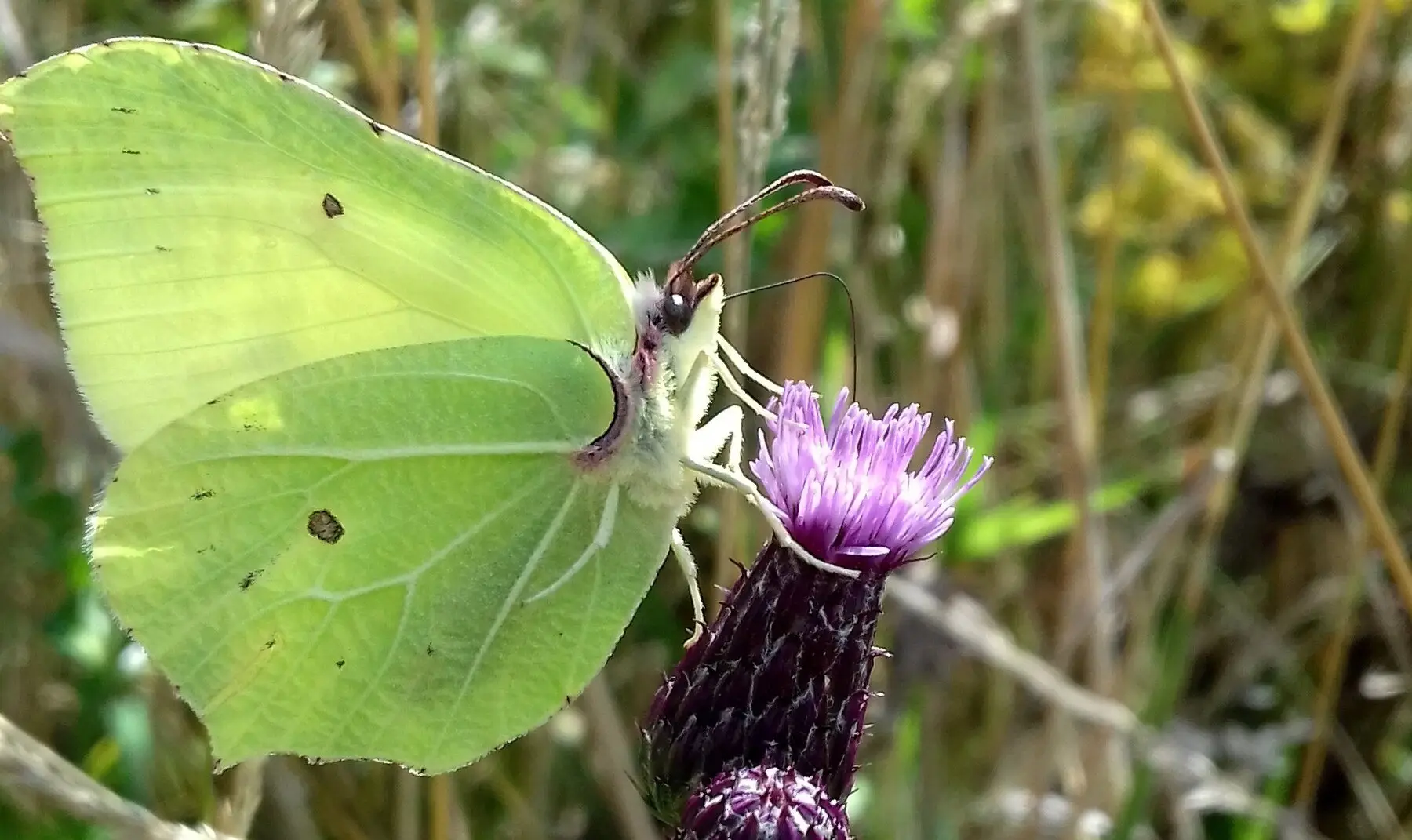
What to Feed Butterflies (And How to Get One to Land on You)
Butterflies drink rather than eat — nectar, fruit juice and mineral-rich mud. A sugar-water feeder, a fruit plate, and the reason yellow and purple work.
Do Butterfly Houses Work? Almost Never, and Here Is Why
Butterfly houses are sold everywhere and are essentially never used by butterflies. What the research found, and what actually helps them overwinter.

Best Binoculars for Backyard Bird Watching — 6 Picks
For the best binoculars for backyard bird watching, close focus beats magnification. 6 pairs compared across budgets. See which hits yours.