
How to Stop Frogs Croaking at Night in Your Yard
Croaking is breeding calling, and it stops when the breeding water does. What works, why sound deterrents do not, and how long the season actually lasts.
 By
On this page
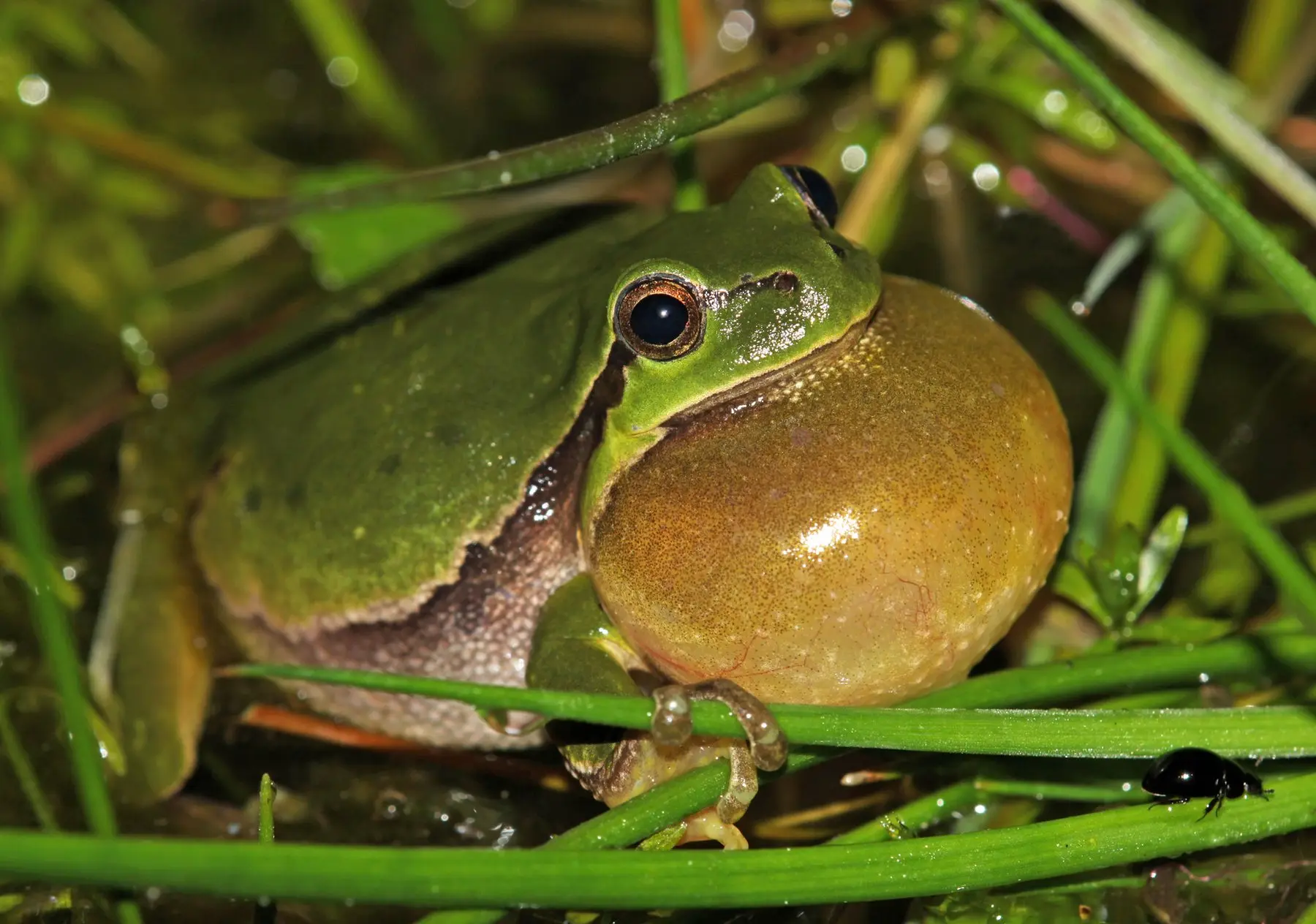
Croaking is breeding calling. Male frogs call from the edge of water to attract females, and they call hardest on warm, humid nights during a season that lasts a few weeks. That single fact rules out most of what gets sold as a solution.
Find the water first
Everything else is guesswork until you know where they are calling from. Go out after dark and walk toward the sound.
Common sources, in rough order of likelihood:
- A pond, yours or a neighbour’s
- A swimming pool left uncovered
- A tarp, pool cover, boat cover or trampoline mat holding rainwater
- A drainage ditch or swale
- A low spot in the lawn that puddles for a week after rain
- Buckets, wheelbarrows, saucers under pots, clogged gutters
If the source is next door
Nothing on your property will fix a chorus coming from a neighbour’s pond, and repellents will not create a sound barrier. That situation is a conversation with the neighbour, or sound masking indoors — not a product.
What works, and what does not
| Approach | Effect on calling | Verdict |
|---|---|---|
| Draining or filling temporary water | Ends it at the source | The fix |
| Covering the pool overnight | Ends pool-side calling | Very effective |
| Yellow bug bulbs, lights off | Fewer frogs near the house | Effective, cheap |
| Clearing damp cover by the foundation | Moves the chorus further off | Worth doing |
| A sudden noise or torch | Silences it for seconds to minutes | Temporary |
| Ultrasonic repellers | No demonstrated effect on amphibians | Does not work |
| Repellent sprays and granules | Do not affect calling males | Does not work |
| Fan or white noise indoors | Covers the remaining weeks | Sensible stopgap |
Why sound deterrents fail
A chorus goes quiet when you open the back door, which is exactly why people believe sound works. It does not.
What you are seeing is a predator response: the frogs stop calling, wait, and start again once nothing has happened. Repeat it and they stop reacting at all, usually within the same night. A device that plays a noise on a timer is teaching them to ignore the noise.
Ultrasonic pest repellers are a separate claim with the same outcome. They are marketed against rodents, insects and amphibians alike, and there is no good evidence they affect any of them — least of all frogs, whose hearing is tuned to the low-frequency range their own calls sit in.
What frogs actually avoid
If you want to make an area less attractive rather than silence it directly, the levers are dryness, darkness and exposure:
- Dry ground. Frogs lose water through their skin and will not settle where they cannot stay damp.
- Short, open planting. No cover means no daytime shelter.
- No insect concentration. Fewer bugs, less reason to be there.
- Open sightlines. Frogs avoid exposed ground with no retreat.
That is also a fair description of a lawn right up against the house, which is why choruses rarely sit on one — they sit where the damp, planted, lit edge is.
The case for living with it
The season is short and the chorus is doing something useful. A yard loud enough to keep you awake in May is a yard with a working amphibian population, and those frogs spend the rest of the year eating mosquitoes, slugs, beetles and cutworms in quantities no spray matches.
If the calling comes from a permanent pond you otherwise value, a fan and a closed window for a few weeks costs less than the pond does — and draining it trades a temporary noise for a permanent loss of everything it supports.
Step by step
- Time
- P14D
- Cost
- $20
- You need
- Yellow "bug light" bulbs, Pond or pool cover, if applicable
- Tools
- Rake for clearing damp cover
Find the water they are calling from
Walk the yard after dark and follow the sound. Calling males sit at the edge of water, so the chorus points at the breeding site — usually a pond, a pool, a ditch, a tarp holding rainwater or a low spot that has puddled for a week. Neighbouring properties count; if the source is not yours, the fixes below are the wrong tool.
Drain or cover the temporary water
Anything holding still water for more than a few days is a breeding site. Empty saucers, tarps, buckets, wheelbarrows and clogged gutters, and fill or re-grade puddling low spots. Cover a swimming pool overnight. This is the change that actually ends the calling rather than muffling it.
Turn the lights down
Outdoor lighting concentrates insects, insects concentrate frogs, and more frogs near the house means a louder chorus at the window. Yellow bug bulbs, downward-aimed path lights and a motion sensor on the porch light all reduce how many are calling within earshot.
Clear the damp cover near the house
Dense groundcover, leaf litter and stacked debris against the foundation give frogs somewhere to spend the day close to the bedroom window. Clearing a few feet back moves the chorus further off without removing frogs from the garden.
Mask the sound indoors for the rest of the season
Breeding choruses are seasonal and usually run a few weeks. A fan, a white-noise machine or a closed window with a heavier curtain covers the remainder, which is a far better trade than draining a pond that is otherwise doing good work.
Common questions
How do you stop frogs from croaking at night?
What sounds make frogs stop croaking?
Why are the frogs so loud all of a sudden?
How long do frogs croak for at night?
Is it illegal to get rid of frogs?
Backyard Weekly
Know what to plant, week by week
Join the weekly email for seasonal jobs, fixes for what is going wrong, and gear worth buying.
Not ready to subscribe? The planting calendar is free and needs no email.
By subscribing you agree to our privacy policy. Grow In Backyard will never sell your address.
Keep reading
How to Get Rid of Frogs — 3 Fixes That Cut the Draw
How to get rid of frogs starts with the water and light drawing them in. 3 fixes compared for yards and pools. See which matches your problem.
How to Keep Frogs Away From a Pool (and Out of It)
Frogs come to a pool for light, insects and water to breed in. Remove those three draws, give them a way out, and the nightly cleanup stops.
How Long Do Lizards Live? By Species, Wild vs. Kept
Backyard lizard lifespan runs from 1 year to over 20, depending entirely on species and whether it is wild or kept as a pet. The real numbers, by common type.
Snakes in a Crawl Space or Under the House: What to Do
A snake under the house is following rodents and cool air. How to confirm it, get it out safely, and seal the gaps so the next one does not get in.