
Why Do Chipmunks Chirp? What Each Sound Actually Means
The chip, the chuck and the trill are three different alarms for three different threats. How to read them, and what the yard is telling you.
 By

On this page
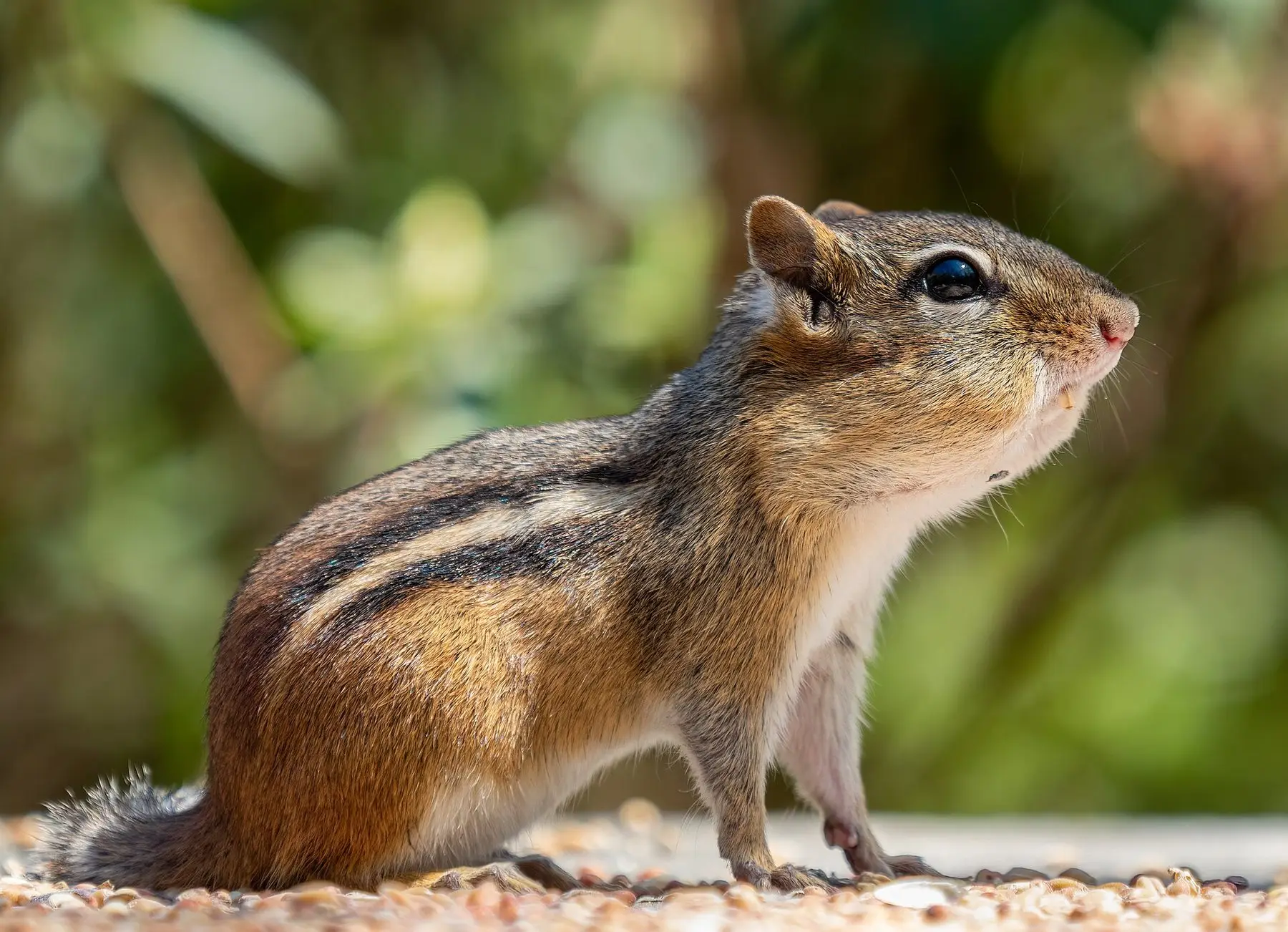
That relentless, bird-like chipping from somewhere near the woodpile is an alarm call, and it is almost certainly about you, the cat, or a hawk. Chipmunks have different calls for different threats, and you can read them from a window.
The three sounds
| Call | Sounds like | Usually means |
|---|---|---|
| Chip | Sharp, high, bird-like, repeated steadily for minutes | Ground predator in sight — cat, fox, dog, person |
| Chuck | Deeper, slower, more spaced out | Aerial predator — hawk, or something overhead |
| Trill | Rapid, 1–2 seconds, urgent | The caller is fleeing, right now |
| Chatter and squeaks | Close-range, quiet | Social and territorial disputes, mating |
The chip is the one that brings most people to this question, because it is astonishingly loud for an animal that weighs about three ounces, and because it can continue unbroken for twenty minutes or more.
Why it goes on so long
Because the predator has not left.
The call is not a single announcement. It is a sustained broadcast, kept up as long as the caller can still see the threat, which does two things at once: it warns every chipmunk in earshot, and it tells the predator it has been spotted. Many ambush hunters give up once they have lost surprise, so the call is also aimed at the cat.
If it stops suddenly
A call that trails off usually means the threat wandered away. A call that stops abruptly often means something moved closer, and the chipmunk has gone silent and still instead. Neither is a reason to intervene.
Yes, it is about you
Chipmunks do not make fine distinctions among large ground predators, and a person weeding a bed ten feet from a burrow entrance is, as far as the animal is concerned, the same category of problem as a fox.
It costs the chipmunk nothing but time, and it will go back to feeding once you have been stationary and boring for a few minutes. Sitting still on a step is the fastest way to end the alarm and usually the best way to watch them.
What else is calling in your yard
Two frequent misidentifications:
“A chipmunk is chirping at night.” Chipmunks are strictly diurnal and are underground by dusk. Night calling is almost always tree frogs, crickets, katydids or a screech owl, whose trill fools people regularly.
“A bird is chipping for twenty minutes.” Often this is the chipmunk. A sustained, unvarying, metronomic chip from low down near cover is far more likely a chipmunk than any bird.
Red squirrels also chatter and scold loudly, at greater length and with more variety, usually from higher up.
What the calling tells you about the yard
A yard with a lot of chipmunk alarm calling usually has one or more of:
- A resident cat using it as hunting ground
- A hawk — a Cooper’s or sharp-shinned hawk working the feeders
- A bird feeder, which supports far more chipmunks than the yard would otherwise carry, and which draws the hawks in turn
- Good cover: stone walls, woodpiles, retaining walls, dense shrubs
If the burrowing is the real problem
The calling is seasonal and threat-driven; the tunnelling is what actually causes damage. If chipmunks are undermining a patio base, a retaining wall or a foundation:
- Cut the food supply. Spilled birdseed is the single biggest driver of high chipmunk density. Sweep it up, use no-mess seed, or pause feeding.
- Gravel, not soil, in a band against foundations and under decks — they dislike digging it.
- Quarter-inch hardware cloth over vents, and buried as an L-shaped apron along vulnerable walls.
- Remove cover immediately against structures: woodpiles, dense groundcover, stacked materials.
That last list, unlike trapping, actually holds — remove one chipmunk from a yard with spilled seed and good cover and another one arrives inside a fortnight.
Common questions
Why do chipmunks chirp?
What does a chipmunk sound like?
Why is a chipmunk chirping non-stop for an hour?
Are chipmunk calls a warning to me or about me?
Do chipmunks chirp at night?
Should I get rid of chipmunks that chirp constantly?
Backyard Weekly
Know what to plant, week by week
Join the weekly email for seasonal jobs, fixes for what is going wrong, and gear worth buying.
Not ready to subscribe? The planting calendar is free and needs no email.
By subscribing you agree to our privacy policy. Grow In Backyard will never sell your address.
Keep reading
What Do Chipmunks Eat? Seeds, Nuts, and a Lot Else
Chipmunks are omnivores hoarding seeds and nuts in cheek pouches — plus insects, eggs and fungi. What to feed them, what harms them, and why they dig your pots.
How Long Do Chipmunks Live? And Why They Dig Up Pots
Wild chipmunks rarely see three years — predators and winter mortality see to that. Realistic lifespan, what they eat, and why flower pots are such an easy target.
What Is Digging Holes in My Yard? Identify It by the Hole
Armadillos, skunks, groundhogs, voles and squirrels all dig differently. Hole size, shape, soil spray and timing identify the animal before you set anything.
Why Do Crickets Make Noise at Night? It Is Only the Males
Crickets chirp at night to attract females and warn off rivals, by rubbing their wings together. Why it stops when you approach, and how to quiet one indoors.