
How Fast Can Squirrels Swim? About 2 mph, and Reluctantly
Grey squirrels swim at roughly 2 mph using a dog-paddle, and can cross a mile of open water. Why they do it, and why a swimming squirrel is often in trouble.
 By
On this page
Squirrels swim at about 2 miles per hour — a sixth of their running speed — using a dog-paddle with the head up and the tail trailing. They can cross a mile of calm water. They would much rather not.
The mechanics
| Speed | roughly 2 mph |
| Stroke | dog-paddle, forelimbs doing most of the work |
| Head | held clear of the surface |
| Tail | trailing behind as a rudder, not a paddle |
| Range | over a mile in calm water |
The tail is the detail people get wrong. On land it is a balance pole, a sunshade and a signalling flag; in water it is dead weight that steers. A swimming squirrel looks unbalanced and slightly comic for exactly that reason — the animal is doing something its body plan was not designed around.
Why they do it at all
- Dispersal. Young squirrels pushed out of a crowded range will cross water to reach unoccupied woodland. Historical accounts describe large numbers crossing rivers in years following a poor mast crop
- Escape. A squirrel cornered by a dog on a bank will take the water
- Accident. Falling from a branch over a pond, or off a pool edge
- A short cut between a dock and a boat, or across a narrow channel to a feeder
Why it costs them
Squirrel fur traps air but is not oiled the way a beaver’s or an otter’s is. Once soaked, it stops insulating, and a wet squirrel in cool weather has to dry and warm up before it can do anything else. That is the real reason for the long detours across branches and fences.
Swimming against the rest of their repertoire
| movement | speed |
|---|---|
| Sprint on the ground | 12–15 mph (grey), up to 20 (some ground squirrels) |
| Climbing a trunk | very fast, near running pace |
| Horizontal leap | 6–8 ft |
| Swimming | about 2 mph |
Swimming is the slowest thing in the list and the only one that leaves them unable to flee upward. That ranking is the whole explanation for their behaviour around water.
The pool problem, which is the common version
A swimming pool is a trap rather than a hazard. The walls are smooth and vertical, the coping overhangs, and an animal that falls in swims the perimeter looking for an exit that does not exist until it is too tired to keep its head up.
What fixes it:
- A floating animal escape ramp — a textured ramp that rests at the waterline
- A plank or pool noodle leaning from the deck into the water, if you want it free
- Covering the pool when it is not in use
- Pruning branches that overhang the water
- Checking the pool first thing in autumn, when dispersing young squirrels are moving
A water butt or a steep-sided trough is the same trap in miniature, and a stick left standing in it is the whole solution.
If you find one in the water
- Give it a route out rather than reaching in — a plank, a net, a broom handle
- Do not grab it. A frightened squirrel bites to the bone, and the bite is a medical matter
- Once out, leave it alone in a sheltered spot to dry and warm up
- A soaked, cold, unresponsive squirrel — particularly a young one — needs a licensed wildlife rehabilitator rather than home care. In most places keeping one is also illegal
A healthy adult that climbs straight up the nearest tree is fine. One that sits hunched and wet for an hour is not.
Common questions
Can squirrels swim?
How fast does a squirrel swim?
How far can a squirrel swim?
Do squirrels like water?
Why would a squirrel be swimming in my pool?
Can baby squirrels swim?
Backyard Weekly
Know what to plant, week by week
Join the weekly email for seasonal jobs, fixes for what is going wrong, and gear worth buying.
Not ready to subscribe? The planting calendar is free and needs no email.
By subscribing you agree to our privacy policy. Grow In Backyard will never sell your address.
Keep reading
How Fast Can Squirrels Run? 12 to 20 mph, By Species
Grey squirrels top out around 12–15 mph, fox squirrels a little higher, and ground squirrels near 20. Why the sprint matters less than the turning.
Where Do Squirrels Go When It Rains? Usually Nowhere
Light rain barely stops a squirrel — they carry on foraging and use the tail as an umbrella. What actually drives them into a drey, and when to worry.
Do Squirrels Have Good Eyesight? Sharp, Wide, and Colour-Blind
Squirrel vision is excellent for spotting movement and judging a jump, but they see only two colours. What that means for feeders and deterrents.
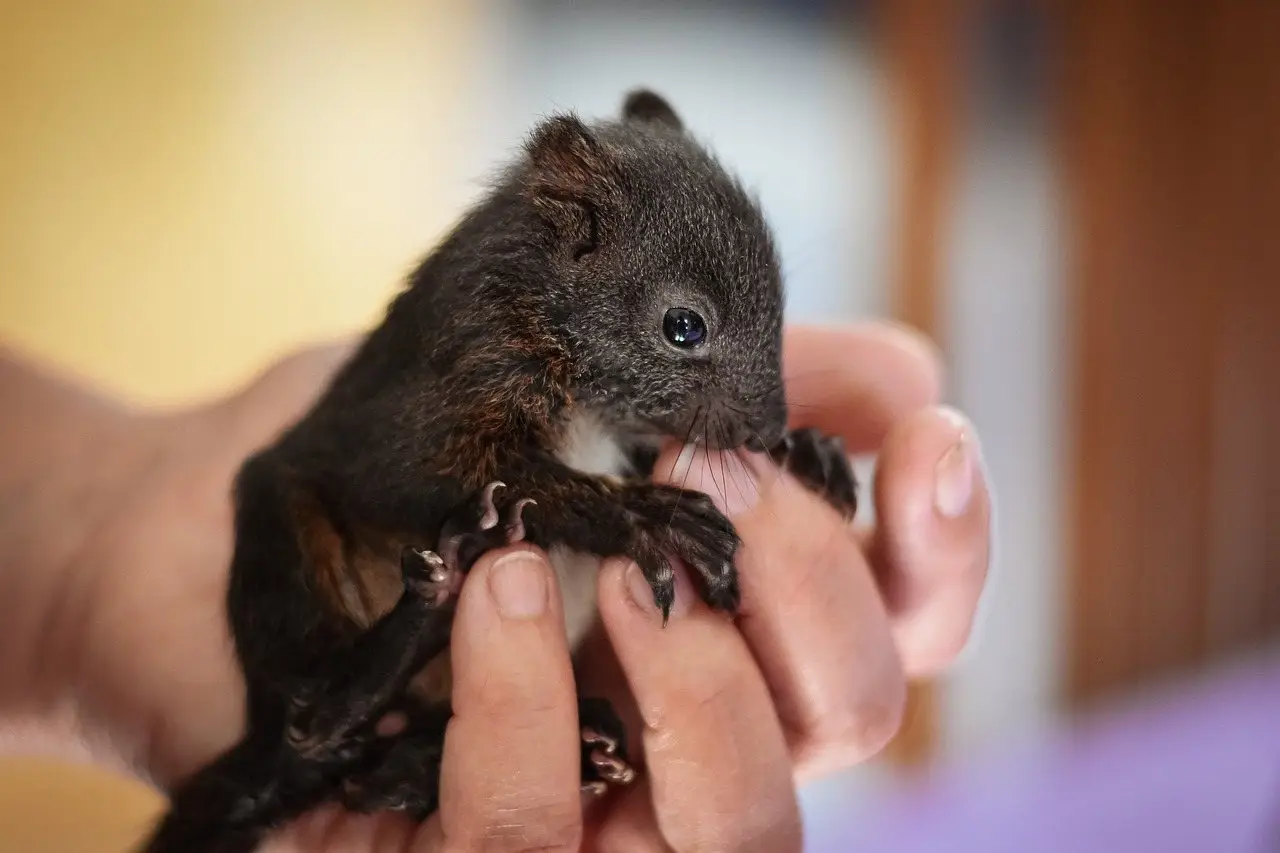
How Fast Do Baby Squirrels Breathe? And What It Tells You
A warm, healthy kit breathes steadily and quietly. What laboured, open-mouth or bubbling breathing means, and why it is a call rather than a home job.