
Where Do Squirrels Go When It Rains? Usually Nowhere
Light rain barely stops a squirrel — they carry on foraging and use the tail as an umbrella. What actually drives them into a drey, and when to worry.
 By
On this page
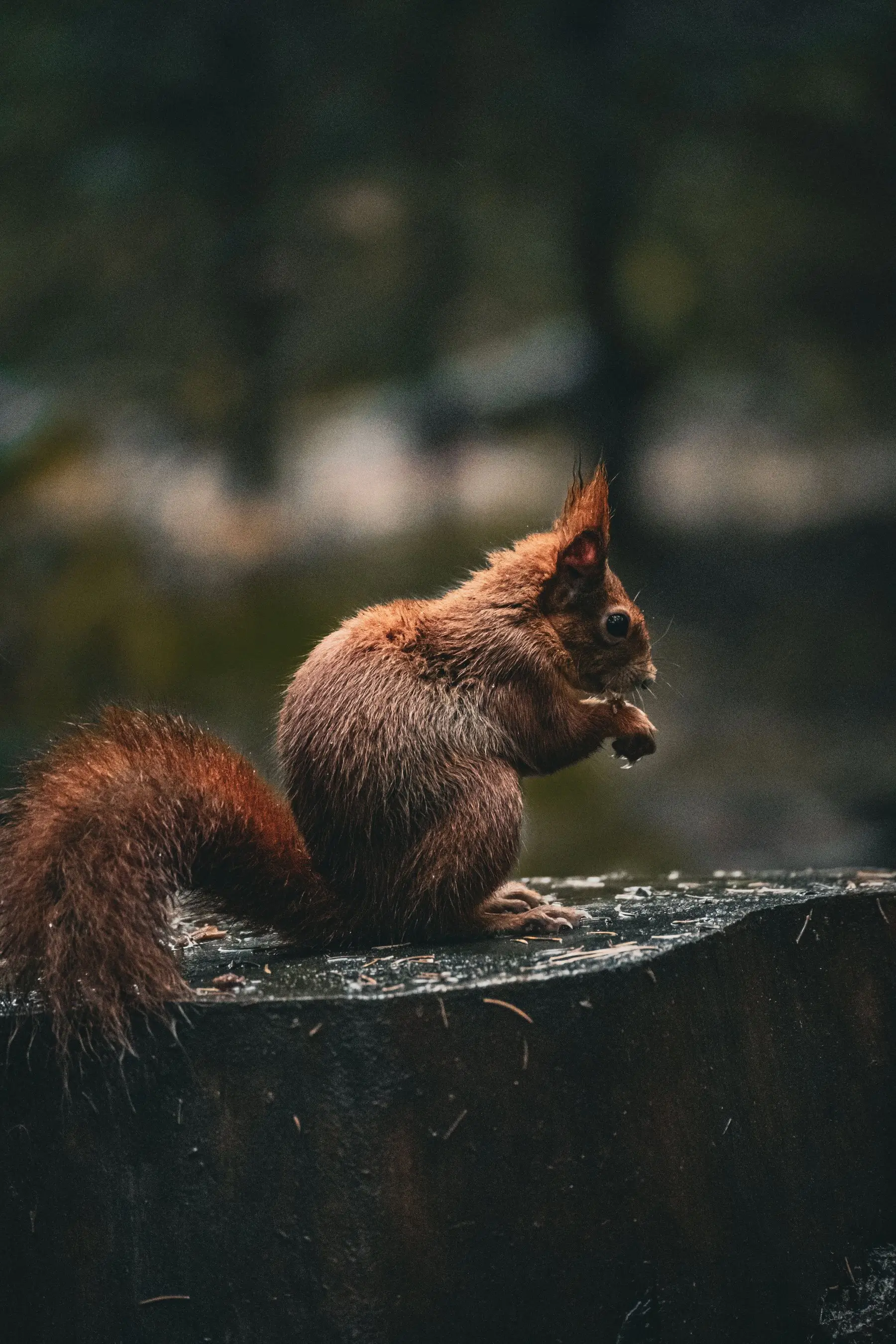
Mostly nowhere at all. A squirrel in light rain carries on exactly as before, with its tail folded over its head — which is the answer people are usually surprised by.
The shelters, ranked by how well they work
| What it is | In heavy rain | |
|---|---|---|
| Tree cavity | A hollow in a trunk or limb | Genuinely dry — the first choice |
| Drey | Twigs, leaves, moss in a fork | Damp. Better than nothing |
| Roof space, wall cavity | Ours, not theirs | Dry, warm — and a problem for you |
| Dense evergreen | Cover, not shelter | Breaks the worst of it |
A drey is not as weatherproof as it looks. It is a rough sphere about the size of a football, lined inside with softer material, and most squirrels keep more than one — but in driving rain the cavity wins every time.
That third row is why heavy weather and squirrels in the loft are connected. A run of cold wet days is when a squirrel starts testing the roofline.
Why rain alone rarely stops them
Squirrels run a high metabolism on small fat reserves. A day not foraging is expensive, so the calculation is not “is it raining” but “does staying out cost more than staying in”.
- Light rain — cost low. Carry on
- Heavy rain — soaked fur stops insulating; cost rises sharply
- Rain plus wind — the combination that really drives heat loss
- Cold as well — now shelter is clearly cheaper than food
- A poor autumn cache — pushes them out in weather they would otherwise sit out
The tail is doing more jobs than you think
Umbrella in rain, parasol in strong sun, blanket wrapped round the body when sleeping, counterweight in the canopy, and a signal flag when flicked during alarm calls.
It is the single most useful thing a squirrel owns, which is why one with a damaged tail is noticeably worse off.
When it is worth doing something
Almost never for an adult. A squirrel foraging in the wet is a squirrel behaving normally.
The exception is after a storm: high winds bring dreys down, and a young squirrel on the ground — soaked, cold, not moving much — is in real trouble. That is a job for a licensed wildlife rehabilitator. Do not warm it indoors and offer milk; cow’s milk is wrong for them and a chilled animal needs warming before anything else, in the right order, by someone who does it routinely.
Rain aside, the shelter they return to every evening is a different question — where squirrels sleep at night covers the drey and the winter cavity, and why they rotate between several.
Common questions
Where do squirrels go when it rains?
Do squirrels get wet in the rain?
What is a drey?
Do squirrels come out in the rain?
Why do squirrels hold their tails over their backs?
Should I worry about a squirrel out in bad weather?
Backyard Weekly
Know what to plant, week by week
Join the weekly email for seasonal jobs, fixes for what is going wrong, and gear worth buying.
Not ready to subscribe? The planting calendar is free and needs no email.
By subscribing you agree to our privacy policy. Grow In Backyard will never sell your address.
Keep reading
How Long Do Squirrels Live? Wild vs. What You'd Expect
Wild squirrels rarely see old age — most die in their first year. The realistic lifespan by species, and why the number is so much lower than people assume.
Why Do Squirrels Bury Nuts? And How They Find Them Again
Squirrels cache thousands of nuts a year, in separate holes, and relocate them by memory and smell — while faking burials for any squirrel watching.
What Not to Feed Squirrels (And Whether to Feed Them at All)
Peanuts, bread, chocolate and salted nuts all cause real harm. The safe list, why corn is worse than it looks, and the case against feeding squirrels.
Where Do Squirrels Go When It Snows? Into the Drey, Together
Grey and red squirrels do not hibernate. They wait out snow in a leaf drey or tree cavity, often huddled with others, and come out to dig for caches.