
Where Do Squirrels Sleep at Night? Dreys, Dens and Your Roof
Squirrels sleep in leaf dreys and tree cavities, keep several nests each, and share them for warmth in winter. How to tell a drey from a bird nest.
 By
On this page
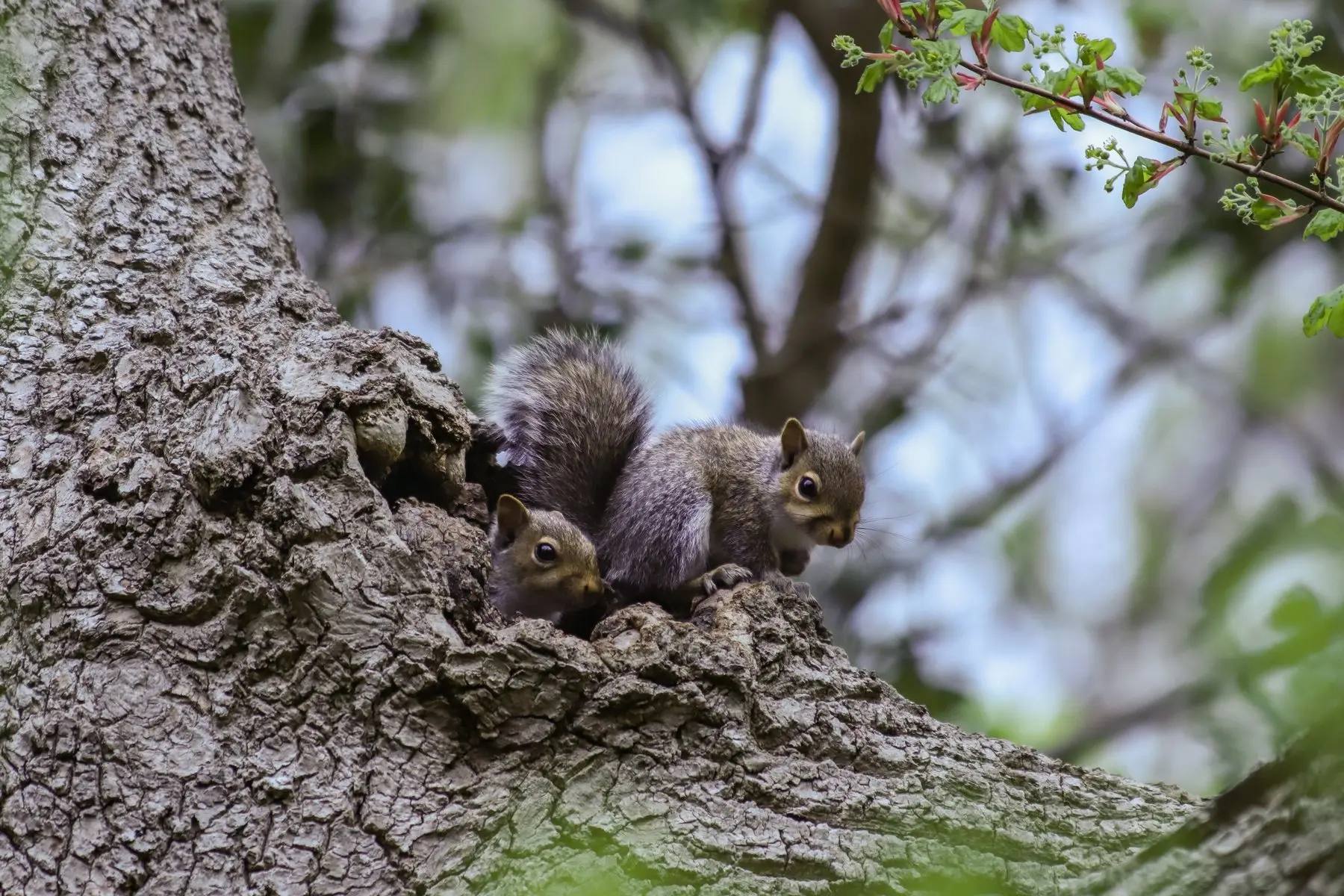
Two kinds of bed: a drey — the football of leaves in the branch fork — and a den, a cavity inside the trunk. Squirrels want the den, and settle for the drey.
The two kinds of nest
| Drey | Den | |
|---|---|---|
| What | Ball of leaves and twigs | Cavity inside the trunk |
| Where | Branch fork, high, near the trunk | Old woodpecker hole, rot hollow |
| Warmth | Good | Much better |
| Safety | Exposed to weather and predators | Far safer |
| Preferred | Fallback | Yes, strongly |
| Used for | A season, constantly repaired | Years |
A drey is better built than it looks. The outer shell is twigs with the leaves still on, woven and wedged tight; inside is a lined chamber of moss, grass, shredded bark and fur, with a small entrance. It sheds rain and holds heat well enough for a squirrel to sleep through a hard frost.
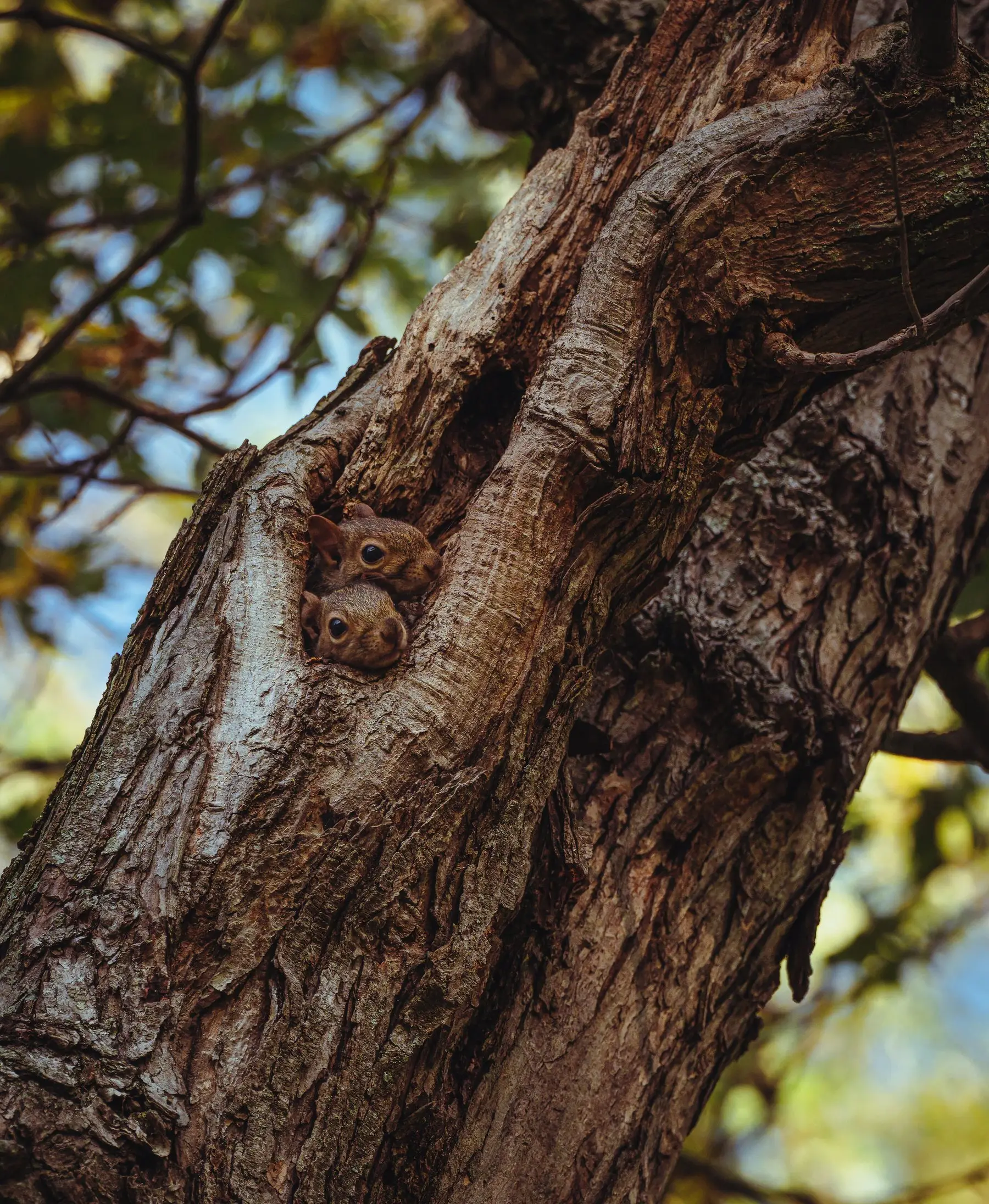
Dens are the prize, which is why mature trees with cavities matter so much — and why an attic looks, from a squirrel’s point of view, like the best den in the neighbourhood.
Telling a drey from a bird’s nest
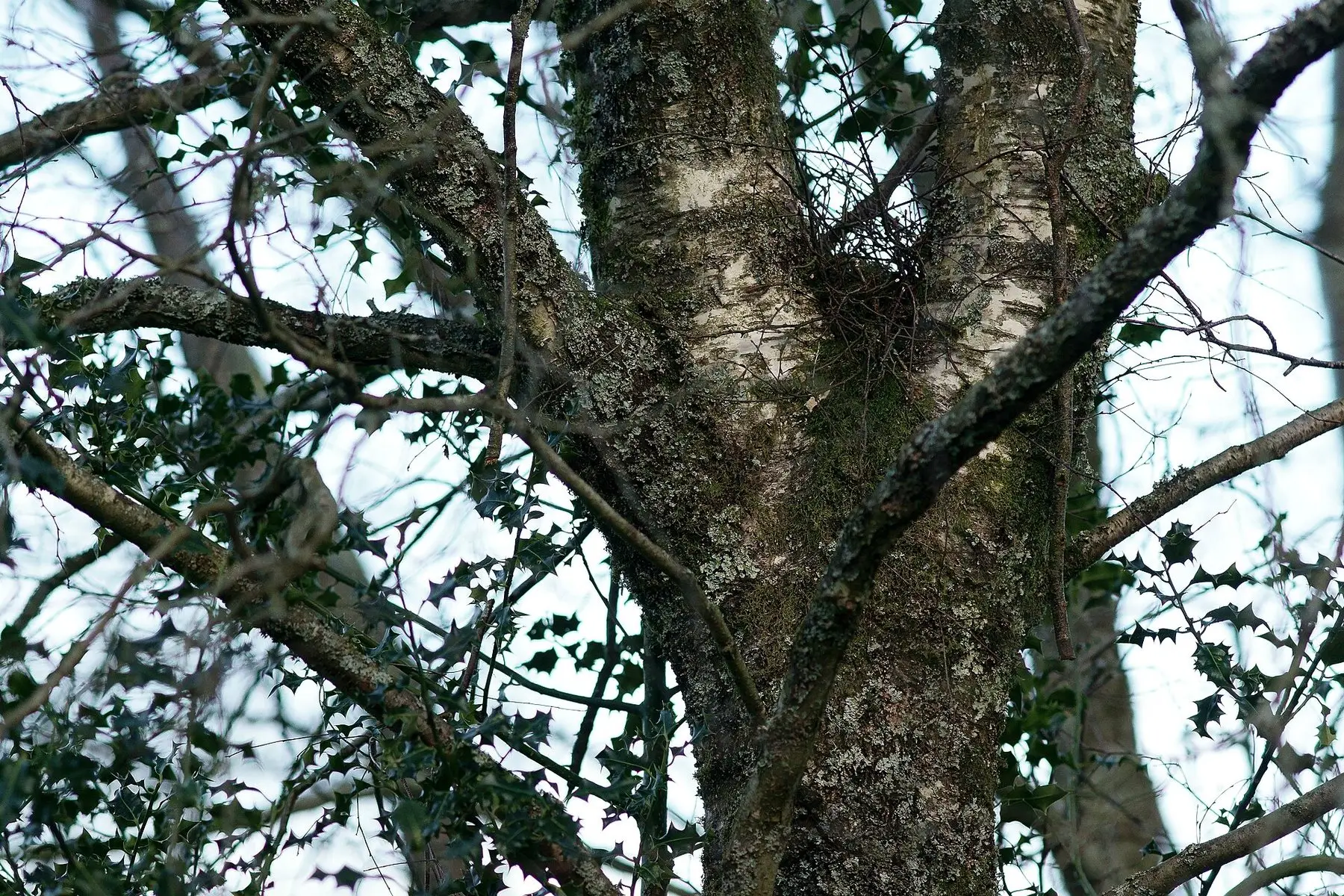
Leaves still on the tree in January
The easiest identification available. A mass of brown leaves still up in a bare winter tree is nearly always a drey.
Bird nests are cups, open at the top, smaller, more neatly built, and often out on thinner branches. A drey is a solid enclosed ball, roughly football-sized, wedged into a fork close to the trunk.
Several nests each
An adult squirrel maintains several nests across its range and rotates between them:
- Spreads the risk if a predator locates one
- Gives it somewhere to go when a nest floods or becomes flea-ridden
- Covers the territory, so it is never far from cover
It still returns to a good nest repeatedly, and a tree cavity gets used for years and is worth fighting over. Dreys are constantly repaired rather than built once — a squirrel carrying leaves in October is doing maintenance, not starting from scratch.
Sharing, and winter
Mostly solitary, unlike flying squirrels, which pile in by the dozen. But:
- Two or three greys commonly share a den in cold weather to save heat
- Siblings from a litter often overwinter together
- A mother with kits is the other case, and she will move the whole litter — carrying them one at a time by the scruff — if the nest is disturbed or infested
They do not hibernate. Grey and fox squirrels stay active all winter, emerging to retrieve cached food during the warmest part of the day. In severe weather they may stay in for a day or two, which is sitting it out rather than dormancy.
Ground squirrels and chipmunks are different and do enter genuine winter dormancy underground.
Where the nest goes
- High — typically 20 to 40 feet up, in the upper third of the tree
- Close to the trunk, in a strong fork, not out on a limb
- Hardwoods preferred — oak, maple, beech — for both structure and food
- Sheltered from prevailing wind
- Sometimes in ivy on a trunk or wall, in dense conifers, or in a large bird box
When the nest is in your roof
An attic is a den without the drawbacks, from the squirrel’s side.
Do not seal a hole before checking for young
A sealed litter dies in the ceiling, and the mother chews new holes trying to reach it. You then have a smell in the walls and a second entry point.
Check for kits first. Litters are in the nest from late February to March, and again in July to August.
The order that works:
- Establish whether young are present — listen at the ceiling, and note the season
- Find every entry point, not just the obvious one
- One-way exclusion door on the main hole, everything else sealed
- Wait a week, then close the last hole
- Seal with half-inch hardware cloth or metal flashing. They chew foam, plastic and wood
- Cut branches back at least ten feet from the roof — this is usually the whole access route
- Do the work in autumn, between the two breeding seasons
If you want them nesting where you can watch
- Leave dead standing timber where it is safe to do so. Cavities are the limiting resource
- A squirrel nest box — larger than a bird box, with a 3 inch hole, fixed 15 to 20 feet up
- Do not clear every leaf in autumn. Drey material comes from somewhere
- Plant nut trees if you have the room and the patience: oak, hickory, walnut, hazel
A garden with cavities and cover holds squirrels that mostly leave your roof alone, which is the version of this that suits everybody.
Common questions
Where do squirrels sleep at night?
How can I tell a drey from a bird's nest?
How many squirrels sleep in one nest?
Do squirrels use the same nest every night?
Do squirrels hibernate in winter?
What should I do about a squirrel nest in my attic?
Backyard Weekly
Know what to plant, week by week
Join the weekly email for seasonal jobs, fixes for what is going wrong, and gear worth buying.
Not ready to subscribe? The planting calendar is free and needs no email.
By subscribing you agree to our privacy policy. Grow In Backyard will never sell your address.
Keep reading
Where Do Squirrels Live and Sleep? Nests, Dens, and Winter
Squirrels build two distinct home types and switch between them by season. What a drey actually is, where they den in winter, and whether they hibernate.
When Do Baby Squirrels Leave the Nest? Week by Week
Kits first come out at six or seven weeks and are independent by three months. The timeline, and how to tell an orphan from one that is fine.
Do Squirrels Come Out at Night? Which Ones, and What You Heard
Grey and fox squirrels are strictly daytime animals. If something is moving in the roof after dark, it is almost certainly not one of them.
Why Are Squirrels So Twitchy? Everything Is Trying to Eat Them
Constant freezing, tail-flicking and direction changes are antipredator behaviour in an animal that is prey to hawks, cats, foxes and snakes alike.