
Do Squirrels Come Out at Night? Which Ones, and What You Heard
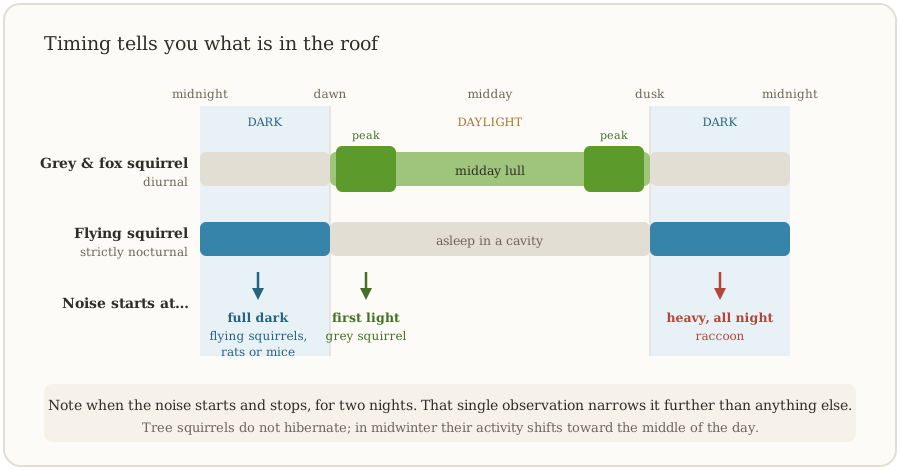
Grey and fox squirrels are strictly daytime animals. If something is moving in the roof after dark, it is almost certainly not one of them.
 By
We may earn a commission when you buy through links on this page, at no extra cost to you.
On this page
Grey and fox squirrels are strictly daytime animals. So if something has been moving in the ceiling at two in the morning, the useful conclusion is that it is probably not a squirrel.
Who is awake when
| Species | Active |
|---|---|
| Eastern grey | Daytime. Dawn and late afternoon peaks |
| Fox squirrel | Daytime |
| Red squirrel | Daytime |
| Ground squirrels | Daytime |
| Chipmunks | Daytime |
| Flying squirrels | Night only. From well after dark |
Everything about a grey squirrel is built for daylight — colour vision, depth perception for judging jumps, a sense of caution that depends on seeing a predator coming. The night niche is left to the flying squirrels, and they have the enormous dark eyes to match.
The daily pattern
- First light to mid-morning — the main feeding period
- Midday lull, pronounced in hot weather
- Late afternoon to dusk — the second peak
- Back in the drey before dark
- In heavy rain, wind or hard cold they may not come out for a day or more
- Winter: no hibernation, but activity shifts to the warmest part of the day, which is why midwinter sightings cluster around midday
So what is in the attic
| Sound and timing | Likely |
|---|---|
| Scurrying from first light | Grey squirrel |
| Light, fast, from full dark, rolling sounds | Flying squirrels — usually several |
| Scratching in walls at night, gnawing | Rats or mice |
| Heavy thumping, dragging, vocal | Raccoon |
| Slow shuffling, sometimes hissing | Opossum |
| Fluttering at dusk, squeaking | Bats |
| Chirping in the wall at dawn | Birds |
Timing narrows it faster than anything else
Sit somewhere quiet and note when the noise starts and stops, for two nights.
- Starts at first light → grey squirrel
- Starts at full dark, stops before dawn → flying squirrels or rodents
- Heavy and irregular, all night → raccoon
That one observation saves most of the guessing, and it is free.
Flying squirrels specifically
The commonest resolution to “squirrels in my attic but only at night”, and they are far more abundant in wooded suburbs than people realise.
- Noise starts at full dark, not dawn
- Lighter and faster than a grey squirrel, with rolling sounds — nuts moved across the ceiling
- Entry holes as small as an inch, where a grey squirrel needs two or more
- Smaller droppings, scattered
- Several animals. Southern flying squirrels huddle communally in winter, a dozen or more in one cavity
Do not seal a hole on a winter huddle
Because they are colonial in winter, sealing an entry point can shut a dozen animals into a ceiling. Flying squirrels are also protected in several states.
One-way exclusion doors, then seal — and do it in autumn or spring, not mid-winter.
For where they actually spend the night, see where squirrels sleep at night. The other familiar night noise in a garden is not a mammal at all — why crickets make noise at night.
A squirrel genuinely out at night
Unusual, and the reasons are all worth noting:
- Displaced from its nest by a predator, a storm or tree work
- Strong artificial lighting, which extends activity at the margins
- Disturbed by something in the tree
- Sick or injured
A squirrel out at night that also seems disoriented, unafraid or unsteady is one to keep away from — and to report to animal control rather than approach.
While you are listening
Two other things are commonly mistaken for an animal at night:
- A house cooling and contracting — sharp single cracks and ticks, not sustained movement
- Branches on the roof in wind, which sounds remarkably like something walking
Both stop being confusing once you have noted the timing, which is the whole method here.
Our picks
| # | Pick | Best for | Where to buy |
|---|---|---|---|
| 1 | Trail camera with infrared, no white flash | For identifying what is actually moving at night | Check price for Trail camera with infrared, no white flash → |
| 2 | Baffle for a feeder pole | For the night visitors you do not want | Check price for Baffle for a feeder pole → |
For identifying what is actually moving at night
Trail camera with infrared, no white flash
Grey squirrels are strictly daytime, so anything at your feeder after dark is a different animal. One night of footage answers it.
- Illumination
- No-glow infrared (940 nm)
- Why
- White flash makes animals avoid the spot
What we liked
- Settles flying squirrel against rat against possum in one night
- No-glow does not train animals away from the camera
Worth knowing
- No-glow images are black and white and shorter range than white flash
For the night visitors you do not want
Baffle for a feeder pole
Placement does the work, not the baffle. Four feet up and ten feet clear, or do not bother buying one.
- Type
- Wrap-around or torpedo
- Height
- Bottom at least 4 ft off the ground
- Clearance
- 8–10 ft from anything jumpable
What we liked
- Works on rats, raccoons and squirrels alike because it defeats climbing
- One purchase, no refilling, nothing to reapply
Worth knowing
- Useless if mounted low or if a fence is within jumping range
Common questions
Are squirrels nocturnal?
Why do I hear noises in my attic at night then?
What time of day are squirrels most active?
Could a squirrel be out at night for another reason?
How do I tell flying squirrels from grey squirrels in the attic?
Do squirrels sleep all night?
Backyard Weekly
Know what to plant, week by week
Join the weekly email for seasonal jobs, fixes for what is going wrong, and gear worth buying.
Not ready to subscribe? The planting calendar is free and needs no email.
By subscribing you agree to our privacy policy. Grow In Backyard will never sell your address.
Keep reading
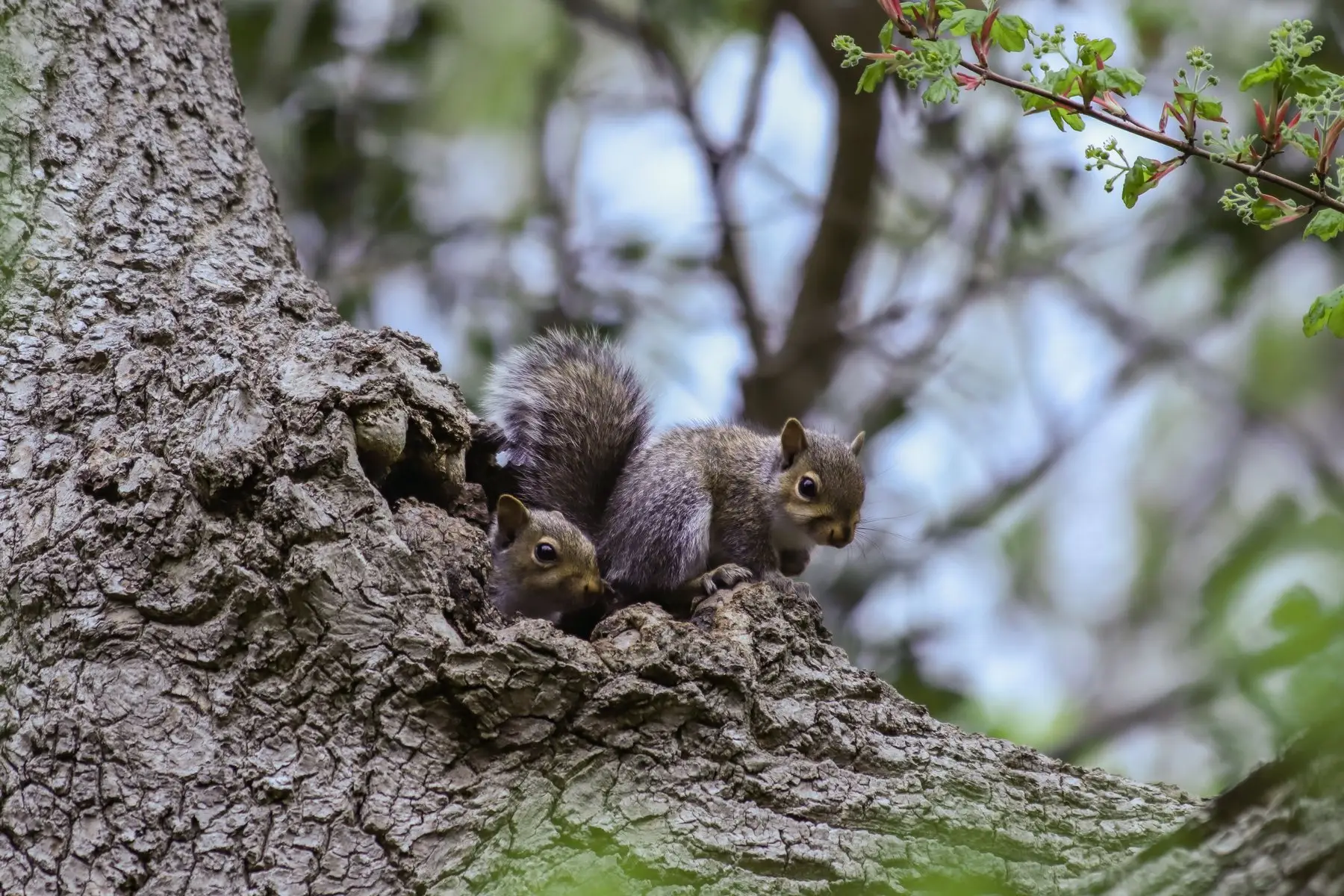
Where Do Squirrels Sleep at Night? Dreys, Dens and Your Roof
Squirrels sleep in leaf dreys and tree cavities, keep several nests each, and share them for warmth in winter. How to tell a drey from a bird nest.
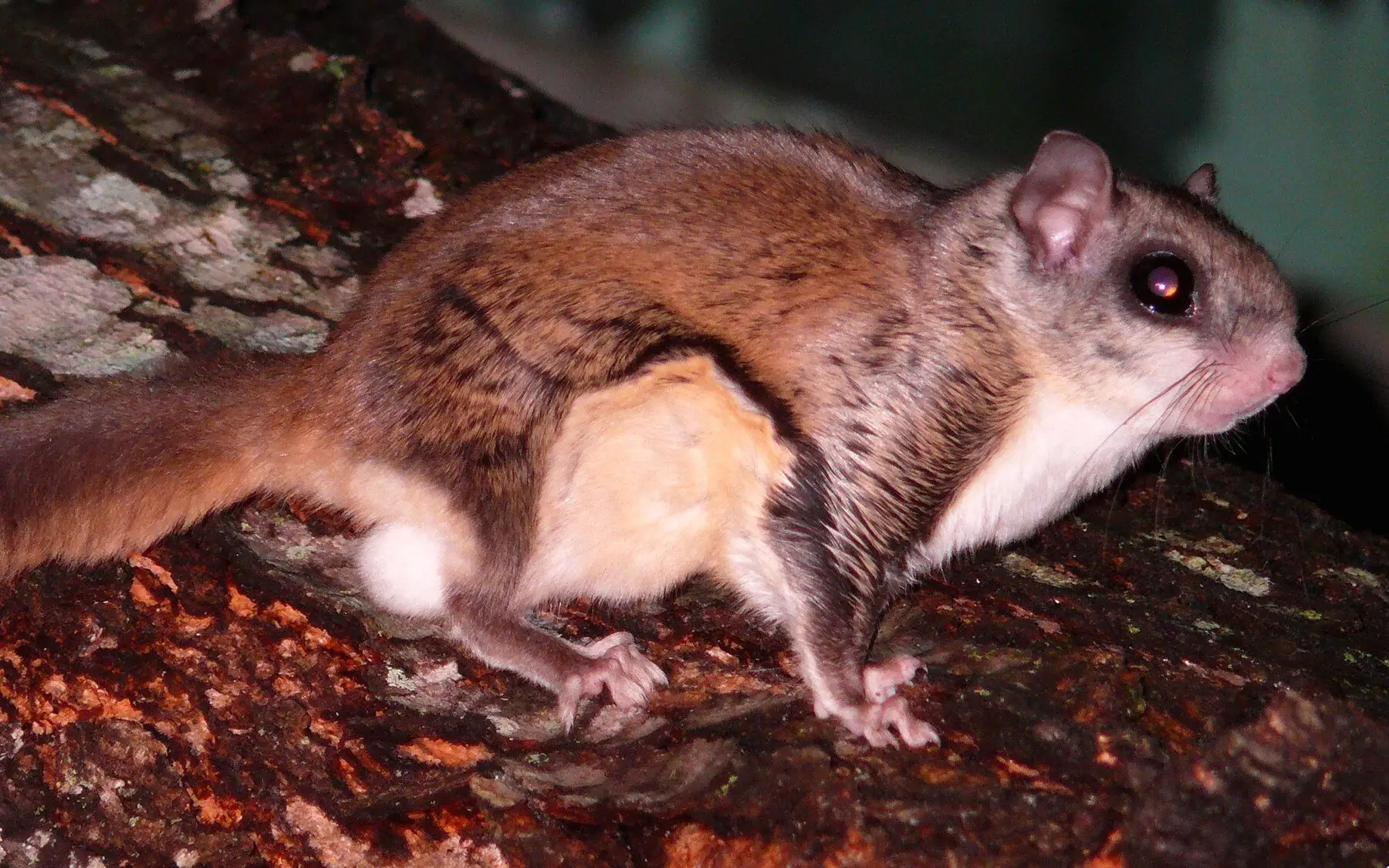
Where Do Flying Squirrels Live? Range, Nests and Your Attic
Flying squirrels are common across most of North America and almost never seen, because they are strictly nocturnal. Habitat, nest sites and attic signs.
Where Do Squirrels Live and Sleep? Nests, Dens, and Winter
Squirrels build two distinct home types and switch between them by season. What a drey actually is, where they den in winter, and whether they hibernate.
How Long Do Squirrels Live? Wild vs. What You'd Expect
Wild squirrels rarely see old age — most die in their first year. The realistic lifespan by species, and why the number is so much lower than people assume.