
Where Do Flying Squirrels Live? Range, Nests and Your Attic
Flying squirrels are common across most of North America and almost never seen, because they are strictly nocturnal. Habitat, nest sites and attic signs.
 By

On this page
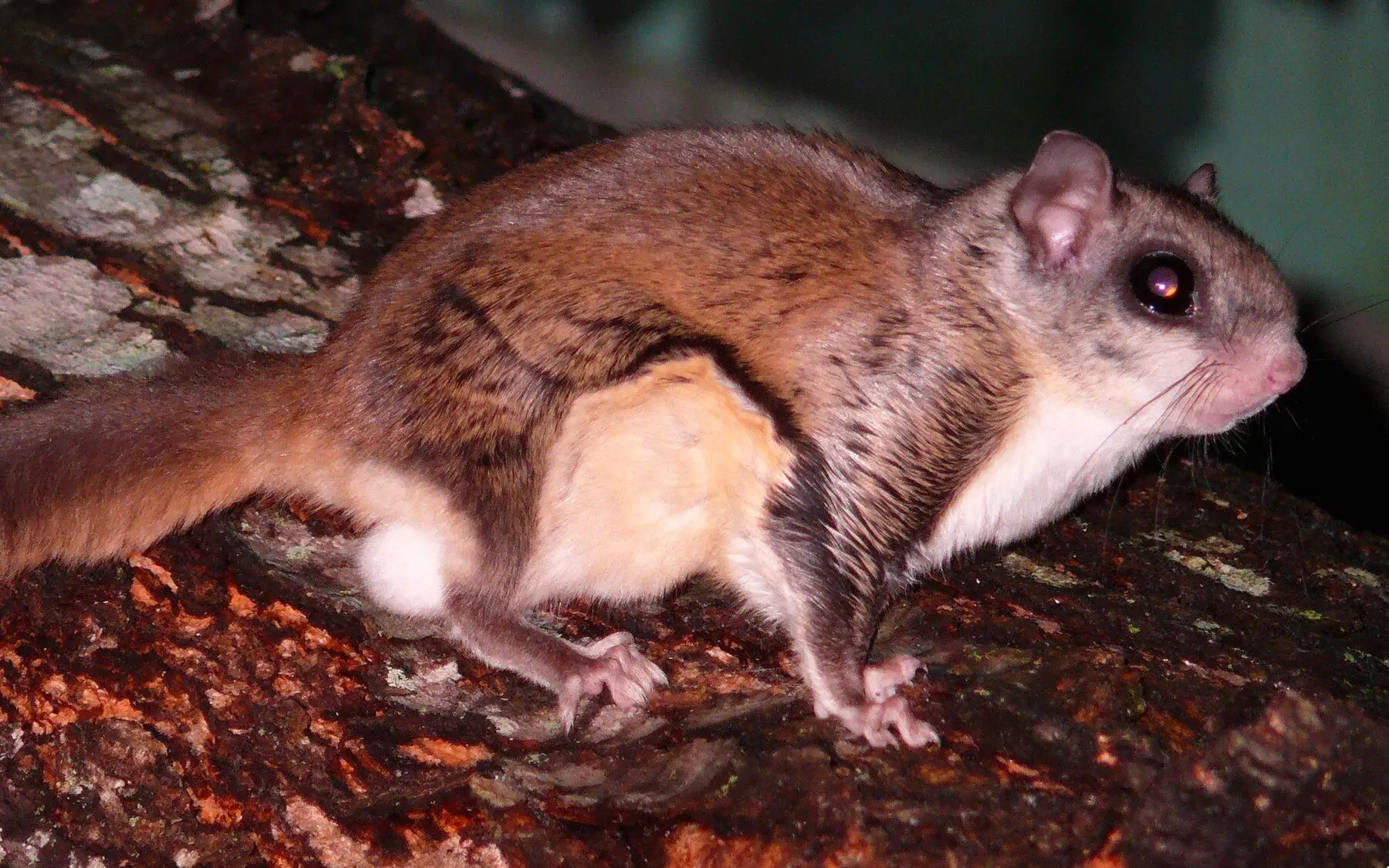
They are in most wooded neighbourhoods in North America, often in greater numbers than grey squirrels — and almost nobody sees one, because they only come out after full dark.
The two species
| Southern (Glaucomys volans) | Northern (Glaucomys sabrinus) | |
|---|---|---|
| Range | Eastern US, Maine to Florida, west to MN and TX | Canada, northern US, Appalachians, west coast |
| Habitat | Deciduous and mixed woodland | Conifer and mixed forest |
| Size | 2–3 oz, 8–10 in with tail | 4–6 oz, 10–12 in |
| Belly fur | White to the base | Grey at the base |
| Diet | Nuts, seeds, fungi, insects, eggs | Lichen and fungi especially |
| Sociability | Very social in winter | Social, less densely |
A third species, Humboldt’s flying squirrel, was separated from the northern in 2017 and occupies the Pacific coastal forests.
What they need
- Mature trees with cavities — old woodpecker holes, rot hollows, natural cavities. This is the limiting factor almost everywhere
- Closed canopy, so they can glide tree to tree without crossing open ground
- Mixed hardwoods producing nuts, and dead standing timber, which is why tidy woodland management removes them
- Water nearby
- Darkness. Heavily lit areas are used far less
Wooded suburbs with mature oaks and hickories suit them very well, which is why they turn up in attics in neighbourhoods that look entirely domesticated.
Why you have never seen one
| Flying squirrel | Grey squirrel | |
|---|---|---|
| Active | Strictly nocturnal | Daytime |
| Size | 2–6 oz | 14–21 oz |
| Eyes | Very large, dark | Moderate |
| Movement | Glides between trees | Runs and leaps |
| Noise | Quiet, high chirps | Loud barking |
How to actually see one
Put a red-filtered torch or a dim red light on a bird feeder or a nut feeder an hour or two after full dark, in autumn or winter, and watch from a window.
Red light disturbs them far less than white. In a wooded neighbourhood with oaks, the odds are good — and most people who try it are surprised how many turn up.
Nests
- Tree cavities above all, especially old woodpecker holes
- Nest boxes — including bird boxes, if the hole suits. A 1½ inch hole admits southern flying squirrels
- Leaf nests in summer
- Attics, soffits and wall voids where those are reachable
- Several nests each, rotated between
Winter huddling is the striking behaviour. Southern flying squirrels pile into a single cavity in large numbers — a dozen or more is ordinary — because a two-ounce animal loses heat too fast to overwinter alone. They do not hibernate.
In an attic
Because of that huddling, an attic occupation is almost never one animal.
Signs, and how they differ from grey squirrels:
- Noise starts at full dark, not dawn. This is the single best indicator
- Lighter, faster scurrying, with rolling sounds — nuts moved across the ceiling
- Small droppings, scattered rather than in latrines
- Entry holes as small as an inch
- Caches of nuts and seeds in insulation
Dealing with it:
- Confirm the species by the timing before doing anything
- Find every entry point — they are small, and there are usually several
- One-way exclusion doors, which is the only humane and effective method for a colony
- Then seal with metal flashing or half-inch hardware cloth
- Cut branches back ten feet, remembering they glide — ten feet is a minimum, not a comfort
- Autumn or spring, never mid-winter or peak breeding. Sealing a huddle in kills a dozen animals in your ceiling
Check your state rules before trapping
Flying squirrels are protected in several states, and northern flying squirrel subspecies in the Appalachians have been federally listed. Trapping or relocating may require a permit or be prohibited outright.
Exclusion is legal everywhere and works better anyway.
The gliding
The membrane is the patagium, stretching wrist to ankle on each side and turning the animal into a small controllable wing.
- Typical glide: 20–50 feet. Recorded glides well over 150
- The flattened tail works as rudder and airbrake
- Steering is accurate enough to pick a specific trunk
- They land head-up, flaring at the last moment, then scramble round to the far side of the trunk — out of the line of anything that followed them
Owls are the main predator — great horned and barred — along with snakes, raccoons and domestic cats. The commitment to darkness and cover is a direct response to that, and it is why they are so abundant and so invisible at once.
Common questions
Where do flying squirrels live?
Why have I never seen a flying squirrel?
Where do flying squirrels nest?
How do I know if I have flying squirrels in the attic?
How long do flying squirrels live?
Do flying squirrels actually fly?
Backyard Weekly
Know what to plant, week by week
Join the weekly email for seasonal jobs, fixes for what is going wrong, and gear worth buying.
Not ready to subscribe? The planting calendar is free and needs no email.
By subscribing you agree to our privacy policy. Grow In Backyard will never sell your address.
Keep reading
Where Do Squirrels Live and Sleep? Nests, Dens, and Winter
Squirrels build two distinct home types and switch between them by season. What a drey actually is, where they den in winter, and whether they hibernate.
How Long Do Squirrels Live? Wild vs. What You'd Expect
Wild squirrels rarely see old age — most die in their first year. The realistic lifespan by species, and why the number is so much lower than people assume.
When Do Squirrels Mate? The Two Seasons and the Chases
Grey squirrels breed twice a year, in midwinter and midsummer. What the frantic spiral chases mean, and why babies appear in your attic in February.
Where Do Squirrels Go When It Rains? Usually Nowhere
Light rain barely stops a squirrel — they carry on foraging and use the tail as an umbrella. What actually drives them into a drey, and when to worry.