
How Fast Can Squirrels Run? 12 to 20 mph, By Species
Grey squirrels top out around 12–15 mph, fox squirrels a little higher, and ground squirrels near 20. Why the sprint matters less than the turning.
 By
On this page
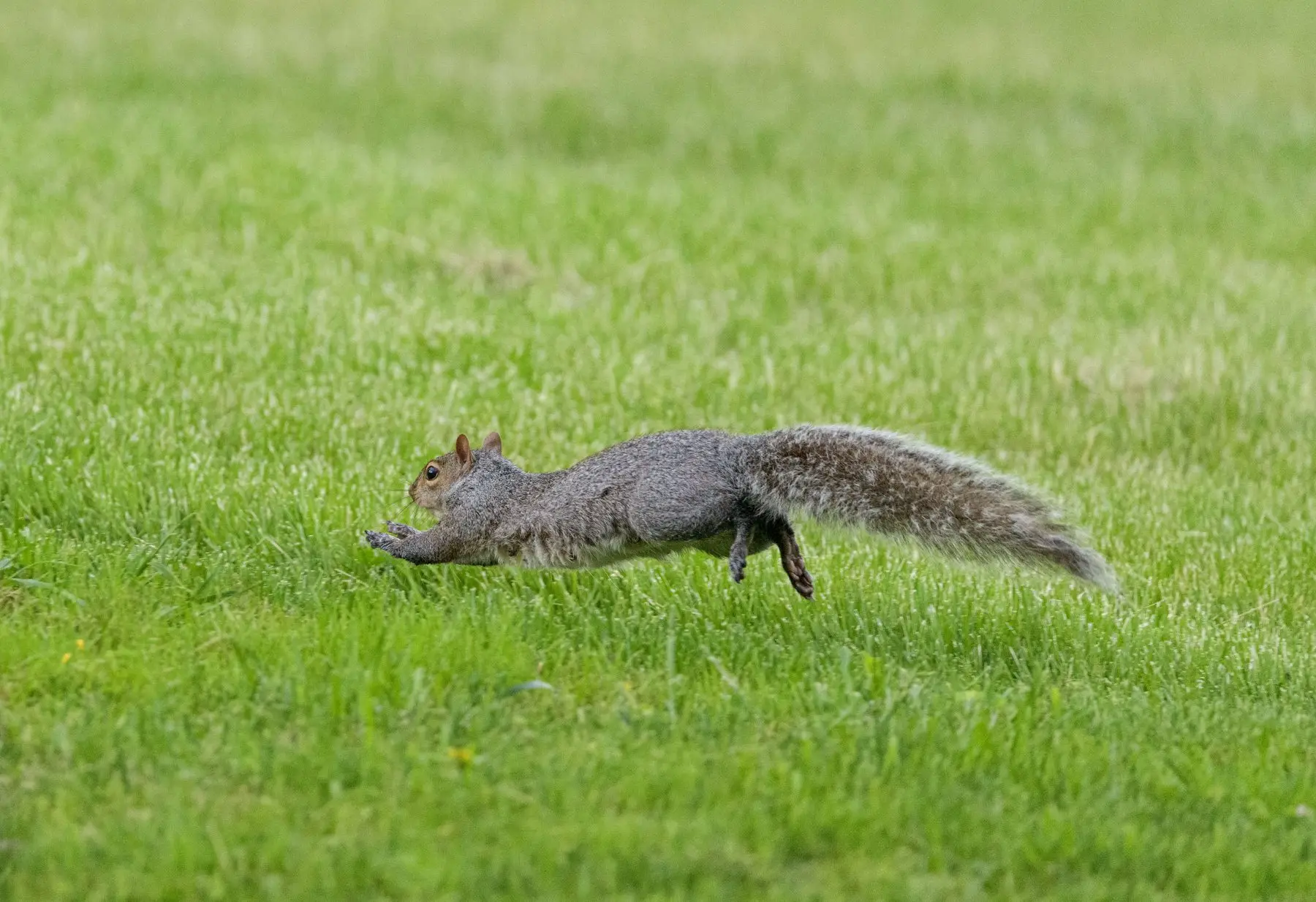
About 12 to 15 mph for a grey squirrel, a little more for a fox squirrel, and close to 20 mph for some ground squirrels. But the sprint is the least interesting number — they can climb at nearly the same speed, and that is what actually saves them.
The numbers in context
| Top speed | |
|---|---|
| Average jogger | 6 mph |
| Grey squirrel | 12–15 mph |
| Fox squirrel | Up to ~17 mph |
| Fit human sprinter | ~15 mph |
| Ground squirrel | ~20 mph |
| Domestic cat | ~30 mph |
| Red fox | ~30 mph |
These are sprints of a few seconds. A squirrel is built for a burst to the nearest trunk, not for distance, and it does not attempt distance.
Climbing is the real figure
Around 12 to 14 mph straight up a rough trunk — barely slower than running on the flat.
- Hind ankles rotate 180 degrees, so the claws grip facing either direction
- That is why a squirrel comes down a trunk head-first at nearly the speed it went up
- Very few climbing mammals can descend head-first at all
Jumping
| Distance | |
|---|---|
| Branch to branch, horizontal | 8–10 ft |
| Vertical from standing | ~4 ft |
| Survivable drop | 20 ft or more |
The tail does double duty — a rudder in the air and a shock absorber on landing.
This is where the feeder advice comes from
A pole 10 feet from anything climbable, with a baffle 4 to 5 feet up, is not arbitrary. It is just outside the horizontal jump and above the vertical one.
Why speed is not how they escape
A cat is twice as fast in a straight line. The squirrel does not run a straight line:
- Full speed in about one stride — acceleration over top end
- Turns almost without losing pace
- Erratic zig-zag, which defeats a predator committed to a line
- Short bursts with freezes, which breaks up a pursuer’s tracking
- Finishes by going vertical, where nothing following it can keep up
Against something faster, that combination beats being fast.
One note on squirrels running at people
Habituated park squirrels do it, and it is food expectation rather than aggression. A squirrel that has lost its wariness will approach at speed and will eventually bite a hand that smells of food — which is among the better arguments for not hand-feeding them.
A wild, unfed squirrel keeps a trunk between you and itself and leaves quickly.
Common questions
How fast can a squirrel run?
Can a squirrel outrun a cat?
How fast can squirrels climb?
How far and high can a squirrel jump?
Why are squirrels so hard to catch?
Do squirrels ever run at people?
Backyard Weekly
Know what to plant, week by week
Join the weekly email for seasonal jobs, fixes for what is going wrong, and gear worth buying.
Not ready to subscribe? The planting calendar is free and needs no email.
By subscribing you agree to our privacy policy. Grow In Backyard will never sell your address.
Keep reading
Can Squirrels Eat Bananas? Yes, and Mostly They Shouldn't
Bananas are not toxic to squirrels and they take them eagerly — but they are sugar with almost no calcium, which is the diet problem rehabbers see.
Are Black Squirrels Rare? Common in Some Towns, Absent Elsewhere
Black squirrels are grey squirrels with a pigment variant, not a separate species. Why they cluster in particular towns and what the colour buys them.
Can Squirrels Be Pets? Legality, Reality and Why Not
Keeping a squirrel is illegal in most US states, and the ones raised by people usually end badly. What actually happens, and the lawful alternatives.
How High Can a Rat Jump? And How Far, and How Small a Gap
A brown rat clears about three feet vertically and four horizontally, and fits through a gap the size of a quarter. What that means for rat-proofing.