
Do Squirrels Take Dust Baths? Yes, for Parasites
Dust bathing works the fur free of mites and excess oil. How to tell it from splooting or a nest problem, and why a bare dry patch gets used.
 By
On this page
Yes — rolling in dry loose soil is parasite and oil management, the same job a chicken does in a dust bath. Water is useless for cleaning fur that has to stay insulating.
What the behaviour looks like
- Finds dry, loose, fine material — soil, sand, dry leaf mould
- Drops and rolls onto its back and sides
- Wriggles and kicks, working particles down through the fur to the skin
- Stands and shakes vigorously
- Grooms with teeth and forepaws afterwards
The whole thing takes under a minute and tends to happen in the same few spots repeatedly.
Why dust rather than water
A squirrel’s coat has to do two jobs that water interferes with:
- Insulate. Tree squirrels do not hibernate; they get through winter on fur, cached food and a modest fat layer. Wet fur does not insulate
- Stay low-friction for climbing and squeezing through gaps
Squirrel fur is not oiled for water-shedding the way a beaver’s or an otter’s is. A soaked squirrel is cold until it dries, which is also why they take long detours across branches rather than swimming.
Dry particles do the job water would: they absorb excess sebum, and they physically abrade and dislodge the fleas, mites and lice that most wild squirrels carry.
Nearly every dust-bathing animal is solving the same problem
Chickens, sparrows, many ground squirrels, chinchillas, elephants and horses all dust bathe. The common factor is a coat or plumage that water would damage or that takes too long to dry.
Dust bath against sploot
Confused constantly, and they mean opposite things.
| dust bath | sploot | |
|---|---|---|
| Motion | active rolling, wriggling, kicking | still |
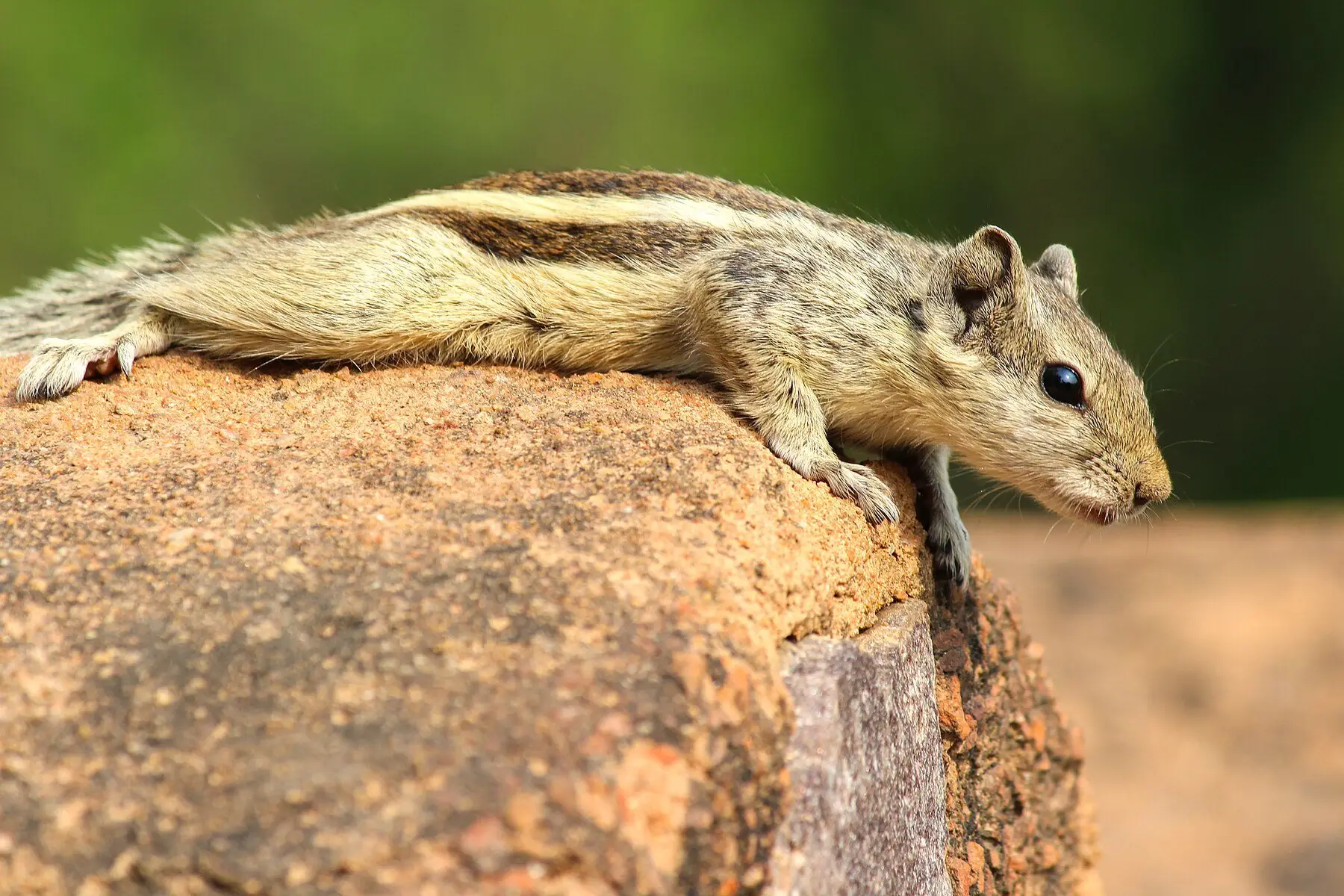
| Posture | on back and sides | flat, belly down, limbs stretched |
| Surface | dry, loose, fine | cool, hard, shaded — concrete, stone, a branch |
| Weather | any | hot |
| Duration | under a minute | minutes to much longer |
| Purpose | parasites and oil | shedding heat |
A squirrel lying flat and motionless on cool concrete in August is cooling down. One throwing soil about in a flower bed is cleaning.
When it is not routine
Dust bathing is normal. What is not:
| sign | likely cause |
|---|---|
| Thin, patchy coat with bare grey crusted skin, animal thin and slow | mange — mite infestation |
| Crusty wart-like lesions round eyes, mouth, nose and feet | squirrel pox — viral, often fatal |
| Scratching constantly without the usual grooming afterwards | heavy parasite load |
| Uneven, scruffy coat with normal skin underneath | moult — twice a year, harmless |
Mange and pox both spread where squirrels concentrate, and in a garden that means the bird feeder. Taking feeders down for a few weeks and scrubbing them with dilute bleach is the one lever a garden owner actually has. Report a cluster of sick animals to your regional wildlife agency.
In your flower beds
They use fresh, dry, loose soil, which is what a newly turned bed or a dry container is.
It does no harm to the soil, but it flattens seedlings and scatters mulch. A grit or coarse pebble top-dressing makes the surface unattractive for bathing — and, usefully, for nut caching too, since both need loose workable material.
Common questions
Do squirrels take dust baths?
Why do squirrels roll in dirt?
How do I tell a dust bath from splooting?
Does dust bathing mean a squirrel has fleas?
Do squirrels bathe in water?
Why is a squirrel dust bathing in my flower bed?
Backyard Weekly
Know what to plant, week by week
Join the weekly email for seasonal jobs, fixes for what is going wrong, and gear worth buying.
Not ready to subscribe? The planting calendar is free and needs no email.
By subscribing you agree to our privacy policy. Grow In Backyard will never sell your address.
Keep reading
Why Do Squirrels Lay Flat? Splooting Explained, and When to Worry
Splooting is usually heat management, but the same posture can mean something is badly wrong. How to tell the two apart at a glance.
Do Squirrels Have Fleas? And Can They Reach Your Pets?
Squirrels carry fleas, lice, mites and ticks, but squirrel fleas rarely settle on cats and dogs. The real risk is a nest left in a roof.
Why Do Squirrels Hold Their Chest? Posture, Not Pain
Forepaws tucked at the chest is simply where they rest when a squirrel stands upright. What the posture is for, and the signs that do mean something is wrong.
Do Squirrels Take Naps? Most of the Day, Actually
Squirrels sleep around 14 hours a day in short bouts, and the flat-out sprawl on a hot branch is not sleep at all. What splooting is.