
Why Do Squirrels Lay Flat? Splooting Explained, and When to Worry
A squirrel lying flat with its legs spread is usually dumping heat into a cool surface. How to tell normal splooting from a squirrel in real trouble.
 By

On this page
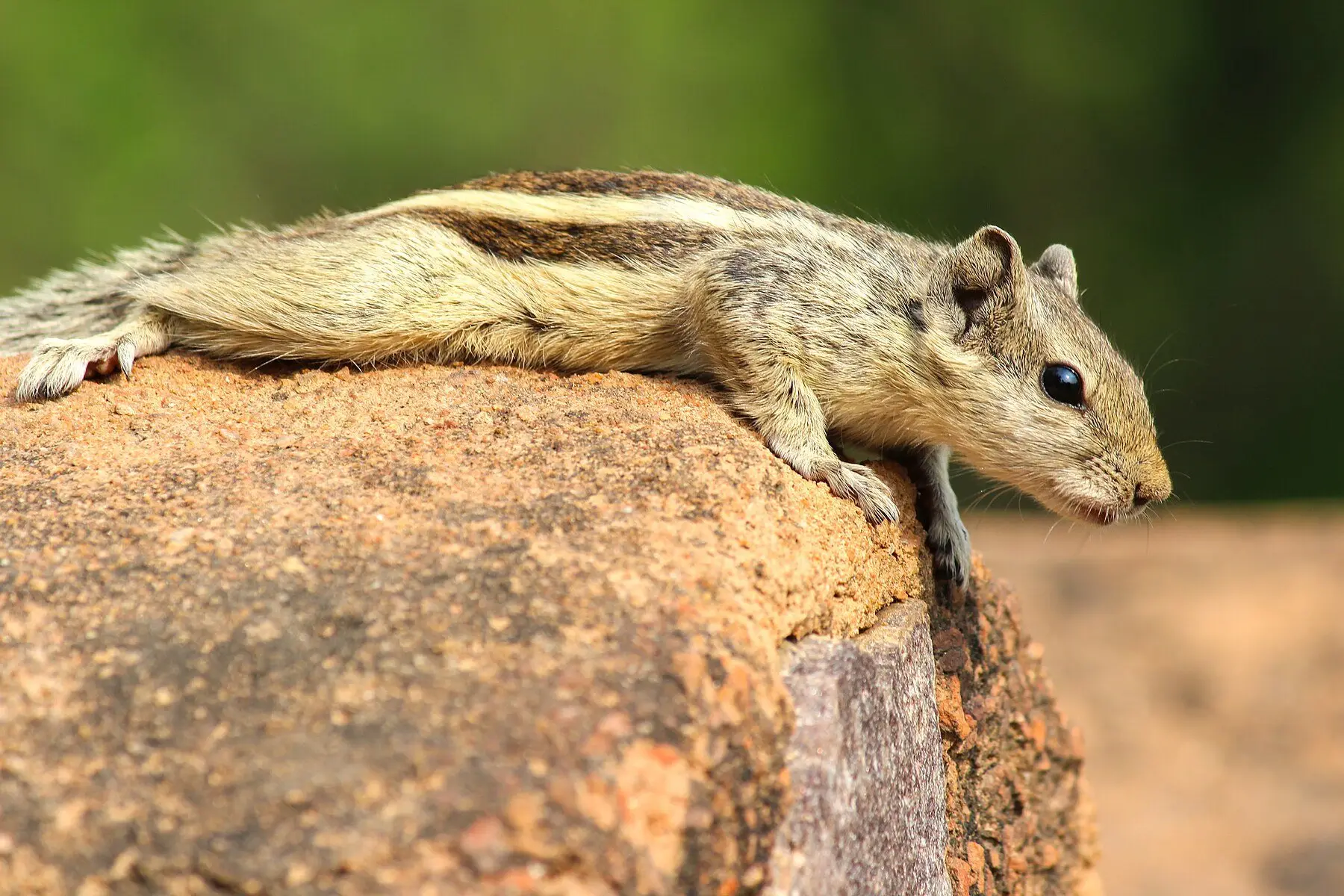
It is cooling down. Belly down, legs out, pressed against a shaded branch or paving slab — the posture puts the thinly furred underside against something cooler than the air. It is called splooting, and in hot weather it is normal.
The mechanism
A squirrel’s back and tail are well insulated. Its belly and the insides of its legs are not — and that asymmetry is the whole trick.
Spread flat against a surface cooler than the air, the poorly insulated side becomes a heat exchanger. Heat leaves by conduction, directly into the branch or the slab, which is far more effective than losing it to still air.
Why concrete and metal are popular
Shaded stone, brick, concrete and metal all hold onto coolness well, so splooting squirrels turn up on window ledges, air-conditioning units, patios and steps as readily as on branches.
A shaded branch has the advantage of being safe as well as cool, which a patio is not. Squirrels use both, and which one you see depends mostly on what your garden offers.
Normal against not normal
This is the part worth getting right, because the same posture appears in both.
| Cooling off | Something wrong | |
|---|---|---|
| Where | In shade, on a cool surface | Full sun, hot ground |
| Alertness | Head up, watching, ears working | Unresponsive, eyes closed |
| If you approach | Leaves | Does not move |
| Breathing | Normal | Open-mouthed, laboured, drooling |
| Coat | Intact | Patchy, bald, crusted — suspect mange |
| Movement | Normal when it goes | Weak, unsteady, disoriented |
The single most useful test is the simplest: does it leave when you get close? A cooling squirrel will. A squirrel in trouble often will not.
What to do
In hot weather, the answer is usually nothing.
- Leave it alone. Interference just costs it a good spot
- A shallow dish of water in shade is reasonable and harmless
- Do not handle it, and do not try to move it somewhere you think is better
When to call someone
Contact a local wildlife rehabilitator, rather than handling the animal, if it is:
- Unresponsive, or does not move when you approach
- Flat in full sun on hot ground rather than seeking shade
- Patchy, bald or crusted — sarcoptic mange is common in grey squirrels and is treatable
- Open-mouthed breathing, drooling, weak or disoriented
Handling a sick wild animal risks both of you, and rehabilitators can usually tell from a photograph whether it needs collecting.
Splooting is not a last resort
Worth saying plainly, because the posture looks alarming to people who have not seen it before.
A splooting squirrel is managing its temperature successfully. It is the working response to heat, not evidence that the heat has won. Genuine heat stress looks different — panting, drooling, staggering, lying exposed instead of seeking shade — and that is when it stops being something to watch and starts being something to report.
Common questions
Why do squirrels lay flat?
Is splooting a sign the squirrel is sick?
What is splooting?
Why do squirrels sploot on a tree branch?
What should I do if I see a squirrel lying flat?
Does a squirrel lying flat mean it is too hot to survive?
Backyard Weekly
Know what to plant, week by week
Join the weekly email for seasonal jobs, fixes for what is going wrong, and gear worth buying.
Not ready to subscribe? The planting calendar is free and needs no email.
By subscribing you agree to our privacy policy. Grow In Backyard will never sell your address.
Keep reading
Why Do Squirrels Bark? Reading the Chatters, Screams and Kuks
A barking squirrel is an alarm call, and the sound tells you what kind of threat it found. Kuks, quaas, screams and the tail flick that goes with them.
When Are Chipmunks Most Active? Daily and Seasonal Patterns
Chipmunks are strictly daytime animals with morning and late-afternoon peaks. Why they vanish in midsummer, and why a January sighting is normal.
Do Squirrels Eat Pumpkin Seeds? Yes — and Your Pumpkin
Squirrels eat pumpkin seeds readily and will hollow out a porch pumpkin to get them. What is safe to offer, what is not, and how to protect the display.
Why Do Squirrels Run in Front of Cars? Hawk Evasion, Badly Aimed
Zig-zagging at the last moment defeats a predator that has to commit to an intercept. A car cannot be dodged the same way, and is far wider.