
Coyote Poop vs Dog Poop: How to Tell Them Apart
Coyote scat is tapered, full of hair and bone, and left in the open on purpose. Dog stool is smooth and uniform. What each one tells you about your yard.
 By

On this page
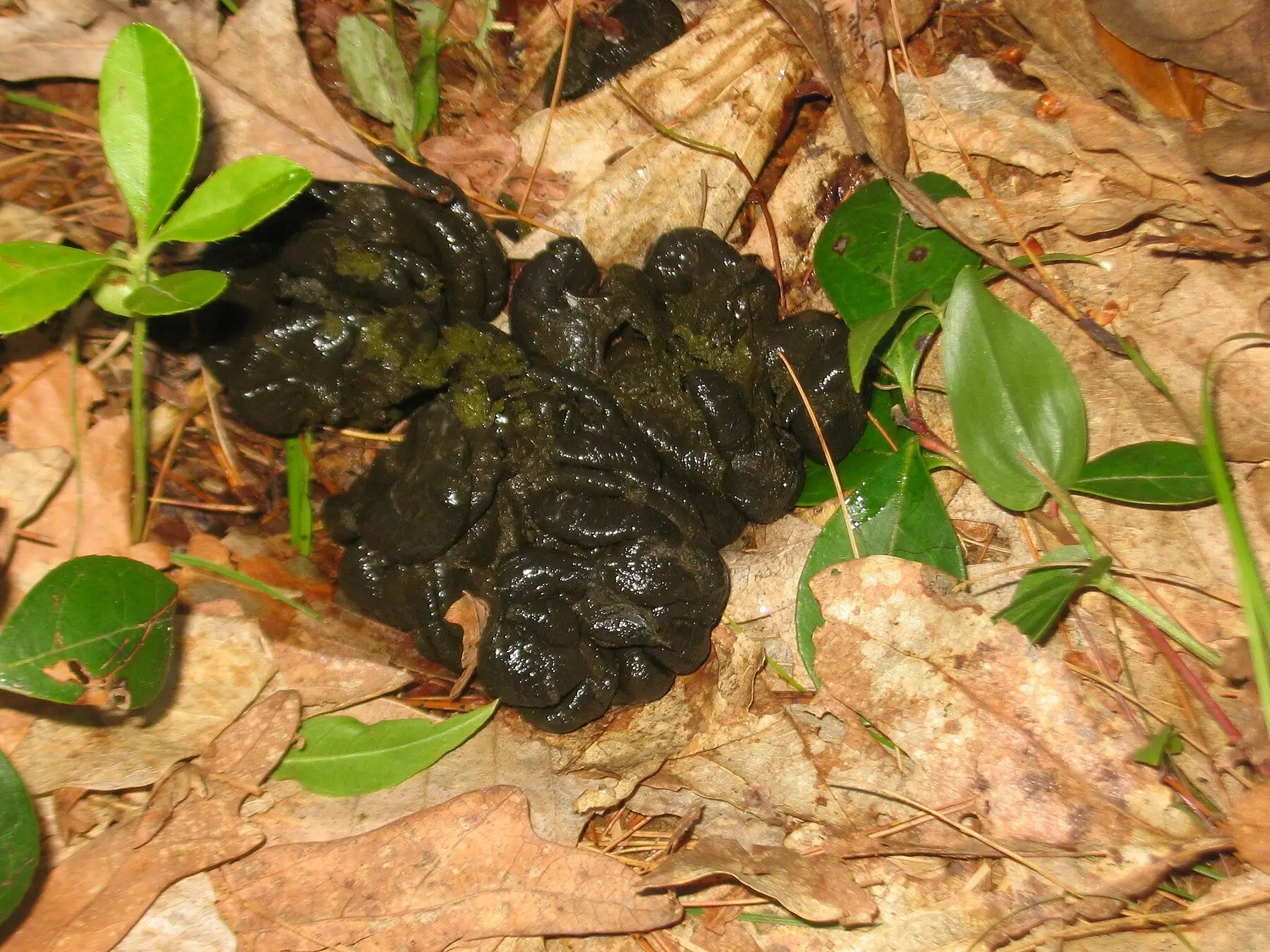
The quickest test is not the shape — it is what is inside it. A dog on commercial food produces smooth, uniform stool with nothing recognisable in it. A coyote eats whole animals and fruit, so its scat is full of hair, bone and seeds.
Side by side
| Feature | Coyote | Dog |
|---|---|---|
| Shape | Rope-like, twisted, tapered to a point | Smooth, uniform, blunt ends |
| Length | 3–5 in, often in segments | Varies with size and diet |
| Thickness | About ¾ in | Varies |
| Contents | Hair, bone chips, seeds, berry skins, feathers | Nothing identifiable |
| Colour | Grey-brown fresh; white and chalky when weathered | Brown, darkens then breaks down |
| Placement | Deliberate — trail junctions, path centres, rocks | Wherever the dog happened to be |
| Smell | Strong, but not musky | Familiar |
The contents test
Break it apart with a stick — never a gloved hand if you can avoid it.
Coyote scat is essentially a record of what it ate whole:
- Matted hair, usually rodent or rabbit, often the bulk of it
- Bone fragments and teeth
- Berry seeds and fruit skins in late summer and autumn, sometimes to the point that the scat is more seed than anything
- Occasionally feathers, insect parts, or bits of a scavenged carcass
That seasonal swing is one of the better tells. A late-summer coyote scat can look almost purple and be packed with seeds, which no dog on kibble ever produces.
The placement test
This one is easy to check and hard to fake.
Coyotes use scat as territorial signage. They put it where another coyote will find it: the middle of a trail, a junction of two paths, a rock, a stump, the top of a mole hill, a mown edge against rough grass, the end of a driveway.
Why it is right in the middle of your path
A path is a travel corridor, and a junction is a noticeboard. Scat in the centre of a path, on a raised object, or repeatedly in the same spot is marking behaviour — and it usually means your yard sits on or near a territory boundary rather than that a coyote is denning in it.
Fox, or coyote?
The two are frequently confused, and contents will not separate them — both are full of hair, bone and seeds.
| Fox | Coyote | |
|---|---|---|
| Thickness | ~½ in | ~¾ in |
| Length | Shorter, often 2–3 in | 3–5 in |
| Tip | Sharply twisted, often whispy | Tapered |
| Smell | Distinctly musky, “foxy” | Strong but not musky |
| Placement | Often on raised objects — molehills, logs, garden furniture | Trails, junctions, path centres |
Raccoon is the other common confusion: blunt-ended, broken into segments, often full of berry seeds or corn, and deposited in latrines — the same spot used repeatedly, typically on a log, a woodpile, a deck rail or a roof. Raccoon latrines carry Baylisascaris roundworm and should be cleaned with particular care.
Removing it safely
Do not hose it into the lawn
Coyote scat can carry roundworm and tapeworm eggs, including Echinococcus, plus giardia, parvovirus and leptospirosis. Roundworm eggs are tough and persist in soil for a long time. Hosing scat into the grass spreads exactly what you want contained.
- Wear disposable gloves and use a scoop or an inverted plastic bag.
- Do not dig or sweep dry scat — that aerosolises spores and eggs. Dampen it lightly first.
- Double bag, seal, and put it in the trash. Not the compost.
- Wash hands thoroughly, and wash any tool used.
- Keep dogs away from the spot, and speak to a vet if your dog ate any — parvovirus and giardia both travel this way.
What it says about your yard
A single scat on the path is a coyote passing through, which is normal almost everywhere in North America now, including cities. Repeated scat in the same spots means a used route.
If you want fewer of them:
- Secure the food. Pet food indoors, trash in rigid latching bins, no meat or dairy in open compost, fallen fruit picked up.
- Deal with the rodents. Coyotes follow rats and rabbits, and bird feeder spillage supports both.
- Lock chickens and rabbits up properly at dusk — a coyote will open a flimsy run.
- Do not feed them, ever, deliberately or otherwise. A coyote that associates people with food is the one that becomes a genuine problem.
- Haze rather than tolerate: if one lingers in the yard, make yourself large and loud. A coyote that stays wary of people stays safe to have around.
Common questions
How do you tell coyote poop from dog poop?
What does coyote poop look like?
Is coyote poop in my yard dangerous?
Why is there coyote poop in the middle of my path?
What attracts coyotes to a yard?
Could it be fox scat instead?
Backyard Weekly
Know what to plant, week by week
Join the weekly email for seasonal jobs, fixes for what is going wrong, and gear worth buying.
Not ready to subscribe? The planting calendar is free and needs no email.
By subscribing you agree to our privacy policy. Grow In Backyard will never sell your address.
Keep reading
What Is Digging Holes in My Yard? Identify It by the Hole
Armadillos, skunks, groundhogs, voles and squirrels all dig differently. Hole size, shape, soil spray and timing identify the animal before you set anything.
Can Possums Climb? Fences, Trees, and What Stops Them
Opossums are capable, deliberate climbers with a grasping tail built for it. What that means for fencing them out, and where they actually can't get a grip.
How to Attract Foxes to Your Garden (Carefully)
Foxes come for cover, quiet and easy food. How to make a garden welcoming without creating a tame fox — and why feeding is the part to get right.
Deer Poop in the Yard: Identifying It, and What It Means
Deer droppings are pellet clusters, not scattered singles. How to tell them from rabbit and goat, what they say about your yard, and the real health risk.