Can Possums Climb? Fences, Trees, and What Stops Them
Opossums are capable, deliberate climbers with a grasping tail built for it. What that means for fencing them out, and where they actually can't get a grip.
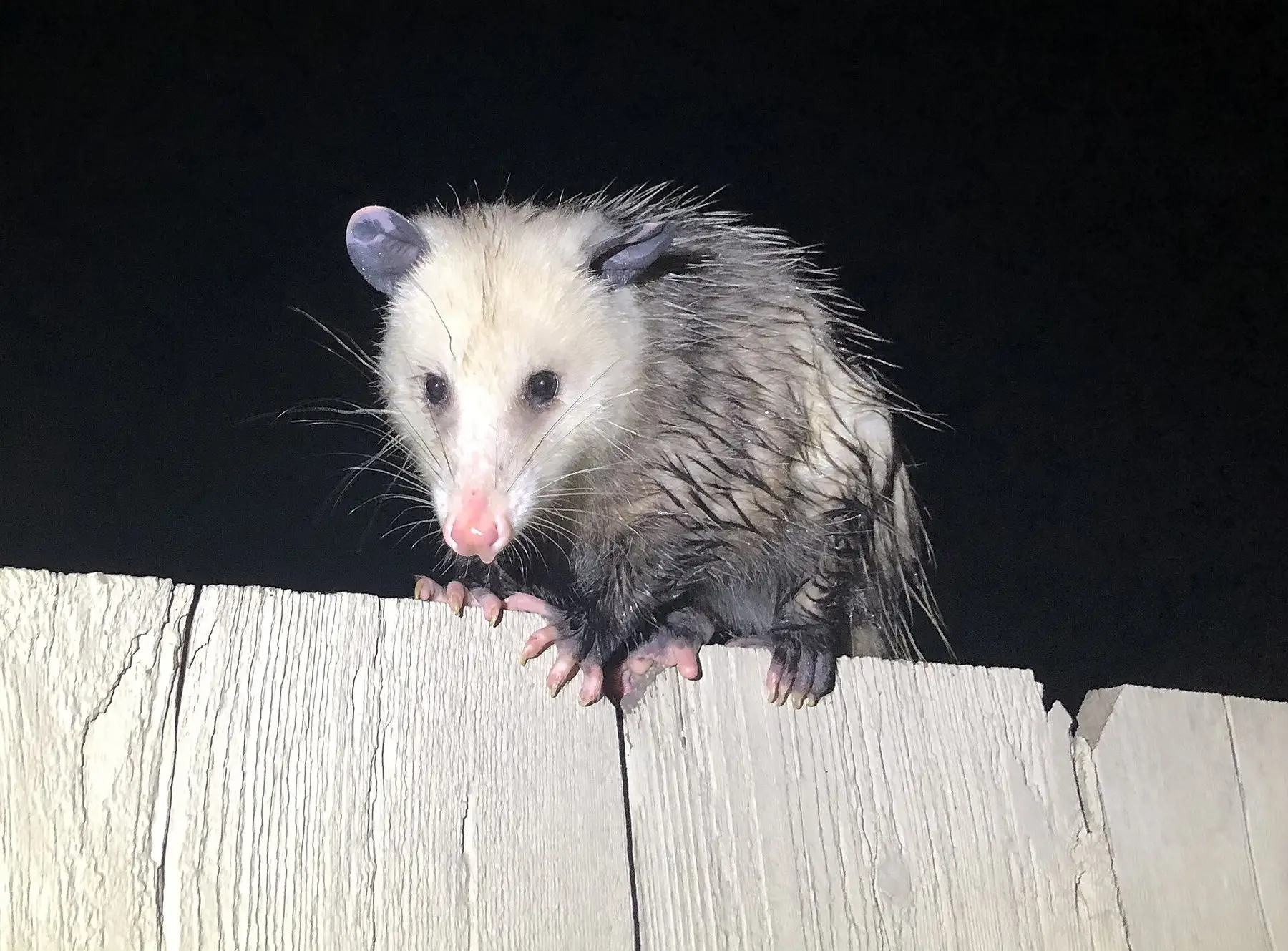
.jpg)
On this page
Opossums have a reputation for being slow and clumsy on the ground, which makes their climbing ability genuinely surprising to people who have not seen it directly. It is not a minor skill for them — it is one of their primary defences.
What makes them capable climbers
| Feature | What it does |
|---|---|
| Sharp, curved claws | Grip bark, mesh, and rough or textured surfaces |
| Opposable hind toe | Functions like a thumb, allowing branches to be grasped |
| Prehensile tail | Wraps around branches for extra stability and balance |
| Low center of gravity | Aids stability while climbing slowly and deliberately |
The prehensile tail is the detail most associated with opossums, and it is real — but it functions as a stabiliser and balance aid rather than a fifth limb capable of supporting the animal’s full weight for sustained periods, which is a common exaggeration.
Climbing is a defence, not just a way to get around
Opossums are slow on open ground and have few effective ways to outrun a predator. Climbing to escape is one of their primary defences, alongside their well-known threat display and, as a last resort, playing dead. This is part of why they climb so readily and confidently compared to their ground movement.
What they can climb easily
Trees, chain-link and wire fencing, lattice, trellises, downspouts, and anything offering a textured or mesh surface their claws can grip. Given access to an overhanging branch near a roofline, reaching the roof itself is straightforward for them.
What actually stops them
Smooth, solid vertical surfaces — with no mesh, ledges, or texture — are genuinely difficult for an opossum to climb, since their claws need something to grip rather than a flat surface to adhere to.
Removing nearby overhang matters more than fence height in practice: an opossum that can reach a tree branch overhanging a fence or roofline bypasses the barrier entirely regardless of how tall or smooth it is. Trimming branches back a meaningful distance from rooflines and fence lines closes this route.
Solid fencing rather than chain-link, where exclusion genuinely matters, removes the easy grip points mesh provides.
Securing a coop against possums is the same principle as against raccoons
Opossums are opportunistic and will take eggs or young poultry given the chance, and the same hardware-cloth-and-secure-latch approach that defends a flock against raccoons works against them too — see chicken coop plans for the specifics on mesh gauge and latch types.
Are they actually a threat?
Opossums are generally not aggressive toward people or pets and prefer to avoid confrontation entirely, using their threat display and, if that fails, playing dead rather than attacking. Their climbing ability is mostly relevant as a practical matter for keeping them out of specific areas — attics, coops, garbage — rather than as a safety concern in itself.
Common questions
Can possums climb chain-link fences?
Can possums climb smooth walls or solid fencing?
Do opossums climb into attics or roof spaces?
What stops a possum from climbing over a barrier?
Backyard Weekly
Know what to plant, week by week
Free planting calendar. Join the weekly email for seasonal jobs, fixes for what is going wrong, and gear worth buying.
Set MONETIZATION.email.endpoint in src/config/site.ts to enable this form.
By subscribing you agree to our privacy policy. Grow In Backyard will never sell your address.
Keep reading
How Long Do Squirrels Live? Wild vs. What You'd Expect
Wild squirrels rarely see old age — most die in their first year. The realistic lifespan by species, and why the number is so much lower than people assume.
Are Corn Snakes Poisonous? No, and Not Venomous Either
Corn snakes are harmless constrictors often killed on sight because they mimic copperheads. How to tell them apart, and why one is worth keeping around.
Can Rats Climb Walls? Brick and Pipes, Yes. Glass, No.
Rats climb rough vertical surfaces easily, jump three feet up and squeeze through a 20mm gap. What that means for sealing a house, and what actually stops them.

How Long Do Koi Live? 25 to 35 Years, With Caveats
Koi routinely outlive the pond they were bought for. What actually sets lifespan, the volume they need, and why the famous 226-year fish is not the benchmark.