
Can Skunks Climb Stairs? Yes, and Decks Are the Problem
Skunks climb stairs, low walls and ramps easily but are poor at anything vertical. What that means for decks, porches and getting one back out.
 By

On this page
Yes — stairs, ramps and low walls all fine. Vertical is where they stop, and knowing exactly where that line falls is what solves the two problems people actually have.
Where the line falls
| Striped skunk | Raccoon | Possum | |
|---|---|---|---|
| Stairs and ramps | Yes | Yes | Yes |
| Low wall | Yes | Yes | Yes |
| Chain link fence | Yes — footholds | Yes | Yes |
| Smooth fence panel | No | Yes | Yes |
| Tree | No | Yes | Yes |
| Digs underneath | Yes — very well | Some | Little |
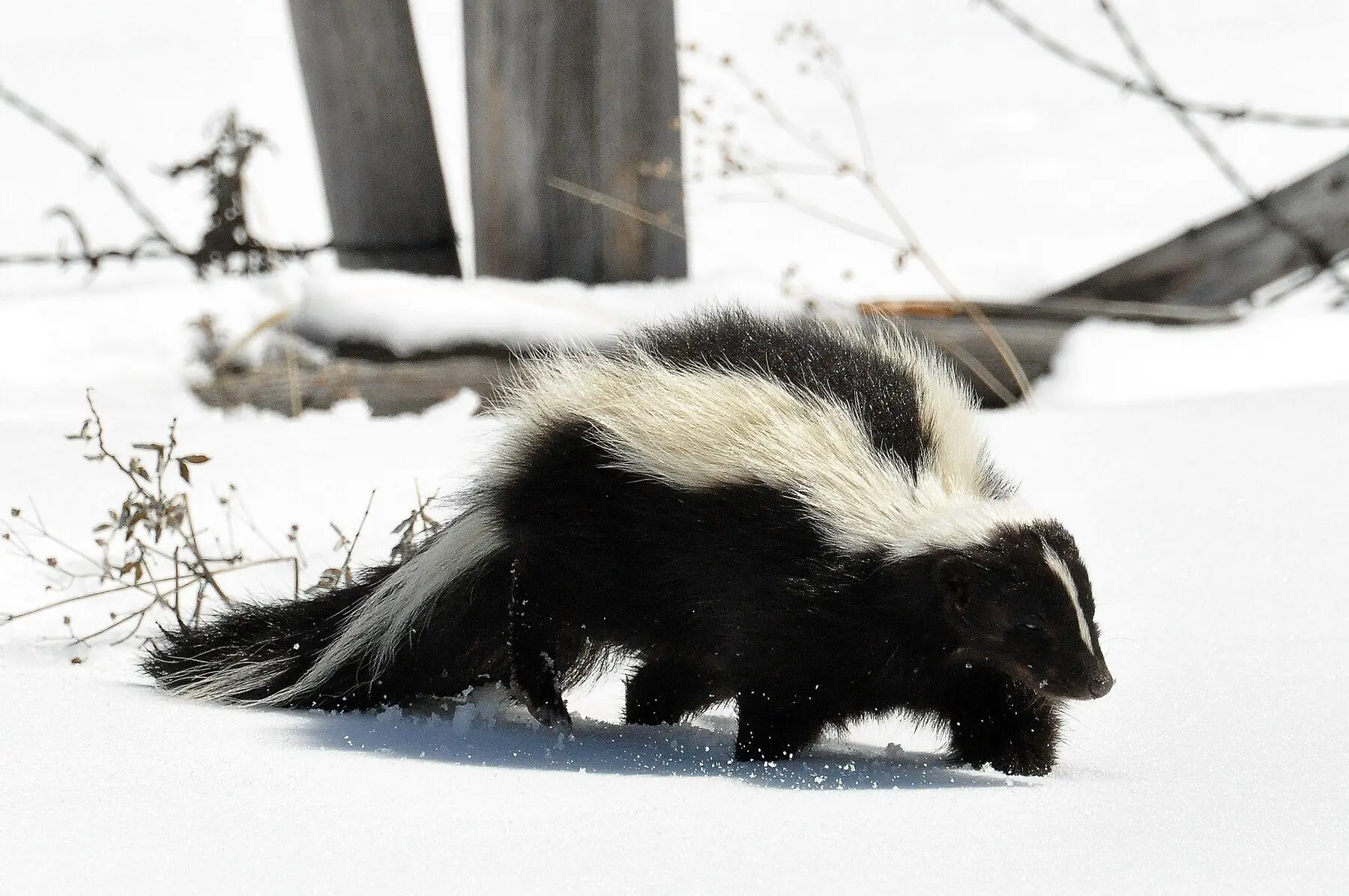
The anatomy explains it. Skunks have short legs, a heavy low body, and long front claws built for digging grubs out of turf — excellent for excavation, useless for gripping bark. Everything a skunk does well is at or below ground level.
Which is why the fence question has the wrong answer in most people’s heads: height barely matters. What matters is the bottom.
The window well problem
This is the most common skunk emergency, and it is easy to make worse.
- Lower a rough plank at no more than about 45 degrees
- Add cleats or carpet so it has grip — a smooth board is no use to an animal with digging claws
- Then go inside and leave it alone, until after dark
Do not stand there watching
A skunk will not climb out with a person nearby, and approaching, poking or shining a torch at it is exactly how people get sprayed. It is trapped, not dangerous — give it the ramp and the privacy and it leaves on its own.
Under the deck
Skunks dig in, and a deck skirt that looks solid usually is not at the bottom.
- Hardware cloth around the perimeter, buried about a foot down and bent outward into an L so digging hits mesh
- Leave one opening fitted with a one-way door until you are certain the animal has gone
- Check first, and check properly
Never seal a deck in spring without checking for kits
Shutting a mother out leaves her young to die underneath. That is cruel, and it produces a smell problem under your deck that is considerably worse than the skunk was.
Reading the warning
Skunks are mild animals and would rather leave. They tell you clearly before spraying:
- Stamping the front feet
- Hissing or a low growl
- Tail up
- Turning to face away from you — this is the last step
Back away slowly and quietly at any of it. Worth remembering that a skunk in the garden spends its nights eating grubs, beetle larvae, wasp nests and mice — it is doing more good than harm right up until it moves in under the decking.
Common questions
Can skunks climb stairs?
Can skunks climb fences?
Can skunks climb trees?
How do I get a skunk out of a window well or a pit?
How do I stop skunks getting under my deck?
Are skunks dangerous?
Backyard Weekly
Know what to plant, week by week
Join the weekly email for seasonal jobs, fixes for what is going wrong, and gear worth buying.
Not ready to subscribe? The planting calendar is free and needs no email.
By subscribing you agree to our privacy policy. Grow In Backyard will never sell your address.
Keep reading
Can Possums Climb? Fences, Trees, and What Stops Them
Opossums are capable, deliberate climbers with a grasping tail built for it. What that means for fencing them out, and where they actually can't get a grip.

Can a Raccoon Jump? How High, How Far, and What Stops One
A raccoon jumps about 4 feet up and 4 to 5 feet across, but climbing is the real problem. What actually keeps one off a fence, a roof or a bin.

Rabbits Under a Deck: Evicting Them Without Trapping a Litter
A rabbit under a deck usually means a nest. How to check before you block anything, the one-way door method, and the skirting that ends it for good.
Can Squirrels Be Pets? Legality, Reality and Why Not
Keeping a squirrel is illegal in most US states, and the ones raised by people usually end badly. What actually happens, and the lawful alternatives.