
Can a Chipmunk Be a Pet? The Legal and Practical Answer
Taking a wild chipmunk is illegal in most states and a poor idea everywhere. What the law says, what captive Siberian chipmunks need, and the honest verdict.
 By
On this page
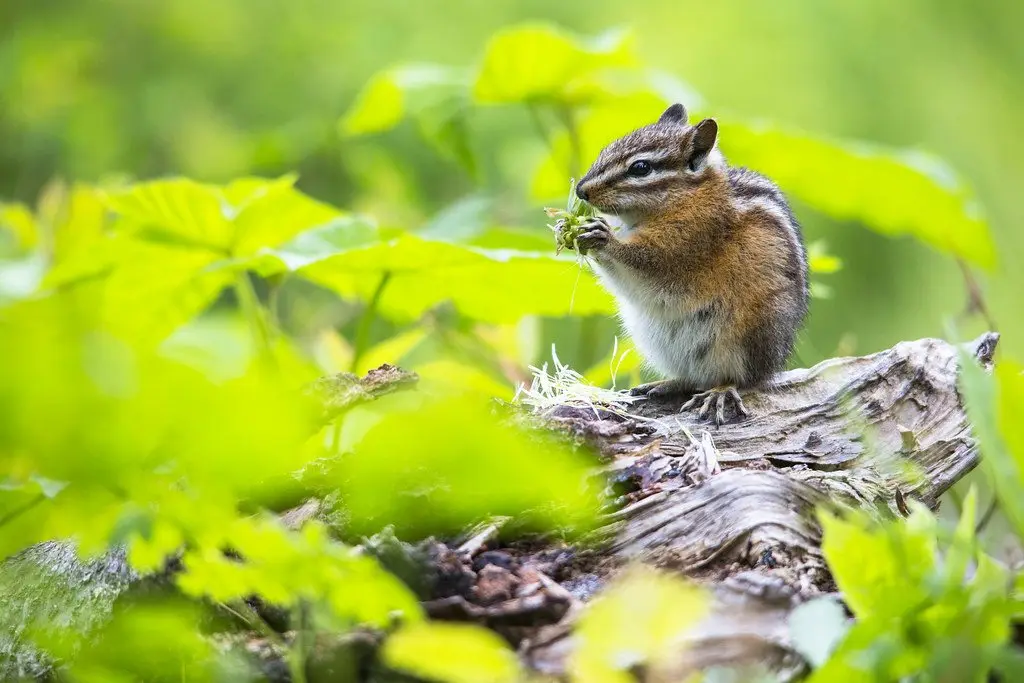
Legally, in most of the US, no. Chipmunks are native wildlife, and taking one is a permit matter at best. And the practical answer runs the same way as the legal one: even where it is allowed, a chipmunk makes a poor pet for almost everyone who wants one.
The legal position
| Situation | Typical status |
|---|---|
| Taking an eastern chipmunk from the wild (US) | Prohibited in most states without a permit |
| Keeping a native chipmunk found injured | Rehabilitators only, under licence, with release intended |
| Captive-bred Siberian chipmunk (US) | Legal in some states, restricted in others |
| Siberian chipmunk (EU/UK) | Banned — listed as an invasive alien species |
| Selling or transporting native wildlife | Prohibited almost everywhere |
The rules are state-level and they change, so the only reliable answer comes from your own state wildlife or natural resources agency. Do not rely on a pet shop’s assurance, and do not rely on this page — take it as a prompt to make one phone call.
A found baby chipmunk is not an opportunity
A lone young chipmunk usually has a mother nearby. If it is genuinely orphaned or injured, the legal and humane route is a licensed wildlife rehabilitator, whose goal is release. Raising one yourself is generally illegal, usually produces an animal that cannot be released, and often ends with an adult nobody can rehome.
Why they make difficult pets
Even setting the law aside, the animal itself is the problem.
- They are prey animals. Restraint reads as capture. A chipmunk that is picked up struggles, and its incisors — designed to open acorns — go through skin easily.
- They are fast and they are escape artists. A chipmunk out in a room is very hard to recover, and it fits through a gap you would not think twice about.
- They are solitary and territorial. Housing two together usually means fighting, so this is not an animal you keep a pair of for company.
- They hoard. Everything edible is stuffed into cheek pouches and cached, which means finding and removing spoiling food from nest boxes constantly.
- They go quiet in winter. Captive chipmunks still enter torpor bouts, waking to eat from a store and dropping back. Months of an inactive, hidden animal is normal, not illness.
If you have a legal one anyway
| Requirement | |
|---|---|
| Enclosure | Tall — around 4 × 2 × 4 ft minimum, fine wire mesh, secure double-latched door |
| Substrate | Deep, diggable — they burrow, and denying it causes stress behaviours |
| Nest boxes | Several, in different positions, with bedding they can rearrange |
| Furniture | Branches, ropes, platforms; a solid-surface wheel, never a rung wheel |
| Diet | Quality rodent or squirrel mix, plus nuts, seeds, fruit, veg, some insect protein |
| Water | Bottle and a shallow dish, both changed daily |
| Company | Housed alone. They fight |
| Vet | An exotics vet, identified before you acquire the animal, not after |
The wheel detail matters. A rung or mesh wheel catches feet and tails and causes serious injuries in small rodents; the surface must be solid.
The same question about squirrels has a similar answer and a different legal footing — see can squirrels be pets. If you want a small pet that is actually legal and suited to captivity, the best pet turtle for beginners is a better starting point.
The better version of this idea
Most people asking this want to be close to a chipmunk, not to own one. That is achievable, and it is free.
- Be predictable. Same spot, same time, sitting still. Habituation is about boredom, not bribery.
- Feed appropriately if at all — sunflower hearts, unsalted nuts, seed. Never salted, roasted or processed food.
- Do not hand-feed. It sounds like the goal and it is the failure mode: the animal loses its wariness, becomes bold with every person including children, and eventually bites a hand it expected food from.
- Give them cover — a log pile, a rock pile, an undisturbed sunny bank of bare soil for burrowing. That bank is where the burrow goes, and where a chipmunk sleeps is further underground than most people picture.
- Keep cats in, which does more for your local chipmunks than anything else on this list.
- Expect losses anyway. Chipmunks sit near the bottom of the food chain, and garter snakes take them along with hawks, cats and foxes.
What you actually get
Within a few weeks of consistent, boring presence, wild chipmunks will forage a few feet away and carry on as if you were furniture. That is a chipmunk behaving like a chipmunk — stuffing pouches, patrolling, chirping at a hawk — which is considerably more interesting than a frightened one in a cage.
Common questions
Can a chipmunk be a pet?
Is it illegal to keep a wild chipmunk?
Do chipmunks like being held?
What does a pet chipmunk need?
How long do chipmunks live as pets?
Can I tame the chipmunks in my yard instead?
Backyard Weekly
Know what to plant, week by week
Join the weekly email for seasonal jobs, fixes for what is going wrong, and gear worth buying.
Not ready to subscribe? The planting calendar is free and needs no email.
By subscribing you agree to our privacy policy. Grow In Backyard will never sell your address.
Keep reading
How Big Is a Chipmunk? Size, Weight and Burrow Depth
An eastern chipmunk is 8–11 inches including tail and weighs about 3 ounces — but its burrow runs 10 to 30 feet. Sizes, and when they reappear in spring.
What Do Chipmunks Eat? Seeds, Nuts, and a Lot Else
Chipmunks are omnivores hoarding seeds and nuts in cheek pouches — plus insects, eggs and fungi. What to feed them, what harms them, and why they dig your pots.
How Long Do Chipmunks Live? And Why They Dig Up Pots
Wild chipmunks rarely see three years — predators and winter mortality see to that. Realistic lifespan, what they eat, and why flower pots are such an easy target.
Can a Deer Kill You? The Honest Risk, and When to Worry
Deer kill more people than bears and snakes combined — almost all in car collisions. Direct attacks are rare but real. When a deer is genuinely dangerous.