
Wasp Nest in a Gutter: What to Do, and When to Leave It
A gutter nest is awkward because you work from a ladder beside it. How to judge the risk, when to call someone, and the one thing never to do up there.
 By
On this page
The wasps are not the hazard. The ladder is. A gutter nest is no more aggressive than one in a hedge — but you have to work right beside it, ten feet up, one-handed.
Work out whether to touch it at all
| Situation | Do |
|---|---|
| Late summer, nest not above a door or path | Leave it. Frost ends it |
| Over a doorway, path, or play area | Deal with it |
| Anyone in the house reacts badly to stings | Pay someone. No exceptions |
| Reachable only from a leaning ladder | Pay someone |
| Reachable from scaffold, tower or flat roof | DIY is reasonable |
| Spring, nest golf-ball sized | Easy — remove now |
Why the ladder changes the whole calculation
At ground level, a defensive colony means you step back and the incident is over.
On a ladder, the same reflex is a fall from height. You are working one-handed, facing the nest, with no way to retreat quickly — and that combination is why most serious injuries linked to gutter nests are falls, not stings.
Judge the job by whether you can get away from it, not by how many wasps you can see.
The things that make it worse
- Hosing it. Provokes the colony while you are on a ladder, and rarely destroys the nest
- Knocking it down with a pole. Same, plus the nest lands somewhere and the colony does not disperse politely
- Fire or petrol. Sets light to the fascia and soffit. People do this every year
- Blocking the downpipe to drown it. Moves water into the roofline and usually leaves a soaked nest the colony rebuilds beside
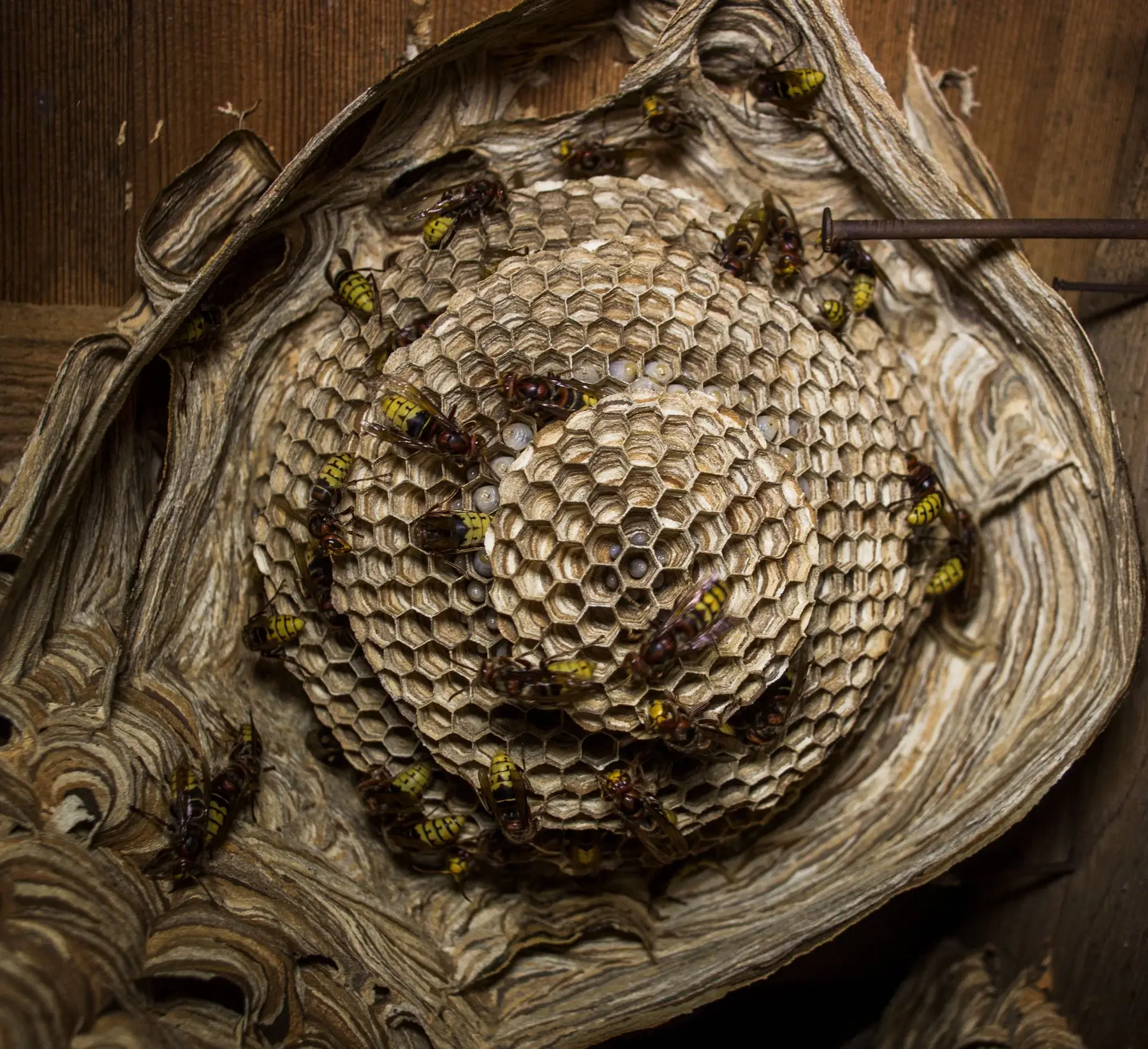
Identify it first
| Looks like | What to do | |
|---|---|---|
| Wasps / yellowjackets | Grey papery envelope | Treat or leave per the table above |
| Honeybees | Waxy comb; or a hanging clump if swarming | Call a beekeeper — usually free |
| Bumblebees | Untidy cavity nest, few bees | Leave. Not aggressive; gone by late summer |
| Paper wasps | Open cells, no envelope, umbrella-shaped | Small, far less defensive |
Killing a honeybee colony in a roofline creates a second problem
The wax and honey stay behind. They melt, stain through the ceiling, and attract ants, wax moths and other wasps.
A beekeeper will usually take a swarm for nothing. Spend the ten minutes identifying before you spend anything else.
The autumn fact worth knowing
Every wasp nest dies.
In autumn the colony produces new queens, those queens leave to overwinter elsewhere, and the workers and the founding queen die with the first hard frosts. The nest is not reused the following year.
So a nest found in August, in a gutter nobody walks under, can often just be left alone — the cheapest and by some distance the safest option.
Stopping next year’s
They will not reuse the nest, but they will often reuse the site, because whatever made it attractive is still true in spring.
April and May is when this job is trivial
- Clear the gutters — debris is what makes the channel dry and sheltered
- Close gaps at the fascia and soffit
- Look in April and May. A new nest is then the size of a golf ball with a single queen and no workers
Removing a golf ball in spring is a two-minute job from the same ladder that becomes genuinely dangerous in August.
Common questions
Is a wasp nest in a gutter dangerous?
Can I remove a wasp nest from a gutter myself?
What should I never do with a nest in a gutter?
When do wasp nests die off on their own?
Will they come back to the same gutter next year?
Is it wasps or bees, and does it matter?
Backyard Weekly
Know what to plant, week by week
Join the weekly email for seasonal jobs, fixes for what is going wrong, and gear worth buying.
Not ready to subscribe? The planting calendar is free and needs no email.
By subscribing you agree to our privacy policy. Grow In Backyard will never sell your address.
Keep reading
How to Keep Bees Away From a Deck or Porch, Safely
Most deck bee problems are carpenter bees, yellowjackets or foraging honeybees, and each needs a different answer. Identify first, then act.
Does Mulch Attract Bugs? Some, and Mostly Useful Ones
Mulch shelters insects rather than creating them, and most are decomposers doing the work. The few that matter, and how depth and placement fix them.

Bird in a Dryer Vent: Getting It Out and Keeping It Shut
A nest in a dryer vent is a fire risk as well as a noise. How to get the bird out safely, when the law says wait, and the cover that stops it.
What Are the First Signs of Termites? Mud Tubes and Wings
Discarded wings on a windowsill and pencil-width mud tubes on foundations are the earliest termite signs — both appear long before visible damage.