
Types of Stink Bugs: Which Are Pests and Which Help
Not every shield bug is a problem — some eat the ones that are. How to tell the invasive brown marmorated from natives, and what to do about each.
 By

On this page
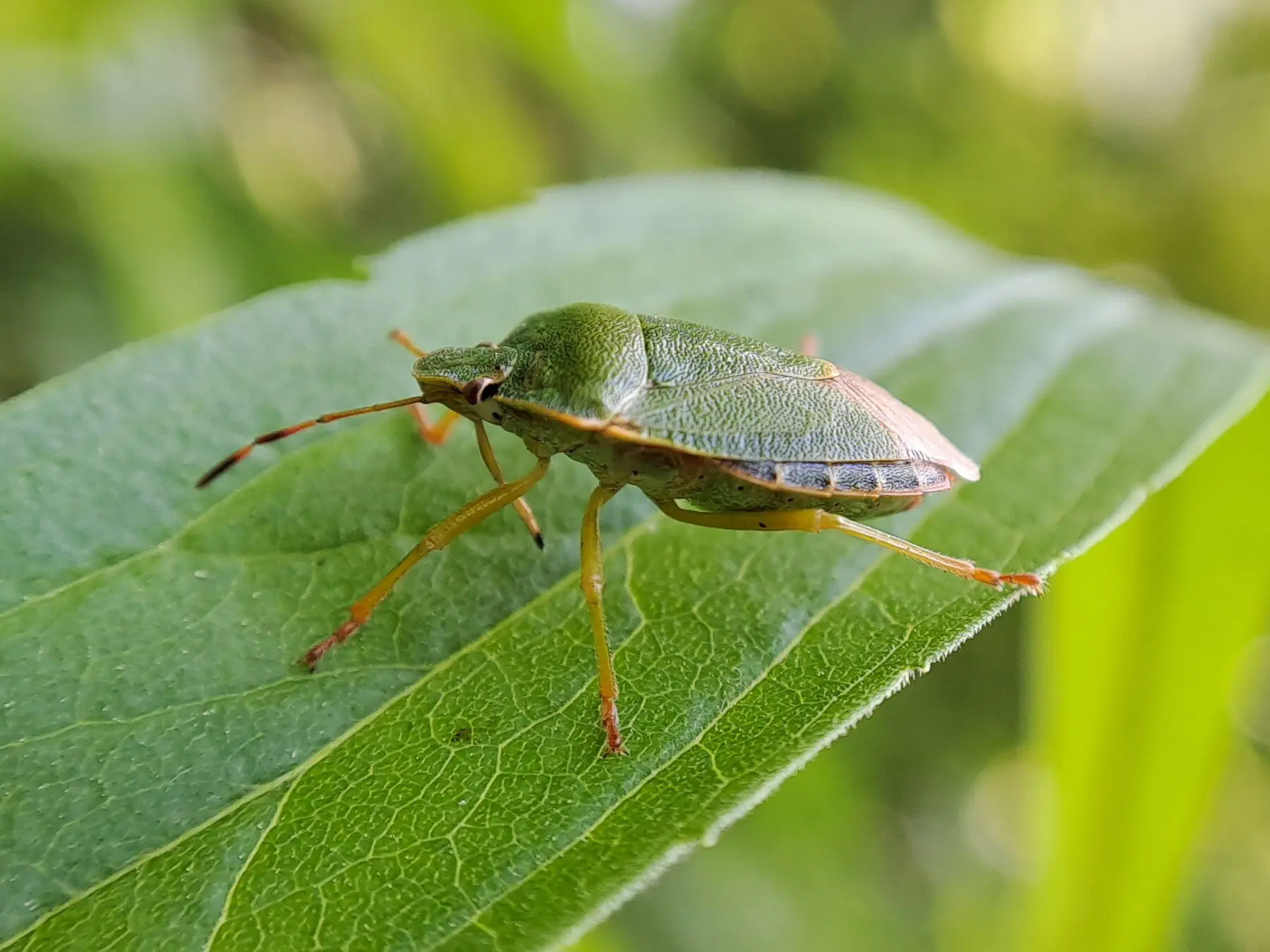
Shield-shaped, slow, and quick to smell. But some of the ones in your garden are eating the pests, and the invasive one is told apart by two white bands on the antennae.
Telling them apart
| Species | Look for | Pest? |
|---|---|---|
| Brown marmorated (Halyomorpha halys) | White bands on antennae, smooth shoulders, banded abdomen edge | Yes — the serious one |
| Green stink bug (Chinavia hilaris) | Bright green, ¾ in, plain | Yes, moderate |
| Southern green (Nezara viridula) | Green, pale spots behind the head | Yes, moderate |
| Brown stink bug (Euschistus servus) | Dull brown, toothed shoulders, no antennal bands | Yes, mild |
| Spined soldier bug (Podisus maculiventris) | Sharp spiny shoulders, thick beak | No — predator |
| Two-spotted stink bug (Perillus bioculatus) | Red-orange and black pattern | No — predator |
| Rough stink bug (Brochymena) | Bark-like grey, very rough edges | No — mostly predator |
| Harlequin bug (Murgantia histrionica) | Black with orange-red markings | Yes, bad on brassicas |
Two features separate friend from foe
The antennae. Two clear white or pale bands on each antenna mean brown marmorated. No native brown stink bug has them.
The beak. Turn the bug over. A thick, stout beak is a predator — it spears caterpillars. A slender needle is a plant feeder. Predatory species also tend to have sharp, spiny shoulders, where the invasive’s are smooth and rounded.
The invasive one
The brown marmorated stink bug arrived in Pennsylvania in the 1990s and has spread across most of the United States and into Europe.
What makes it different from the natives:
- An enormous host range — fruit trees, vegetables, ornamentals, field crops, over a hundred species
- No effective native predators, so populations build unchecked
- It overwinters indoors in large numbers, which the natives mostly do not
- Real commercial damage, particularly to apples, peaches and soybeans
In a garden it is a nuisance rather than a catastrophe. In an orchard it is a genuine problem.
The damage
Plant feeders pierce fruit and pods with a needle-like mouthpart and suck sap. The plant walls off the wound, which is what you see later:
- Tomatoes — pale, hard, corky patches under the skin, called cloudy spot
- Peaches and apples — sunken dimples and distortion, called cat-facing
- Beans, okra, peppers — dimpled, distorted, sometimes aborted pods
- Sweetcorn — shrivelled or discoloured kernels
It is cosmetic at garden scale. The fruit is edible — cut out the corky patch. Nothing is poisoned, nothing spreads.
Outdoors, in the garden
Honest order of usefulness:
- Hand-pick into soapy water. They are slow and obvious in the morning. On a garden’s worth of plants this is genuinely the most effective control
- Row cover over vulnerable crops before the bugs arrive
- Clear weedy edges and debris where they shelter, though not at the cost of habitat for predators
- Leave the predators alone — soldier bugs, assassin bugs, parasitic wasps and birds all take stink bugs
- Sprays last, and reluctantly. Broad-spectrum insecticides kill the predatory stink bugs along with the pests, and stink bugs re-invade from outside the treated area within days
Do not spray on the strength of seeing a shield bug
Several of the commonest shield bugs in a vegetable garden are hunting caterpillars for you. A broad-spectrum spray removes them, removes the parasitic wasps too, and leaves you with more caterpillars than you started with.
Identify first. Spiny shoulders and a thick beak mean leave it alone.
Indoors, in autumn
The brown marmorated stink bug overwinters as an adult, and a heated house is the best cavity it will ever find.
What works — before they arrive:
- Seal in late summer. Gaps around windows and doors, vents, soffits, utility entries, chimney and siding gaps
- Repair screens and fit door sweeps
- Reduce outdoor lighting on the walls in early autumn, or switch to warmer colour temperatures
Once they are in:
- Vacuum them up. Empty the bag or canister outdoors immediately — the smell survives in a vacuum for weeks otherwise
- A dedicated shop-vac, or a stocking-over-the-hose trick, keeps the machine clean
- Do not squash them. The fluid stains fabric and the smell lingers
- Do not spray inside walls. It cannot reach most of them, and hundreds of dead bugs in a wall void attract carpet beetles, which are a worse problem than the stink bugs were
They do not bite, breed, feed or damage anything indoors. They are waiting for spring, and on warm winter days they wake up and appear at windows. That is the whole of it.
The smell
Released from glands on the thorax when the bug is crushed or alarmed — the compounds are aldehydes, and people describe them as coriander, burnt rubber or old socks.
It is a defence, not an attack, and it does not attract more stink bugs to the spot despite the common belief. Handle them gently and most never release it at all.
Common questions
How do I identify a brown marmorated stink bug?
Are all stink bugs pests?
What damage do stink bugs do to plants?
Why do stink bugs come inside in autumn?
How do I get rid of stink bugs in the house?
Do stink bugs bite or are they dangerous?
Backyard Weekly
Know what to plant, week by week
Join the weekly email for seasonal jobs, fixes for what is going wrong, and gear worth buying.
Not ready to subscribe? The planting calendar is free and needs no email.
By subscribing you agree to our privacy policy. Grow In Backyard will never sell your address.
Keep reading
Flea Beetles: Shotholes in Leaves, and What Actually Stops Them
Tiny jumping beetles that pepper brassica and eggplant leaves with holes. Why seedlings are the only real risk, and the controls that work in order.
How to Use Neem Oil on Plants Without Burning Them
The right dilution, why it needs soap to mix, when to spray, and which pests it works on. Neem is slow and specific — treat it as a knockdown and it fails.
How to Grow Tomatoes: Determinate or Indeterminate First
That one word on the seed packet decides your spacing, your pruning, and your harvest shape. Then it is warmth, consistent water, and feeding at the right time.
Wasp Nest in a Gutter: What to Do, and When to Leave It
A gutter nest is awkward because you work from a ladder beside it. How to judge the risk, when to call someone, and the one thing never to do up there.