
Is Rust a Fungus? Yes — and an Unusually Strange One
Plant rust is a fungal disease of the order Pucciniales. Many species need two unrelated host plants to complete their life cycle.
 By

On this page
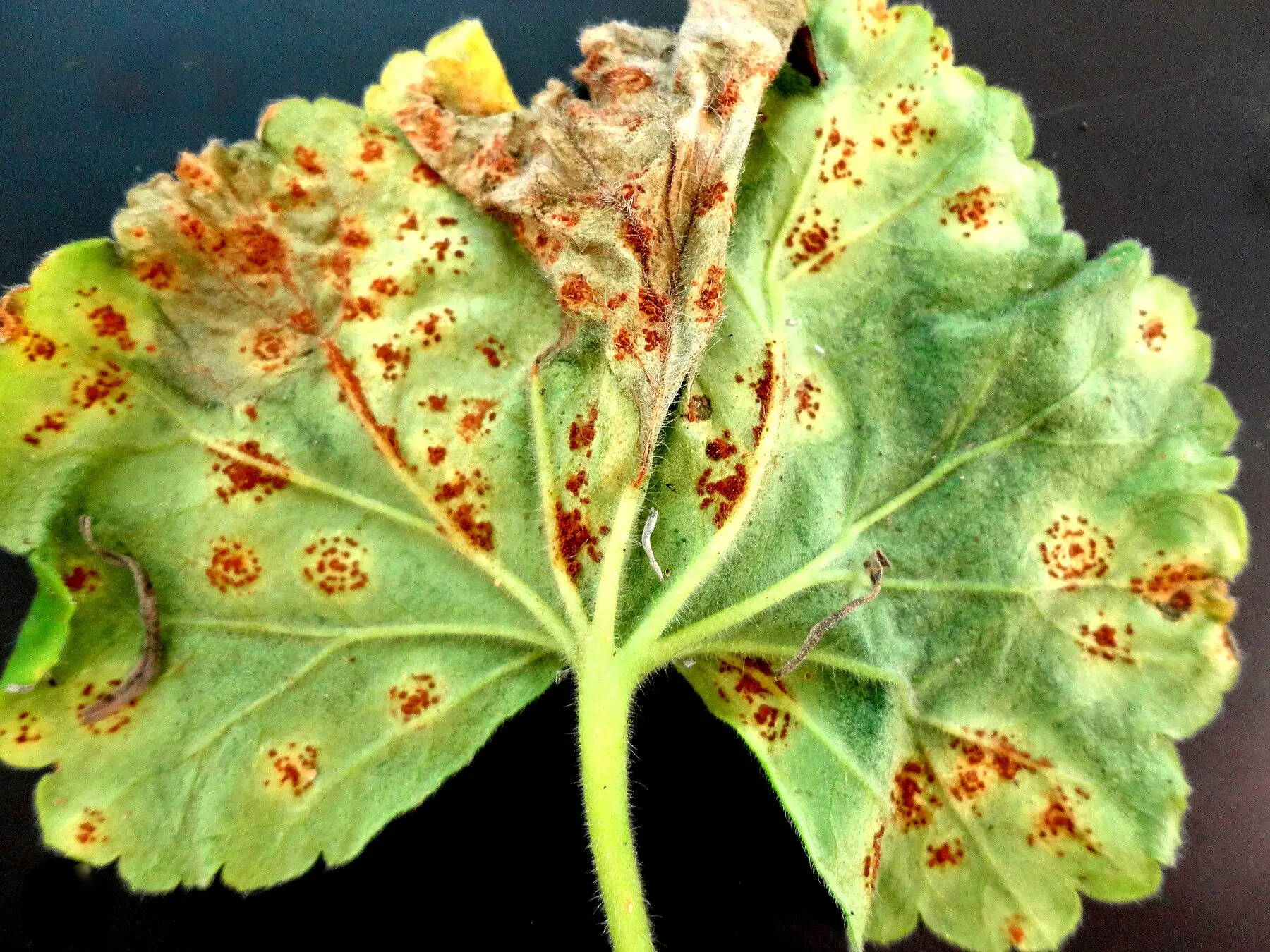
Yes — and it is one of the stranger fungal groups there is. Plant rust is caused by the order Pucciniales, around 8,000 species, and many of them need two completely unrelated host plants to complete a life cycle.
What makes rust fungi odd
| Rust | Blight, mildew | |
|---|---|---|
| Lives on dead material? | No — living tissue only | Yes |
| Survives in compost? | No | Yes |
| Needs two host plants? | Often | No |
| Spore stages | Up to five | One or two |
| Host range | Usually very narrow | Broader |
Being an obligate parasite is the practically useful part: rust does not overwinter in your compost heap the way blight does.
The two-host thing
This explains control advice that otherwise looks arbitrary
Many rusts alternate between two entirely unrelated plants:
- Wheat stem rust alternates between wheat and barberry — which is why barberry eradication campaigns were run across North America and Europe
- Cedar-apple rust alternates between junipers and apples, producing bizarre orange gelatinous horns on the juniper
That is why “remove the junipers” is advice about an apple disease.
Does it spread around the garden?
It spreads readily — but usually only to close relatives, because most rust species are highly host-specific:
- Rose rust → roses
- Hollyhock rust → hollyhocks and other mallows
- Leek rust → alliums
Rust on your roses will not move to your beans. The alternate-host species are the exception, and even they are specific about which second plant.
Treating it
- Remove and bin affected leaves as soon as you see them. Never compost them
- Thin crowded growth for airflow
- Water at the base, never over the foliage — spores need leaf wetness to germinate
- Myclobutanil or tebuconazole work as protectants on ornamentals where permitted
Fungicides protect new growth — they do not cure rusted leaves
Which is why acting early matters far more than which product you pick.
Will it kill the plant?
Rarely outright. What it does is weaken over successive seasons:
- Loses leaf area, so less vigour
- Flowers less
- Goes into winter with fewer reserves
On annual crops it mostly just reduces the harvest. The exception is a severe infection on a young plant, which can be fatal simply because there is no reserve to draw on.
Common questions
Is rust a fungus?
What makes rust fungi unusual?
Does rust spread to other plants in the garden?
What is an alternate host, and why does it matter?
How do you treat rust on plants?
Will rust kill my plant?
Backyard Weekly
Know what to plant, week by week
Join the weekly email for seasonal jobs, fixes for what is going wrong, and gear worth buying.
Not ready to subscribe? The planting calendar is free and needs no email.
By subscribing you agree to our privacy policy. Grow In Backyard will never sell your address.
Keep reading
What Is Blight in Plants? Fast Death of Leaves and Stems
Blight is rapid tissue death from fungal or bacterial infection — not one disease. What separates it from wilt, rot, spot and mildew.
Powdery Mildew: Why It Spreads and What Actually Stops It
Powdery mildew is the one fungus that does not need wet leaves — it thrives in humid air and dry foliage. How to spot it early and what treatments hold up.
Tomato Blight: Telling Early From Late, and What to Do
Late blight destroys a plant in days and there is no cure. How to identify it against early blight, act fast enough to save the fruit, and prevent it next year.
Plum Tree Diseases: Identifying Silver Leaf, Rust and Rot
Most plum problems are one of six things. How to tell them apart by what the leaves, fruit and bark show, and which ones mean the tree is lost.