
How to Get Rid of Morning Glory (Bindweed) for Good
How to get rid of morning glory depends on which plant you have — annual or bindweed. Why digging makes 1 of them worse, and the method that exhausts the roots.
 By
On this page
Before anything else: find out which plant you have. The two things called morning glory need completely opposite treatment, and most wasted effort here comes from treating one as the other.
Which plant do you have?
| Annual morning glory | Field bindweed | |
|---|---|---|
| Botanical | Ipomoea | Convolvulus arvensis |
| Leaf | Heart-shaped, no lobes | Arrowhead, pointed basal lobes |
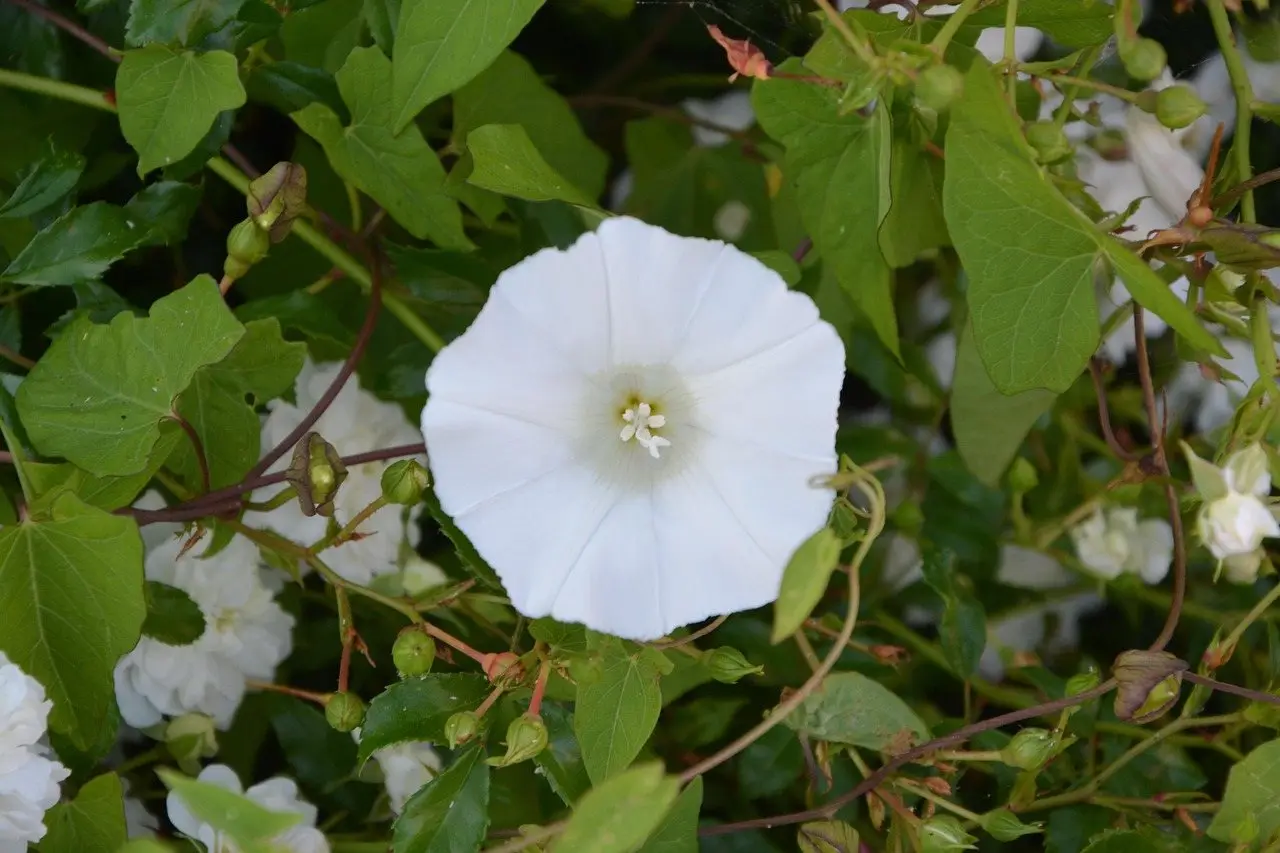
| Flower | Large, 2–4 in, blue/purple/pink | Small, under 1 in, white or pale pink |
| Root | Shallow, annual | Over 10 ft, perennial |
| Winter | Dies at frost | Returns from root |
| Treatment | Pull before it seeds | Exhaustion over two seasons |
If it dies back completely every winter and has big showy flowers, it is the annual and you do not have a problem — just pull it before the seed sets.
If it is back every spring from the same spot with small white trumpets, it is bindweed, and the rest of this applies.
Why digging is the wrong instinct
It is the thing everyone tries, and it reliably makes the patch worse.
Bindweed regenerates from root fragments. A spade through a root system turns one plant into a dozen, each growing from a piece you left behind. Since the roots reach depths no garden tool touches, “getting it all out” is not a thing that can happen.
Watch out
A bindweed patch that has been dug over typically comes back denser the following season. If you have already dug, do not take that as evidence the method needs more effort — switch approach rather than digging harder.
The method that works: exhaustion
The plant lives on energy stored in those deep roots. Every time it regrows leaves, it spends some of that reserve. The strategy is simply to make it spend more than it earns.
1. Cut everything at ground level. Shears, hoe, or a strimmer in rough ground. Do not pull — a pull that breaks the root underground is a small version of digging.
2. Let it regrow to a few inches, then cut again. Roughly every two weeks. This is the part people get wrong by being too diligent: a shoot that reaches a few inches has already cost the plant more than one cut at emergence, so you want some regrowth before cutting.
3. Mulch what you can. Cardboard with four to six inches of mulch over it blocks light from whatever emerges, forcing longer, weaker shoots that cost more energy still.
4. Keep going all season. Stopping in August undoes most of a summer’s work, because the plant rebuilds its reserve in late season before dormancy.
5. Expect two seasons. Year one looks like you are losing. The signal to watch is not whether it comes back but how vigorous the regrowth is — thinner, paler, slower shoots mean the reserve is draining.
If you use herbicide
A systemic product is the one route that reaches the root, and timing is everything:
- Apply at flowering, when the plant is moving sugars downward to the roots. Spring application on new growth largely fails because the flow is the wrong way.
- Paint it on leaves rather than spraying. Bindweed grows up through things you want to keep, and drift kills those instead.
- Expect repeat applications. One treatment will not clear an established root system.
Vinegar, salt and flame all work on contact and do not travel. They remove the foliage, the plant regrows from the root within a week, and nothing has changed.
Step by step
- Time
- PT1H
Identify which plant you have
Annual morning glory (Ipomoea) has heart-shaped leaves and dies at first frost. Field bindweed (Convolvulus arvensis) has arrowhead leaves with pointed basal lobes and returns from roots every year. Only the second needs this method.
Stop digging it out
Every root fragment left behind regenerates a new plant, and bindweed roots reach well over 10 feet deep. Digging multiplies the infestation rather than reducing it.
Cut every shoot at ground level
Remove all top growth with shears or a hoe. The aim is not to kill the plant but to force it to spend stored root energy producing replacement leaves.
Repeat every two weeks through the growing season
Each regrowth draws down the root reserve. Letting shoots reach a few inches before cutting again wastes more of the plant's energy than cutting constantly.
Mulch heavily where you can
Cardboard topped with 4 to 6 inches of mulch blocks light from any shoot that does emerge, which compounds the exhaustion.
Spot-treat survivors at flowering, if using herbicide
If you choose a systemic herbicide, apply when the plant is flowering and moving sugars downward, which carries it to the roots. Painted onto leaves rather than sprayed, so nothing drifts onto neighbouring plants.
Common questions
Is morning glory the same as bindweed?
Why does digging up bindweed make it worse?
How deep do bindweed roots go?
Will vinegar kill bindweed?
How long does it take to get rid of bindweed?
Backyard Weekly
Know what to plant, week by week
Join the weekly email for seasonal jobs, fixes for what is going wrong, and gear worth buying.
Not ready to subscribe? The planting calendar is free and needs no email.
By subscribing you agree to our privacy policy. Grow In Backyard will never sell your address.
Keep reading
Does Vinegar Kill Weeds — 4 Checks on What It Misses
Does vinegar kill weeds down to the root, or only the leaves? Only the leaves, and 4 checks cover strength, gear and perennials. See where it earns use.
Backyard Landscaping Ideas No Grass — 11 That Replace Lawn
Backyard landscaping ideas no grass, costed per square foot. 11 replacements from clover to gravel, what each needs, and which survive dogs and children.

What Is Diatomaceous Earth — 3 Rules Before You Buy
What is diatomaceous earth doing when it works is cutting insect cuticles while dry. 3 rules cover grade, use and a dust mask. See whether it fits your pest.
How to Use Neem Oil on Plants Without Burning Them
The right dilution, why it needs soap to mix, when to spray, and which pests it works on. Neem is slow and specific — treat it as a knockdown and it fails.