
Backyard Landscaping Ideas No Grass — 11 That Replace Lawn
Backyard landscaping ideas no grass, costed per square foot. 11 replacements from clover to gravel, what each needs, and which survive dogs and children.
 By
On this page
Lawn is the most expensive ground cover most gardens own, counted in water, mowing and time. Eleven replacements, with what each actually costs per square foot and what it survives.
Living replacements
| Replacement | Rough cost/sq ft | Water | Foot traffic | Mowing |
|---|---|---|---|---|
| Clover | $0.02–0.04 | Low | Good | 1–2× a year |
| Creeping thyme | $1.50–3.00 | Very low | Light | None |
| Native groundcover | $0.50–2.00 | Low once set | Light | None |
| Moss | $1.00–3.00 | Needs shade, damp | None | None |
| Meadow mix | $0.05–0.15 | Low | Paths only | 1× a year |
| Mulch beds | $0.50–1.00 | n/a | Light | None |
1. Clover. White clover (“microclover” in its low-growing form) stays green through drought, fixes its own nitrogen so it needs no feeding, and handles dog urine far better than grass. Mow twice a year if you want it neat. The single best-value change on this page.
2. Creeping thyme. Takes light foot traffic, releases scent when walked on, flowers for bees, and needs almost no water once established. Expensive to plant over a large area, so it suits paths and small areas between pavers.
3. Native groundcover. Whatever is native where you are — vinca, ajuga, wild ginger, prairie dropseed. Lowest long-term maintenance of anything here because it is already adapted.
4. Moss. Only in shade with reliable damp. In those conditions it is better than anything else and costs nothing but patience.
5. Meadow or wildflower mix. For areas you look at rather than walk on. Cut once a year after seeding. It needs poorer soil than most people expect — a fertile former lawn grows grasses that swamp the flowers.
6. Mulched planting beds. Not a lawn replacement so much as the removal of the question: shrubs and perennials through mulch, with paths between.
Hard surfaces
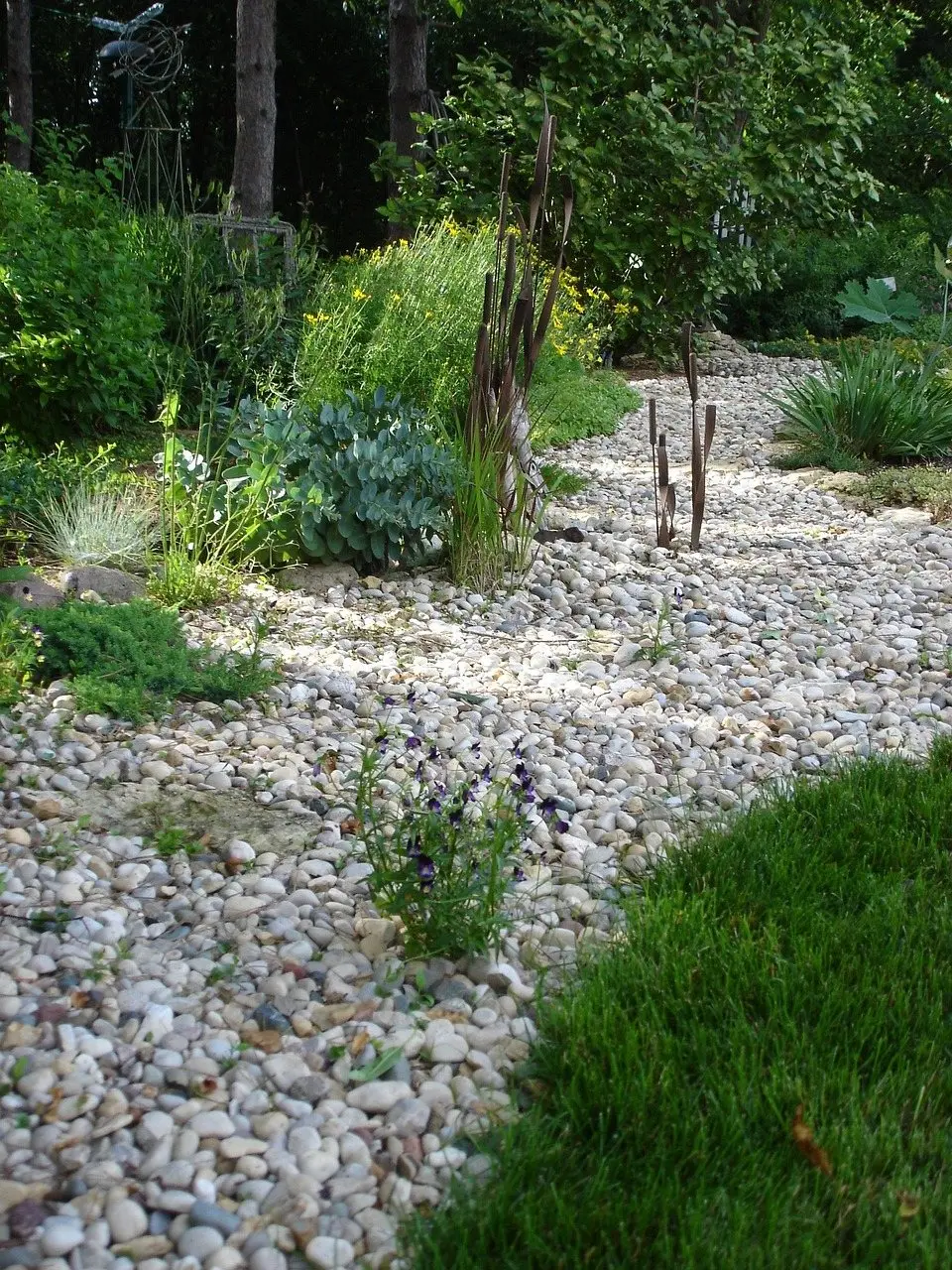
7. Gravel. Drains, lasts decades, zero water. Needs a membrane beneath and a hard edge, or it migrates. Pea gravel is comfortable underfoot; angular gravel stays put better.
8. Decomposed granite. Compacts to a firm surface that is pleasant to walk on and sheds water slowly. More expensive than gravel and considerably better for seating areas.
9. Pavers or flagstone with planted joints. The highest-cost option and the longest-lived. Thyme or dwarf mondo in the joints keeps it from reading as a patio.
10. Deck or platform. Right where the ground is awkward — sloping, compacted or over roots. Puts usable flat space where soil work would be expensive.
11. Artificial turf. Handles traffic nothing else will, and it is the one on this list with a real drawback: in direct sun the surface runs far hotter than air temperature, hot enough to be uncomfortable barefoot and a genuine consideration for dogs.
Watch out
Gravel, paving and artificial turf all absorb and radiate heat. In a small enclosed yard, replacing a lawn entirely with hard surfacing can make the space measurably warmer to sit in through summer. Mixing in planted beds and keeping some shade is what stops a low-maintenance yard becoming an unusable one.
Removing the lawn first
Sheet mulching is cheaper and better than stripping turf, and it is almost no work.
- Mow as short as the machine will go and leave the clippings.
- Cover with cardboard, overlapping every seam by six inches. Gaps are where grass comes back.
- Water the cardboard thoroughly so it beds down.
- 4–6 inches of mulch or compost on top.
- Wait two to three months in warm weather, then plant straight through it.
The grass dies in the dark and composts where it stands, which keeps the organic matter in your soil rather than in a skip.
Common questions
What is the cheapest alternative to a lawn?
What can I put down instead of grass for dogs?
Is gravel a good replacement for a lawn?
Will a no-grass yard lower my property value?
How do I kill the existing lawn without chemicals?
Backyard Weekly
Know what to plant, week by week
Join the weekly email for seasonal jobs, fixes for what is going wrong, and gear worth buying.
Not ready to subscribe? The planting calendar is free and needs no email.
By subscribing you agree to our privacy policy. Grow In Backyard will never sell your address.
Keep reading
Types of Worms in Soil — 7 You Find and What Each Does
Types of worms in soil fall into 3 earthworm groups plus the larvae people mistake for them. Which are working for you, and which are eating your roots.
Sloped Garden Ideas on a Budget — 9 Under $500
Sloped garden ideas on a budget start with drainage, not walls. 9 approaches costed honestly, and the 1 job where paying a contractor is the cheaper call.
Types of Gardening Methods — 8 and What Each Suits
Types of gardening methods come down to 8 real choices, from no-dig to hydroponics. What each costs in space, water and effort, and which fits your ground.
Best Time to Plant Grass Seed in the Northeast: Late Summer
Mid-August to mid-September beats spring by a wide margin. Warm soil, cool air and no crabgrass competition — spring gives you none of those.