
How to Get Rid of Foxtails Before They Hurt a Dog
How to get rid of foxtails: the seed heads migrate into dogs and need surgery. Timing the removal to the 3-week green window, and what works after they dry.
 By
On this page
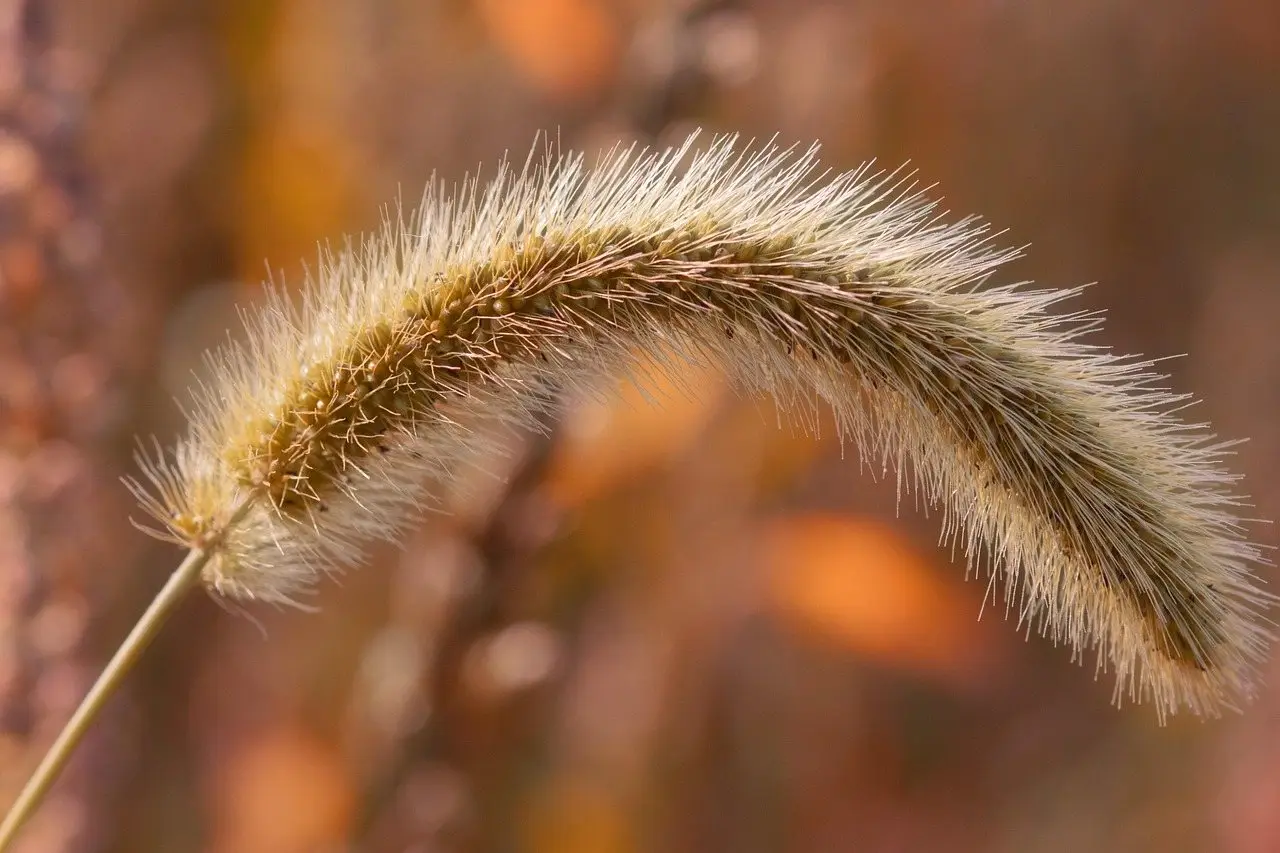
Foxtails are the one weed on this site that sends animals to surgery. The seed head is barbed so that it can only travel forward, which means that once it is in a dog it keeps going.
That changes the priority: this is a timing problem more than a herbicide problem.
Why the timing matters more than the method
| Seed head | Feel | Pulling | Mowing |
|---|---|---|---|
| Green | Flexible, attached | Comes away whole | Safe, with bagging |
| Turning | Stiffening | Some shatter | Risky |
| Dry, tan | Brittle, detaches | Shatters in the hand | Spreads thousands of seeds |
This is the whole thing. A yard mown in May is cleaner next year. The same yard mown in July is worse, because every pass has distributed seed into ground that had none.
If the heads have already dried, rake and bag rather than mow, and accept that you are managing this year’s hazard rather than preventing next year’s.
Clearing it
1. Pull isolated clumps. Foxtail barley and the annual foxtails have shallow fibrous roots and lift whole from damp soil. Take them by the base, bag them, and do not compost — a domestic heap will not reliably kill the seed.
2. Mow the rest low, with a collection box. Below seed-head height, everything collected.
3. Do the margins. This is the step that gets skipped and the reason foxtails come back annually. Fence lines, wall bases, the gravel strip by a drive and the edge of a path all escape the mower, set seed undisturbed, and reseed the lawn each season. The lawn is the symptom; the margins are the source.
4. Pre-emergent the following late winter. Foxtails are annuals — they die every year and return entirely from seed. A pre-emergent applied before soil temperatures reach about 55°F stops that germination. This is the single highest-return step, and it has to happen before anything is visible.
5. Thicken the turf. Foxtails colonise thin, disturbed and compacted ground. Autumn overseeding into bare patches closes the openings they need.
Watch out
Check a dog after every walk in dry grass, not just after your own yard. Run hands over the whole coat, then specifically between every toe, inside both ear flaps, the armpits and the groin. A dog licking one paw obsessively, shaking its head, or sneezing suddenly and repeatedly has very likely picked one up — and once it has entered, this is a vet visit rather than a tweezers job.
Where they come from
Foxtails are opportunists of disturbed ground, which is why they appear after building work, along new fence lines, and in lawns thinned by summer drought.
They also arrive. Seed travels in on fur, on boots, in hay and straw, and in cheap grass seed mixes. A yard that is cleared and then reseeded with contaminated seed has bought the problem back, so it is worth checking what is in the bag.
Step by step
- Time
- PT3H
Act while the seed heads are still green
Green foxtails pull and mow without shattering. Once they dry to tan, mowing scatters the barbed seeds across the yard and makes the problem worse.
Pull isolated clumps by the base
Foxtail barley and most annual foxtails have shallow fibrous roots and lift whole when the soil is damp. Bag the pulled plants rather than composting them.
Mow the rest low, and bag the clippings
Cut below the seed head height and collect everything. Mulching mowers are the wrong tool here because they distribute the seed.
Clear the margins
Fence lines, the base of walls and gravel edges are where foxtails survive mowing and reseed the lawn each year. These strips are the actual source.
Apply a pre-emergent the following late winter
Foxtails are annuals that germinate from seed each spring. A pre-emergent applied before soil temperatures reach about 55F stops that germination, and is the step that prevents next year's crop.
Thicken the lawn
Overseed bare patches in autumn. Foxtails colonise thin and disturbed ground, so dense turf is what keeps them out long-term.
Common questions
Are foxtails dangerous to dogs?
When is the best time to remove foxtails?
Will mowing get rid of foxtails?
What kills foxtail grass?
How do I check a dog for foxtails?
Backyard Weekly
Know what to plant, week by week
Join the weekly email for seasonal jobs, fixes for what is going wrong, and gear worth buying.
Not ready to subscribe? The planting calendar is free and needs no email.
By subscribing you agree to our privacy policy. Grow In Backyard will never sell your address.
Keep reading
Backyard Landscaping Ideas No Grass — 11 That Replace Lawn
Backyard landscaping ideas no grass, costed per square foot. 11 replacements from clover to gravel, what each needs, and which survive dogs and children.
Does Vinegar Kill Weeds — 4 Checks on What It Misses
Does vinegar kill weeds down to the root, or only the leaves? Only the leaves, and 4 checks cover strength, gear and perennials. See where it earns use.

Best Time to Plant Grass Seed in the Northeast: Late Summer
Mid-August to mid-September beats spring by a wide margin. Warm soil, cool air and no crabgrass competition — spring gives you none of those.
How to Get Rid of Goat Head Weeds (Puncturevine)
Goat heads set seed within weeks and the burrs stay viable for years. Pull before it flowers, sweep up every burr, and never rotary-mow a mature plant.