
Where Should You Put a Shed in Your Backyard? Drainage First
Pick the driest, most level spot you can reach with a barrow, keep it clear of boundaries and trees, and check the rules before the base goes down.
 By
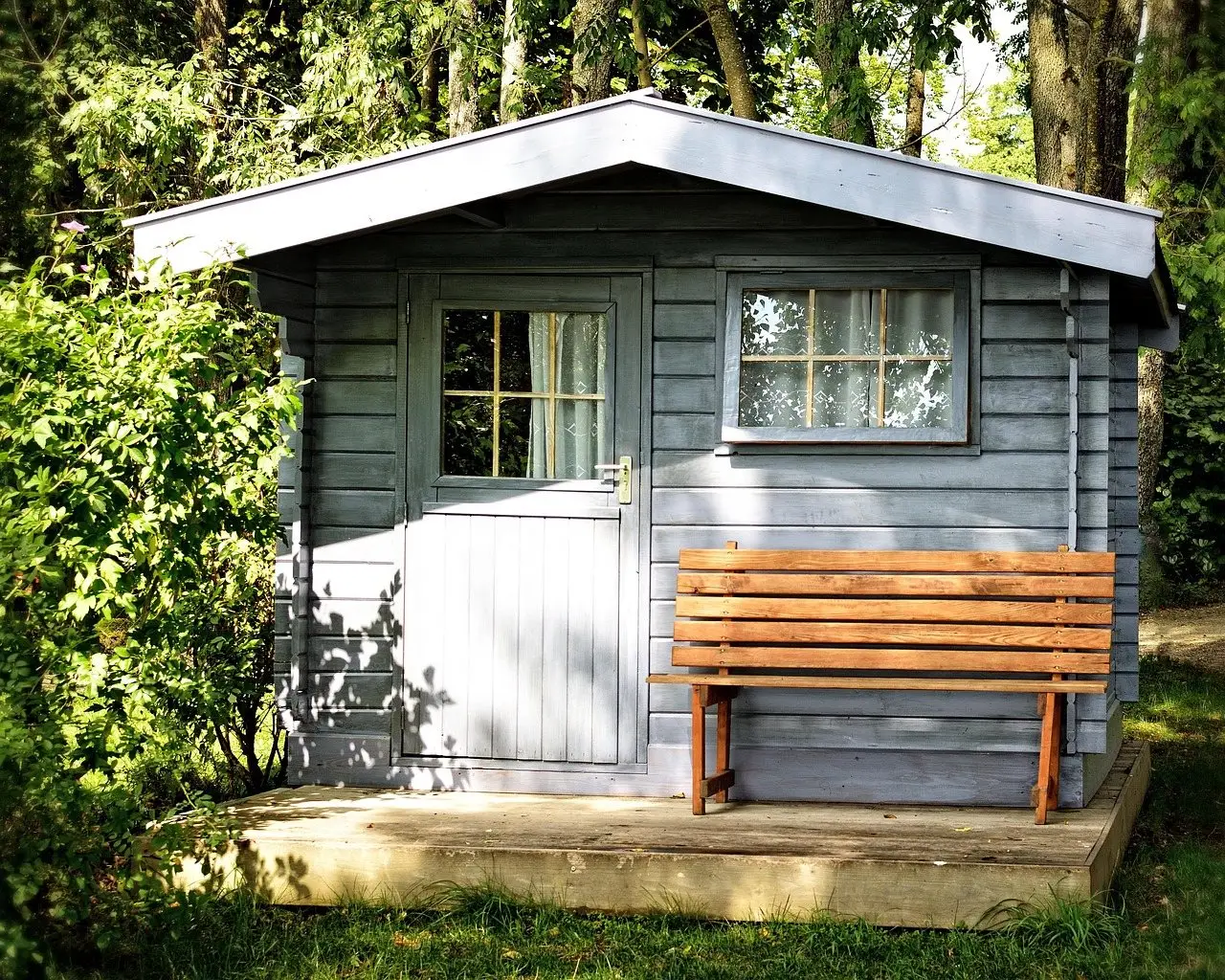
On this page
Driest, most level ground you can reach with a barrow. Drainage decides a shed’s life more than anything else — wet ground rots it from the floor up however well it is built. Then access, boundaries and trees.
Work through it in this order
| Consideration | What to look for |
|---|---|
| 1. Drainage | The driest ground you have. Avoid hollows and the bottom of a slope |
| 2. Level | Less excavation, cheaper base, door that still shuts in five years |
| 3. Access | A barrow or a mower has to get in and out, loaded |
| 4. Clearance | 450–600 mm all round — plus any local boundary minimum |
| 5. Trees | Outside the canopy, not just clear of the trunk |
| 6. Light | East or south-facing door dries fastest |
| 7. Rules | Height, footprint, boundary distance, front-of-house position |
Never tight against a fence
It is the commonest regret. Without a gap you cannot treat the cladding, clear leaves or reach a failed panel, damp is trapped between the two, and the hidden side rots first — usually unnoticed until it is structural.
Why not under a tree
- Leaves and sap on the roof, holding moisture
- Dripping long after the rain stops, which keeps everything damp and mossy
- Falling limbs onto a lightweight roof
- Roots make a level base harder now and lift it later
Keep outside the canopy, not merely clear of the trunk.
The base
A level, free-draining base holding the timber off the ground: a concrete slab, paving slabs on compacted hardcore, or a timber or plastic grid base on gravel.
Same size as the shed, or slightly smaller
A base that overhangs collects water at the edges and runs it back against the walls, which is exactly what you were trying to avoid. The floor should sit clear of the surrounding soil.
Permission
Usual triggers are height, footprint, distance from a boundary, and position relative to the front of the house. Many places allow a modest shed without permission but cap eaves height, overall height and how much of the garden it covers. Listed buildings, conservation areas and covenants add more. Ask the local authority first — moving a shed is easy, moving its base is not.
Common questions
Where should you put a shed in your backyard?
How far should a shed be from a fence?
Which direction should a shed face?
Should a shed go under a tree?
Do I need permission to put up a shed?
What should the shed sit on?
Backyard Weekly
Know what to plant, week by week
Join the weekly email for seasonal jobs, fixes for what is going wrong, and gear worth buying.
Not ready to subscribe? The planting calendar is free and needs no email.
By subscribing you agree to our privacy policy. Grow In Backyard will never sell your address.
Keep reading
How Much Do Trusses Cost for a Shed? Build or Buy
Site-built trusses from dimensional timber cost a fraction of ordered ones for a small shed. Span and pitch decide whether that is still the right call.
Do I Need Planning Permission for a Garden Room?
Often not, under permitted development — but height, footprint, position and what you use it for each have limits that turn it into a planning application.
What Is the Best Surface for a Patio? Match It to the Use
Concrete slabs are the cheapest solid option, porcelain the most maintenance-free, gravel the easiest to lay. The base matters more than any of them.
Where to Dispose of Landscaping Rocks: Free Options First
Rock is heavy, not biodegradable and refused by most kerbside collections. Giving it away locally almost always beats paying to skip it.