
Can You Grill in the Garage? No — Not Even With the Door Up
Charcoal and gas grills produce carbon monoxide, and an open garage door does not clear it. The exhaust risk and the fire risk are separate problems.
 By
On this page
No — and an open door does not change the answer. Both charcoal and gas produce carbon monoxide, and a garage is an enclosed space. Charcoal is the worse of the two because it keeps producing it for hours after the flames are out.
Why the open door does not help
The open door is the dangerous part of this belief
It provides nowhere near the air exchange needed to clear combustion gases from an enclosed space, especially in still air or with wind pushing against the opening. Garages with the door partly or fully open are among the most common settings for poisoning incidents — precisely because people feel the situation is handled.
Charcoal versus gas
| Charcoal | Gas | |
|---|---|---|
| Produces carbon monoxide | Yes | Yes |
| After you stop cooking | Continues for hours | Stops when switched off |
| Sparks and embers | Yes | Minimal |
| Grease smoke | Yes | Yes |
| Safe in a garage | No | No |
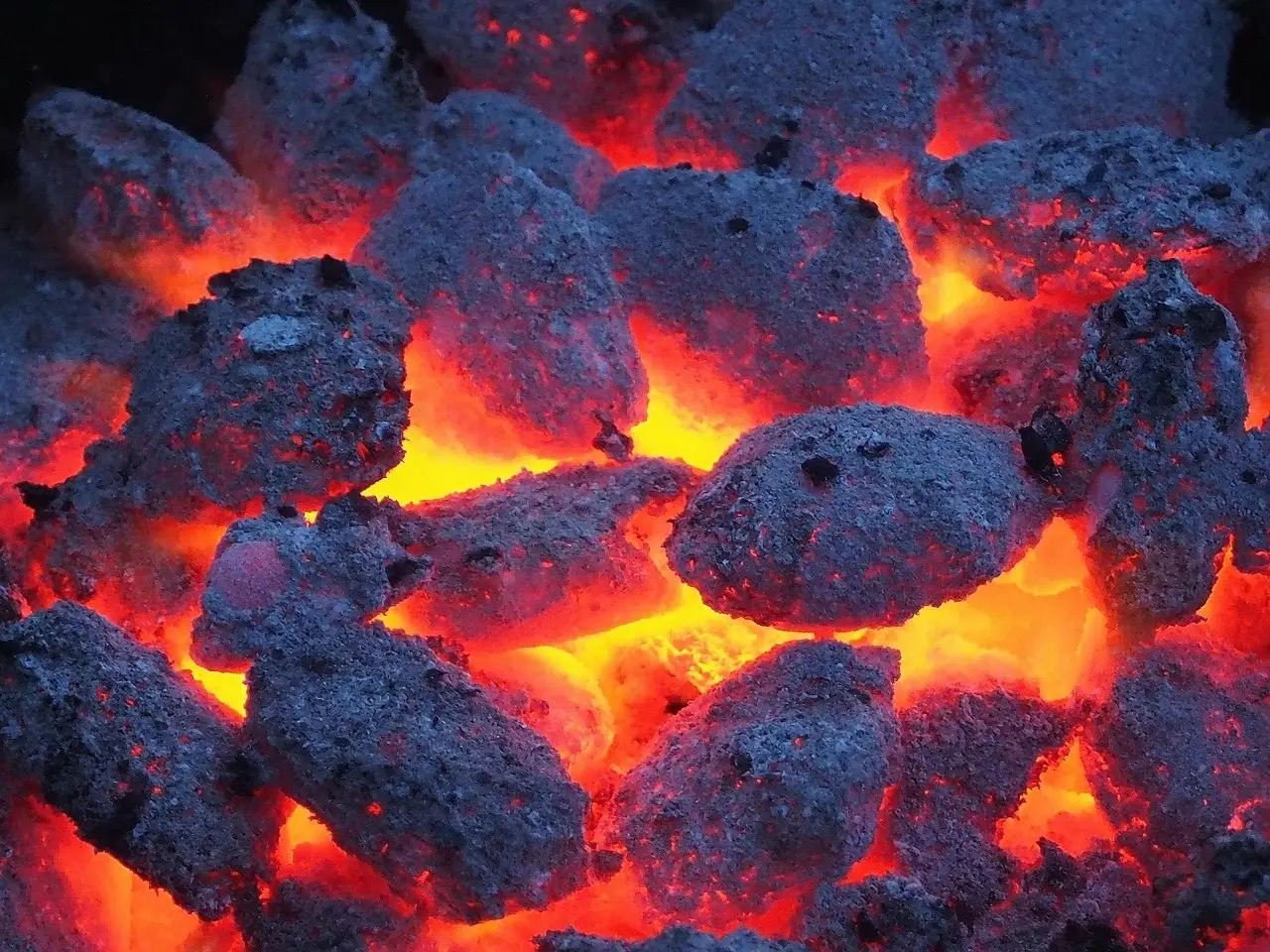
The line that catches people out: a bed of coals left to die down in an enclosed space goes on releasing carbon monoxide for hours. Smouldering is incomplete combustion, and incomplete combustion is exactly what produces it.
Moving a finished charcoal grill into the garage to cool, or out of the rain, is one of the most common versions of this.
The second, separate problem
Even setting the exhaust aside, a garage usually contains:
- Petrol, paint, solvents, propane spares
- A vehicle
- Cardboard, timber and stored fabric
- A low ceiling taking radiant heat and grease-laden smoke
Those are fire risks independent of ventilation, and they do not improve with the door open.
Carports and covered patios
Different question, and it depends on how open the structure is.
- Open-sided carport, generous clearance above — usually acceptable for a gas grill, since gases disperse sideways
- Three enclosed sides — behaves much like a garage
- Overhead clearance matters separately — radiant heat and grease smoke against a ceiling are a fire risk. Check your grill’s stated clearances and treat them as limits
What to do when it rains
Decide this before the food is ready, not during.
- A large patio umbrella, well clear of the grill
- An open-sided gazebo with adequate overhead clearance
- A sheltered spot against a wall with open sky above
- Cook indoors instead — a griddle pan is a better outcome than an enclosed-space grill session
Know the symptoms, because the gas gives no warning
Headache, dizziness, nausea, breathlessness, confusion, unusual tiredness — typically affecting everyone present and easing outdoors. If you suspect it, get everyone into fresh air first and seek medical help; deal with the grill afterwards.
Common questions
Can you grill in the garage?
Is it safe to grill in a garage with the door open?
Why is charcoal more dangerous than gas indoors?
Can you grill under a carport or covered patio?
Where should you put a grill when it is raining?
What are the signs of carbon monoxide poisoning?
Backyard Weekly
Know what to plant, week by week
Join the weekly email for seasonal jobs, fixes for what is going wrong, and gear worth buying.
Not ready to subscribe? The planting calendar is free and needs no email.
By subscribing you agree to our privacy policy. Grow In Backyard will never sell your address.
Keep reading
Can You Use a Patio Heater Indoors? Gas Ones, Never
Propane and gas patio heaters consume oxygen and produce carbon monoxide — outdoor appliances only. Electric radiant heaters are a different question.
How to Turn Off a Charcoal Grill (And Put Out the Coals)
Close the lid and shut every vent — starving the fire of oxygen is the method. Why water is the wrong answer, and how long the ash stays dangerous.
How to Grill Without a Grill: Five Methods That Work
A broiler, a cast-iron grill pan or a fire pit with a grate will all do the job. What each is good at, and the indoor method that is genuinely dangerous.
Can You Leave a Charcoal Grill Unattended? Not While Lit
Live coals throw embers, flare on dripping fat and stay dangerously hot for hours after cooking. Close the lid and vents rather than walking away.