
Will Frost Kill Grass Seed? Dormant Seed Survives It
Ungerminated seed sits through frost unharmed and waits for spring. It is the seedling stage, after germination, that frost destroys outright.
 By
On this page
Dormant seed survives it. Ungerminated seed sits through frost, snow and freeze-thaw and waits — that is how grass reseeds itself in nature. It is the seedling stage that frost destroys. The risk is sowing late enough to germinate and then meet a frost.
The three situations
| When you sow | What happens |
|---|---|
| Well before first frost | Seedlings root and establish — best |
| Just before first frost | Germinates, then dies. The one to avoid |
| After soil drops below ~10°C | Dormant seeding — lies until spring. Fine |
| Mid-winter onto frozen ground | Works, but more loss to birds and rain |
Soil temperature is the number that matters
Not the air. Most cool-season grasses need soil consistently above about 10°C, with 13–18°C ideal. Warm-season grasses want 18–24°C.
Buy a soil thermometer
Pushed into the top few centimetres, it tells you more than any forecast. Below the threshold the seed sits rather than dies — which is why autumn sowings that look like failures often come up in spring.
Dormant seeding
Sow deliberately late, after the soil has fallen below the germination threshold. The seed lies through winter and germinates very early as the ground warms, and freeze-thaw cycles work it into the soil surface, which helps seed-to-soil contact.
- Less reliable than autumn sowing — birds and heavy rain take a share
- So sow more generously than the usual rate
- Best on bare or thin ground, where the seed can reach soil
If it has already germinated
- Keep the soil moist. Dry soil swings temperature faster and a dehydrated seedling has less tolerance.
- Straw or a germination fleece gives useful protection to very young growth.
- Do not mow until it has reached mowing height and had a few weeks of root growth.
- Never mow while frosted.
Keep off frosted grass, established or new
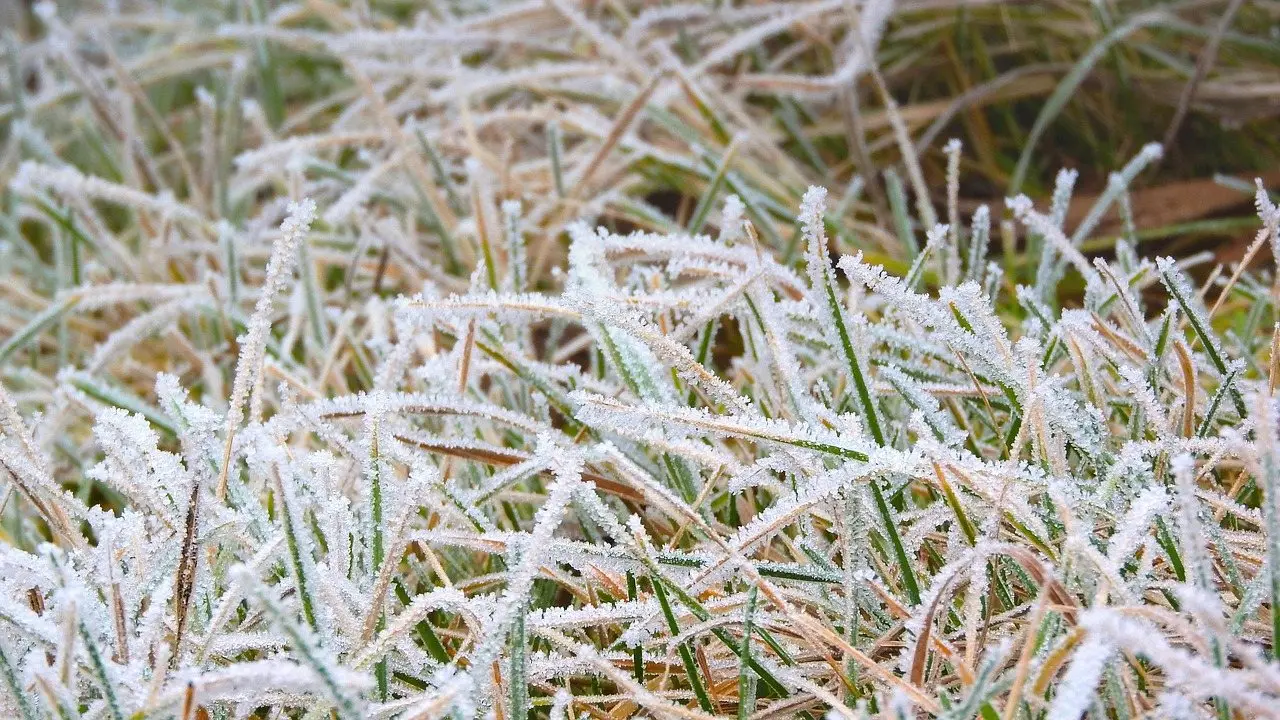
Walking across a frozen lawn ruptures the cells in the blades, leaving a trail of dead footprints that can take weeks to recover. Established grass handles the cold itself perfectly well — it is the traffic that does the damage.
Common questions
Will frost kill grass seed?
What temperature does grass seed need to germinate?
Can you plant grass seed in winter?
When is it too late to sow grass seed?
How do I protect seedlings that have already germinated?
Does frost damage established lawns?
Backyard Weekly
Know what to plant, week by week
Join the weekly email for seasonal jobs, fixes for what is going wrong, and gear worth buying.
Not ready to subscribe? The planting calendar is free and needs no email.
By subscribing you agree to our privacy policy. Grow In Backyard will never sell your address.
Keep reading
How Long Does Grass Seed Take to Grow? (5–30 Days)
Germination runs 5–30 days depending on the grass type — ryegrass in under a week, bluegrass up to a month. Here is the timeline and what actually delays it.
How to Plant Grass Seed So It Actually Comes Up
Seed fails from poor contact and a surface that dried out once, not from bad seed. Soil prep, sowing rates, and the watering routine that carries it to germination.
Can You Just Throw Grass Seed Down on an Existing Lawn?
You can, and most of it dies. What seed needs to actually germinate, and the twenty extra minutes that takes overseeding from 10% success to 70%.
Will Vinegar Kill Grass — Yes, and 4 Reasons to Pause
Will vinegar kill grass and stop there? No — 4 cautions cover reach, roots and soil. See where it is safe to use.