
How Long After Planting Grass Seed Can You Walk on It?
Stay off entirely until the first mow, which is usually 4 to 6 weeks. Light traffic is survivable after that; normal use needs a full growing season.
 By
On this page
Stay off it entirely until the first mow — usually four to six weeks. After that, light traffic is survivable. Normal use waits a full growing season, because the part that carries traffic is the root system, and it is a long way behind the leaf you can see.
The timeline
| Stage | When | Traffic allowed |
|---|---|---|
| Sown to germination | 0–3 weeks | None at all |
| Germination to first mow | 3–6 weeks | None |
| After first mow | 4–8 weeks | Light and occasional, dry ground only |
| After ~2 months of growth | 2–3 months | Regular foot traffic |
| After a full growing season | 3+ months | Normal use, dogs, furniture |
Rope it off on day one
A few canes and some string are the cheapest insurance in gardening. Most new-lawn damage is accidental — a shortcut to the shed, someone fetching the washing.
Before germination: you are moving the seed
Seed sits on or just under the surface, and a footstep does two things at once: it presses seed too deep to emerge and it compacts the soil where you stood.
The result does not appear for a fortnight, then shows as bare footprints and thin strips through an otherwise even sward. It is one of the most common causes of a patchy new lawn and it is entirely avoidable.
After germination: the roots are tiny
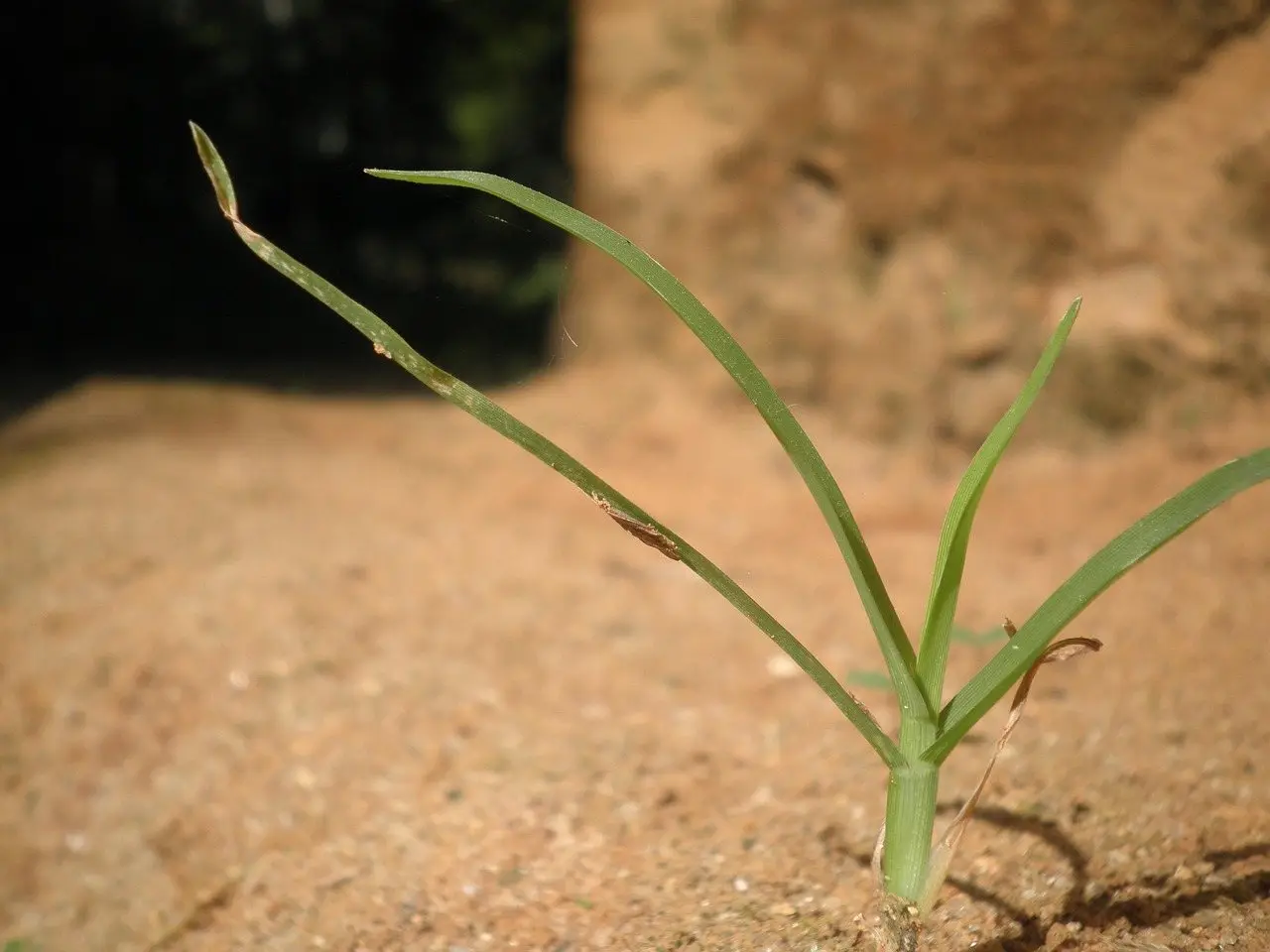
A three-week-old grass plant is a few blades of leaf on a root system barely a couple of centimetres deep. There is no mat, no interlocking, nothing to spread the load.
A foot either shears those roots off or lifts the whole plant out. Mature turf resists this because of a dense network of roots and rhizomes that has not been built yet.
The first mow, and why a sharp blade matters
Mow when the grass is about a third taller than the cutting height you want — for a 3 inch lawn, cut at around 4 inches. Usually three to five weeks after germination.
A blunt blade pulls young grass out of the ground
Young plants are not anchored well enough to resist a tearing blade. Sharpen before the first cut of a new lawn, mow on dry ground, and take no more than a third of the leaf.
Dogs
Realistically, a full growing season. Dogs turn, skid and dig, which applies far more shear force than walking, and they repeat it in the same places. Urine is also harder on young grass than on established turf.
Fencing the area, or confining the dog to part of the garden for one season, is the difference between a lawn and a repair job.
If you genuinely have to cross it
- Only when the surface is dry. Wet soil compacts far more readily.
- Vary the route so no single line gets repeated traffic.
- Lay a board to spread the load if the crossing is regular.
Common questions
How long after planting grass seed can you walk on it?
Why is walking on new grass so damaging?
When can you first mow a new lawn?
How long before dogs can go on new grass?
What happens if you walk on grass seed before it germinates?
Does it matter what the weather is when you walk on new grass?
Backyard Weekly
Know what to plant, week by week
Join the weekly email for seasonal jobs, fixes for what is going wrong, and gear worth buying.
Not ready to subscribe? The planting calendar is free and needs no email.
By subscribing you agree to our privacy policy. Grow In Backyard will never sell your address.
Keep reading
How to Plant Grass Seed So It Actually Comes Up
Seed fails from poor contact and a surface that dried out once, not from bad seed. Soil prep, sowing rates, and the watering routine that carries it to germination.
How Long Does Grass Seed Take to Grow? (5–30 Days)
Germination runs 5–30 days depending on the grass type — ryegrass in under a week, bluegrass up to a month. Here is the timeline and what actually delays it.
Will Frost Kill Grass Seed? Dormant Seed Survives It
Ungerminated seed sits through frost unharmed and waits for spring. It is the seedling stage, after germination, that frost destroys outright.
Can You Just Throw Grass Seed Down on an Existing Lawn?
You can, and most of it dies. What seed needs to actually germinate, and the twenty extra minutes that takes overseeding from 10% success to 70%.