
Do Lawn Aerator Shoes Work? No, and Here Is Why
Spiked sandals compress soil sideways instead of removing it, which is the opposite of aeration. What the mechanism is and what to use instead.
 By
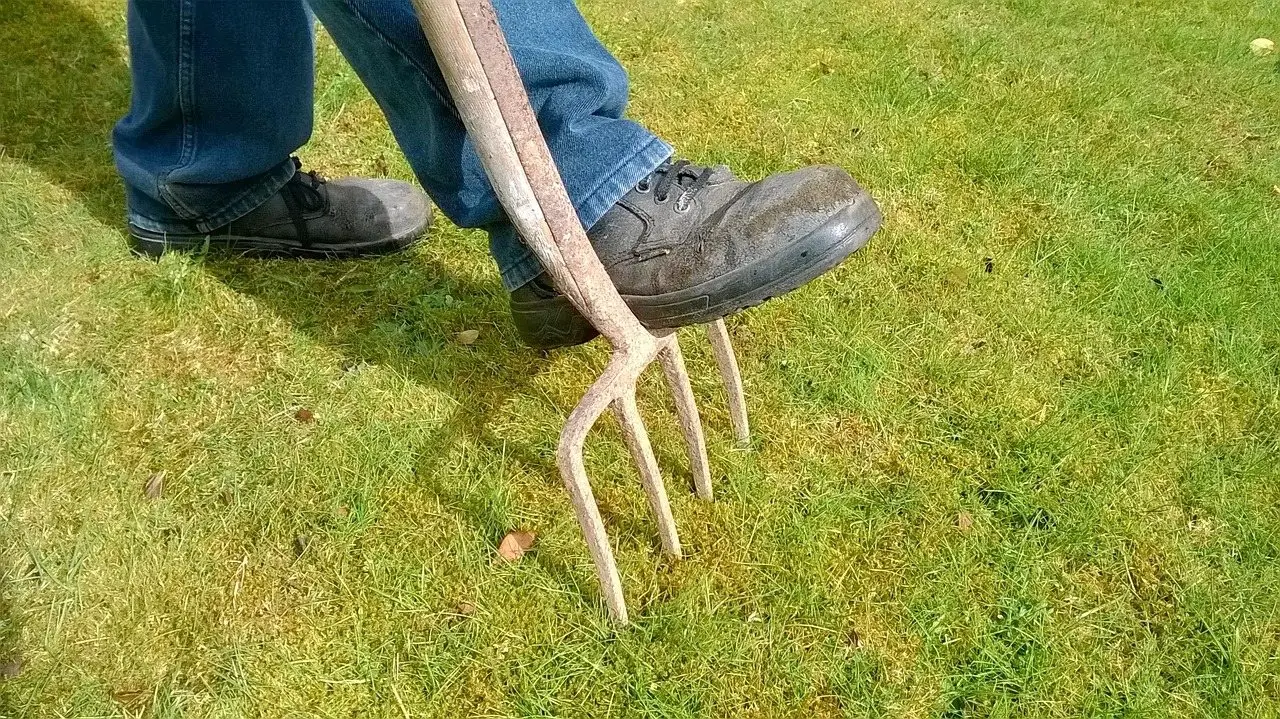
On this page
Aerator shoes make holes. Aeration is not about making holes — it is about removing soil, and that difference is the whole answer.
The mechanism, which is the whole point
| tool | what happens to the soil |
|---|---|
| Hollow-tine core aerator | A plug is removed. Void space created. Compaction relieved |
| Hollow-tine hand fork | Same, by hand, slowly |
| Solid-tine spike or fork | Soil displaced sideways; a denser ring forms around the hole |
| Aerator shoes | Same as above, with shorter tines and less control |
Compacted soil has lost its pore space. Restoring it means taking soil away so the rest has somewhere to move. A spike takes nothing away.
They are also just awkward
The spikes are short, they pack with soil and grass within a few steps, and walking a lawn evenly while strapped to two sets of nails is slow and unsteady. Even if the mechanism worked, covering a lawn at four-inch spacing on foot would not be the way to do it.
What to use instead
- Hire a powered core aerator — usually well under the cost of a service, and an hour or two on a domestic lawn
- Hollow-tine hand fork for a small lawn. Push, pull a plug, move four inches, repeat
- Garden fork as the free option. Solid-tined, so only slightly useful — push in and rock it gently to open fissures
- Top dress after either, so the holes fill with compost rather than closing up
The one thing spiking is good for
A dry summer lawn can become hydrophobic and shed water off the surface. Slitting or spiking it helps water get in. That is water penetration, not compaction relief:
- Fork or slitter, a few inches deep
- Water immediately afterwards
- A wetting agent does the same job without the holes
Check you need anything at all
Push a screwdriver into moist soil. Six inches under light hand pressure means the soil is fine and every aerator on the market is irrelevant to your lawn. Spend it on seed and raise the mowing height instead.
Common questions
Do aerator shoes actually aerate a lawn?
What is the difference between solid and hollow tines?
Is there any use for spiking a lawn?
What is the cheapest way to aerate a lawn properly?
Does my lawn even need aerating?
Why are they still sold if they do not work?
Backyard Weekly
Know what to plant, week by week
Join the weekly email for seasonal jobs, fixes for what is going wrong, and gear worth buying.
Not ready to subscribe? The planting calendar is free and needs no email.
By subscribing you agree to our privacy policy. Grow In Backyard will never sell your address.
Keep reading
Is Lawn Aeration Necessary? Only If It Is Compacted
The screwdriver test settles it in ten seconds. Which lawns genuinely need aerating, which do not, and why annual aeration by default is a waste.
What to Do After Aerating a Lawn: The First Two Weeks
Leave the cores where they fall, overseed within 48 hours, top-dress with compost, and hold off mowing. The order matters more than the tasks.
How to Make a Lawn Green and Thick: The Order That Works
Thick grass comes from mowing height, overseeding and deep watering before fertilizer. The sequence that fixes a thin lawn in one season.
Do Weeds Die in the Winter? Annuals Yes, the Rest No
Summer annuals die at the first frost, but winter annuals and perennials carry straight through. Which is which, and why autumn is the best time to act.