
Can You Compost Leaves? Yes — They Are the Best Brown You Have
Leaves are the ideal carbon layer in a heap, and composted alone they make leaf mould. Shred them, or they mat into sheets that shed water.
 By
On this page
Yes — they are the best brown material most gardens produce. Free, in quantity, exactly when a heap needs carbon. Shred them first, or whole leaves mat into wet sheets that shed water and stall the heap.
Two different things to make
| In a mixed heap | As leaf mould | |
|---|---|---|
| With | Green waste, turned | Leaves alone, left alone |
| Driven by | Bacteria, heat | Fungi, cool and damp |
| Time | A season or two | 1–2 years; 3 for oak and beech |
| Result | Compost — feeds | Conditioner — holds water, opens soil |
| Effort | Turning, balancing | Almost none |
Making leaf mould
Genuinely effortless:
- A wire cage, or a bin bag with holes punched in it.
- Fill with damp leaves. Wet them if they are dry.
- Leave it alone. No turning, no balancing, no attention.
- Shredded leaves roughly halve the time.
It is low in nutrients compared with compost — it conditions rather than feeds — and it is the traditional base for seed and potting mixes.
Shredding is the one thing worth doing
Whole leaves lie flat and mat into layers water runs off rather than through, which stalls decomposition and makes a heap unpleasant to turn. Run a mower over a spread of leaves on the lawn — collection box on or off — and it is done in minutes. A leaf shredder or a strimmer in a bin does the same.
Which leaves to keep out
- Walnut — contains juglone, which inhibits many plants and persists. Compost separately and age well, or leave out.
- Diseased leaves — rose black spot, apple scab. Only safe in a heap that reliably gets hot; a cool heap will not kill the spores.
- Conifer needles and evergreens — acidic and very slow. Sparingly, or composted separately for ericaceous plants.
On the lawn
A thick layer left in place kills grass
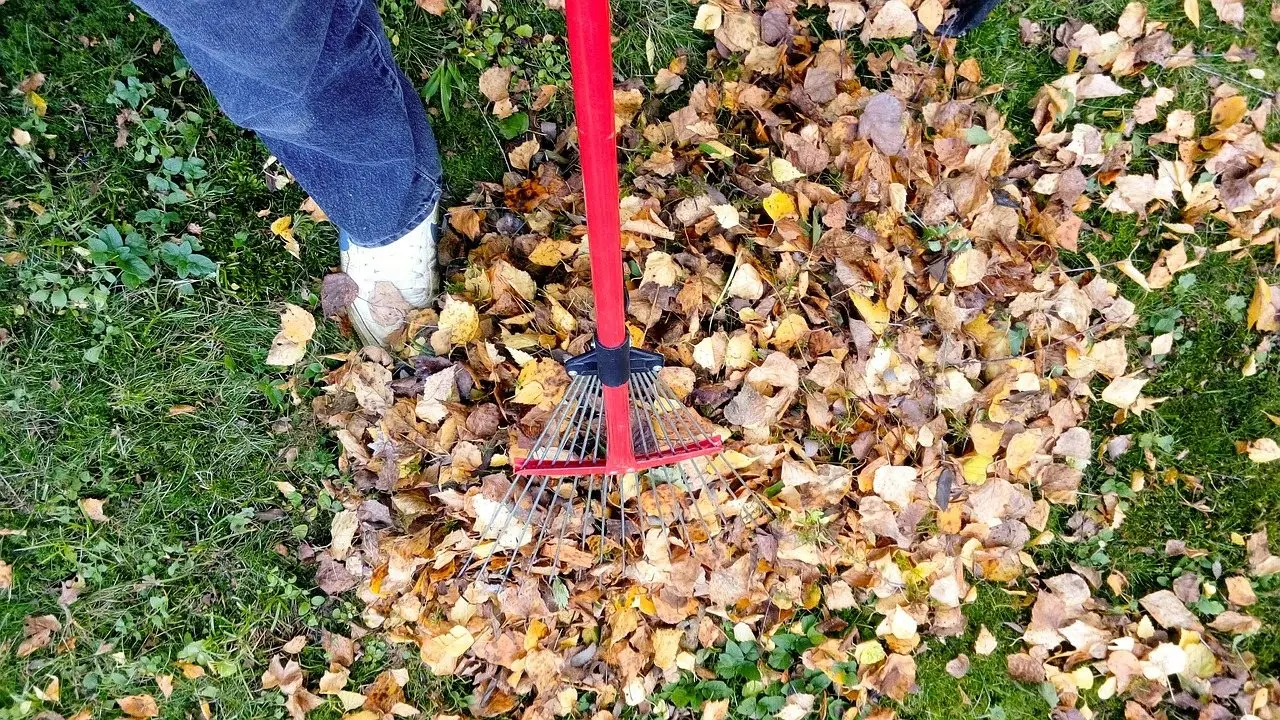
It blocks light and traps moisture against the sward, causing yellowing, encouraging disease and killing patches outright over a wet winter. Rake thick drifts off and compost them.
A light scatter is different — mow over it and the chopped leaves drop into the sward, feed the soil and disappear. That is free soil improvement, and it saves raking.
Common questions
Can you compost leaves?
How long do leaves take to compost?
What is leaf mould and is it worth making?
Which leaves should not be composted?
Do I need to shred leaves first?
Can you just leave the leaves on the lawn?
Backyard Weekly
Know what to plant, week by week
Join the weekly email for seasonal jobs, fixes for what is going wrong, and gear worth buying.
Not ready to subscribe? The planting calendar is free and needs no email.
By subscribing you agree to our privacy policy. Grow In Backyard will never sell your address.
Keep reading
How to Make a Compost Bin — 4 Parts, 3 Designs
How to make a compost bin: pick the design, then size it for the heat. 4 parts cover all 3 builds. See which suits the space you have.
Are Pine Needles Good for Compost? Yes, Slowly
Pine needles compost well but break down slowly, and they do not acidify finished compost. How to speed them up and where they work better as mulch.
Are Maggots Good for Compost? Yes — They Speed It Up
Soldier fly larvae break down food waste faster than anything else in the heap. Maggots signal a wet, nitrogen-heavy pile rather than a problem.
Can You Compost Weeds? Yes, With Two Real Exceptions
Most weeds compost fine. Seed heads and perennial roots are the two that survive a cool heap — how to handle them without losing the material.