
Can You Compost in the Winter? Yes — It Just Slows Down
A cold heap does not stop, it idles. Keep adding, insulate the sides, stop turning, and expect finished compost a few weeks later than usual.
 By
On this page
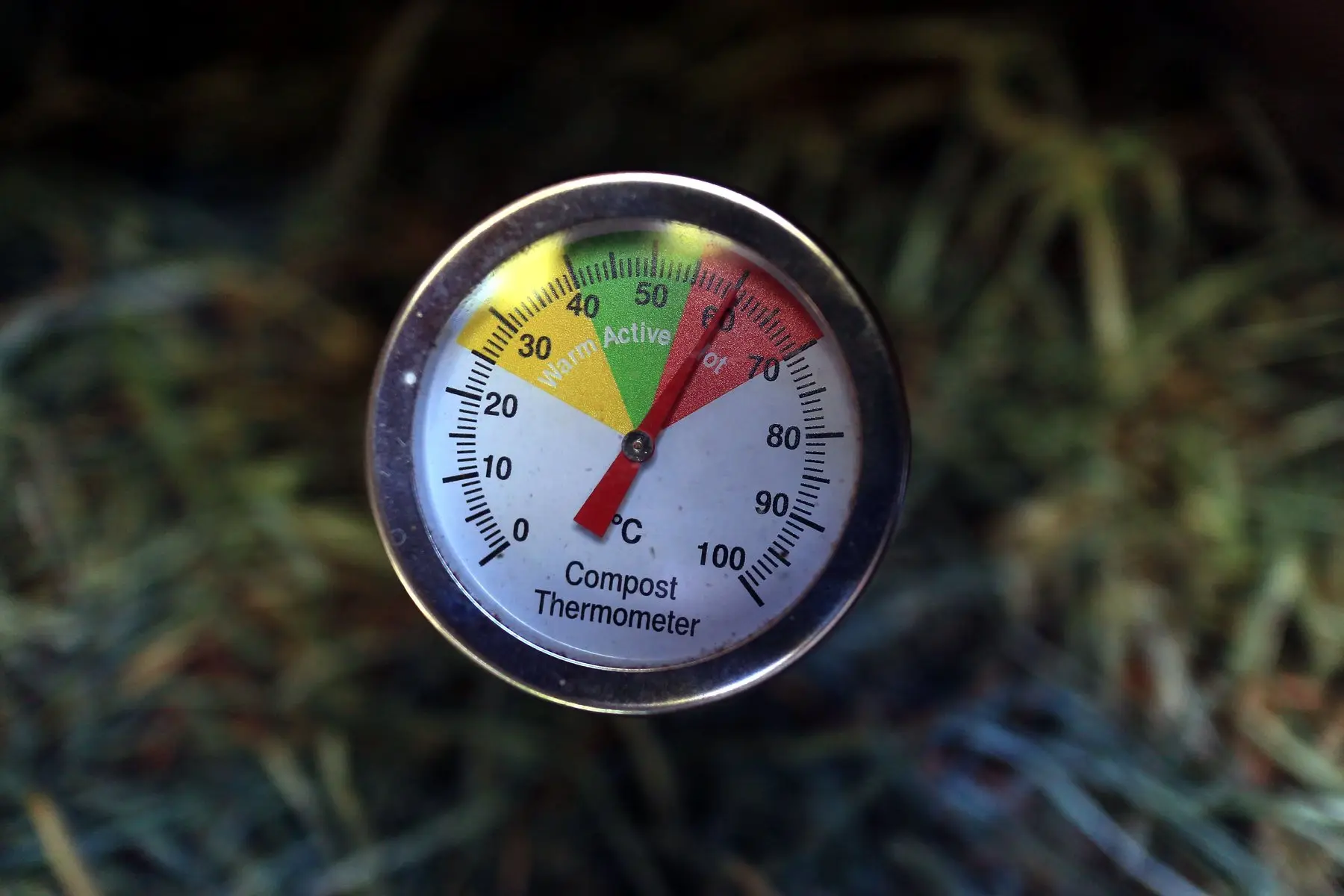
It does not stop — it idles. The hot bacteria go dormant below about 50°F and slower cold-tolerant organisms take over. A heap frozen solid in January is working again within days of a thaw, without you doing anything.
What actually changes in the cold
| Warm weather | Winter | |
|---|---|---|
| Active organisms | Thermophilic bacteria | Cold-tolerant bacteria, fungi |
| Core temperature | 130–160°F | Ambient to gently warm |
| Turning | Every week or two | None |
| Time to finish | 2–3 months | Add several weeks |
| Material in | Balanced | Greens-heavy — correct it |
Stop turning
Each turn vents the one thing the heap cannot spare
Turning is how heat leaves a heap. In summer that does not matter — it rebuilds in a day. In winter a single turn can drop the core by ten degrees or more and take weeks to recover.
Leave it alone from the first hard frost until spring, then resume.
Bulk, then insulation
Bulk first, because it is the bigger lever. A heap under about a cubic yard has too little mass to retain any heat at all, whatever you wrap it in.
Then:
- Straw bales stacked around the sides
- Fallen leaves piled against it
- Old carpet or flattened cardboard as a wrap
- A cover on top — a saturated heap goes cold and anaerobic, which is the actual failure mode
- Site it out of the wind. This matters more than siting it in the sun
Feeding it through winter
The seasonal problem is that greens are scarce and browns are everywhere — but the browns are outside and the greens are the kitchen caddy, so most winter heaps go wet and slimy from kitchen scraps alone.
- Stockpile autumn leaves in a separate bag or bin
- Add a handful of them with every caddy
- Chop smaller than you would in summer — surface area matters more when the biology is slow
Freezing is not a setback
It does something useful. The freeze-thaw cycle ruptures plant cell walls, so material that has been through a hard winter breaks down noticeably faster once it warms.
A frozen heap needs nothing done to it.
The one method that does fail
Worm bins do not tolerate cold
Composting worms stop feeding below about 50°F and die near freezing. An outdoor worm bin left through a hard winter is a genuine loss, not a slowdown.
Move it into a garage, shed or utility room. If it must stay outside, insulate it heavily and feed it much less.
Common questions
Can you compost in the winter?
Should you turn a compost pile in winter?
How do you keep a compost pile warm in winter?
What can you add to a compost heap in winter?
Will a frozen compost pile still work?
Is a worm bin a better option in winter?
Backyard Weekly
Know what to plant, week by week
Join the weekly email for seasonal jobs, fixes for what is going wrong, and gear worth buying.
Not ready to subscribe? The planting calendar is free and needs no email.
By subscribing you agree to our privacy policy. Grow In Backyard will never sell your address.
Keep reading
How to Make a Compost Bin — 4 Parts, 3 Designs
How to make a compost bin: pick the design, then size it for the heat. 4 parts cover all 3 builds. See which suits the space you have.
Can You Compost Weeds? Yes, With Two Real Exceptions
Most weeds compost fine. Seed heads and perennial roots are the two that survive a cool heap — how to handle them without losing the material.
Are Pine Needles Good for Compost? Yes, Slowly
Pine needles compost well but break down slowly, and they do not acidify finished compost. How to speed them up and where they work better as mulch.
Can You Compost Leaves? Yes — They Are the Best Brown You Have
Leaves are the ideal carbon layer in a heap, and composted alone they make leaf mould. Shred them, or they mat into sheets that shed water.