When to Harvest Sweet Potatoes, and Why Curing Matters
Sweet potatoes are dug on days-from-planting, not on a visible sign, and they taste of nothing until cured. The 100-day count, and the ten days that make them sweet.

On this page
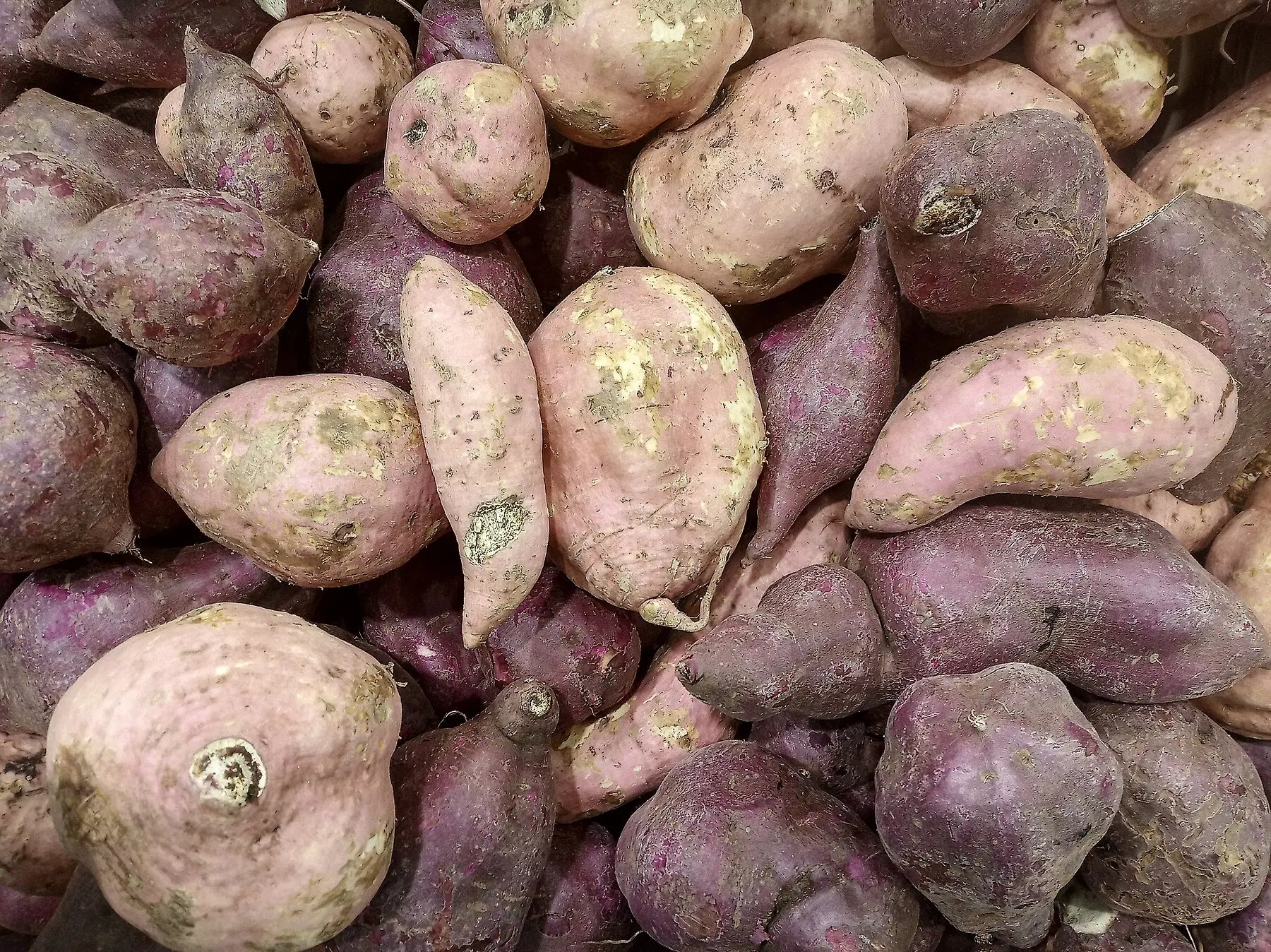
Sweet potatoes are one of the few crops with no reliable ripeness signal. The foliage stays green until frost kills it, and the crop is underground.
So you harvest on a count — 90 to 120 days from planting the slips — and confirm with a test dig. Then comes the part that actually decides whether they taste of anything.
Timing
90 to 120 days from planting slips, by variety. Beauregard and similar early types finish nearer 90; larger-rooted varieties want the full 120.
Always before the first frost. This overrides the count.
The vines yellowing is not a ripeness signal — it usually means cold nights or simple age. Sweet potatoes will keep bulking as long as the foliage is alive and the soil is warm, so in a long season there is a real benefit to leaving them, right up to the frost limit.
Frost damage travels from the vine into the roots
If frost kills the foliage, the damage does not stop at the soil line — it moves into the roots, and frosted sweet potatoes rot in storage instead of curing. If you get caught, cut the vines off at ground level immediately to break the connection, and dig within a day or two. Those roots will not keep and should be eaten within a few weeks.
The test dig
At the earliest end of the range, carefully excavate one plant with a fork, well out from the crown.
- Usable size — harvest the lot.
- Too small — refill the hole, water, and give it another two or three weeks, provided frost is not close.
This costs one plant and removes all the guesswork.
Digging
Sweet potato skins are extremely thin at harvest and bruise and tear at a touch. Almost all storage losses start as a handling injury.
- Cut the vines off and clear them a day before, so you can see what you are doing.
- Fork in well outside the crown — 12 to 18 inches — because roots run further than you expect.
- Lift from underneath and finish by hand.
- Do not wash them. Brush soil off gently once dry. Washing pushes water and pathogens into micro-wounds.
- Handle each one individually. No tipping into a bucket.
- Set anything damaged aside to eat first — it will not cure or store.
Dig on a dry day if you can, and get them out of direct sun quickly.
Curing: the step that makes them sweet
This is not optional preservation advice. It is what makes a sweet potato taste like a sweet potato.
- 80 to 85°F
- 85 to 90 percent humidity
- 10 days (7 at the short end, 14 for a large crop)
- Good airflow, roots not touching
Two things happen. The skin thickens and cuts heal over, sealing out the rot organisms that otherwise get in through harvest damage. And enzymes convert starch into maltose, which is where the sweetness comes from.
| Uncured | Cured | |
|---|---|---|
| Flavour | Bland, starchy, close to a normal potato | Sweet, rich |
| Texture when cooked | Firm, dry | Soft, moist |
| Skin | Thin, tears easily | Thickened, sealed |
| Storage life | 2–4 weeks | 6–12 months |
Improvising the conditions: a greenhouse in late summer, a warm airing cupboard, or crates covered loosely with plastic near a heat source. Some people use an oven with only the light on. The combination of warmth and humidity is what matters — dry heat shrivels them instead.
Storing
- 55 to 60°F, dark, dry, ventilated.
- Wrapped individually in newspaper, or in crates with the roots not touching.
- Check periodically and remove anything soft.
Never put sweet potatoes in the fridge
Below about 50°F they suffer chilling injury — the flesh develops a hard core that will not soften however long you cook it, the flavour goes off, and they rot faster once removed. This applies to storage, not to cooked leftovers. It is the single most common way a good harvest is ruined after all the work of growing it.
Do not store them next to potatoes — potatoes release moisture and gases that make sweet potatoes sprout and spoil. They also want quite different conditions: potatoes keep cold and dark, sweet potatoes distinctly warmer.
The leaves
Sweet potato foliage is edible and good — cooked like spinach, and eaten widely across Asia and Africa.
Worth stating clearly because the two crops are unrelated: potato foliage is toxic, sweet potato foliage is a vegetable. They are in entirely different plant families despite the shared name.
You can pick leaves lightly through the season without reducing the root crop, and at harvest the whole top is food rather than compost.
Common questions
When do you harvest sweet potatoes?
Do sweet potatoes need curing?
How do you know sweet potatoes are ready without digging them all up?
What happens if sweet potatoes get frosted?
How do you store sweet potatoes after curing?
Are sweet potato leaves edible?
Backyard Weekly
Know what to plant, week by week
Free planting calendar. Join the weekly email for seasonal jobs, fixes for what is going wrong, and gear worth buying.
Set MONETIZATION.email.endpoint in src/config/site.ts to enable this form.
By subscribing you agree to our privacy policy. Grow In Backyard will never sell your address.
Keep reading
When to Harvest Potatoes: Two Crops From One Plant
New potatoes come at flowering; storage potatoes need the tops to die back first. How to tell which stage you are at, and how to cure them so they keep.
When to Harvest Pumpkins: Three Signs, Not the Calendar
Rind hardness, stem colour and a hollow sound tell you it is ready. Why you must cut the stem rather than carry by it, and the curing that decides storage life.
How to Grow Potatoes: Chitting, Depth, and Earthing Up
Potatoes form on stem, not roots, which is why you plant them deep and keep burying them. Seed potatoes, timing by variety group, and the mistakes that cost a crop.
When to Pick Jalapeños: Green, Red, and Corked
Pick green at full size and firm for classic heat, or leave them to red for sweetness. What the white corking lines mean, and why picking gives you more.